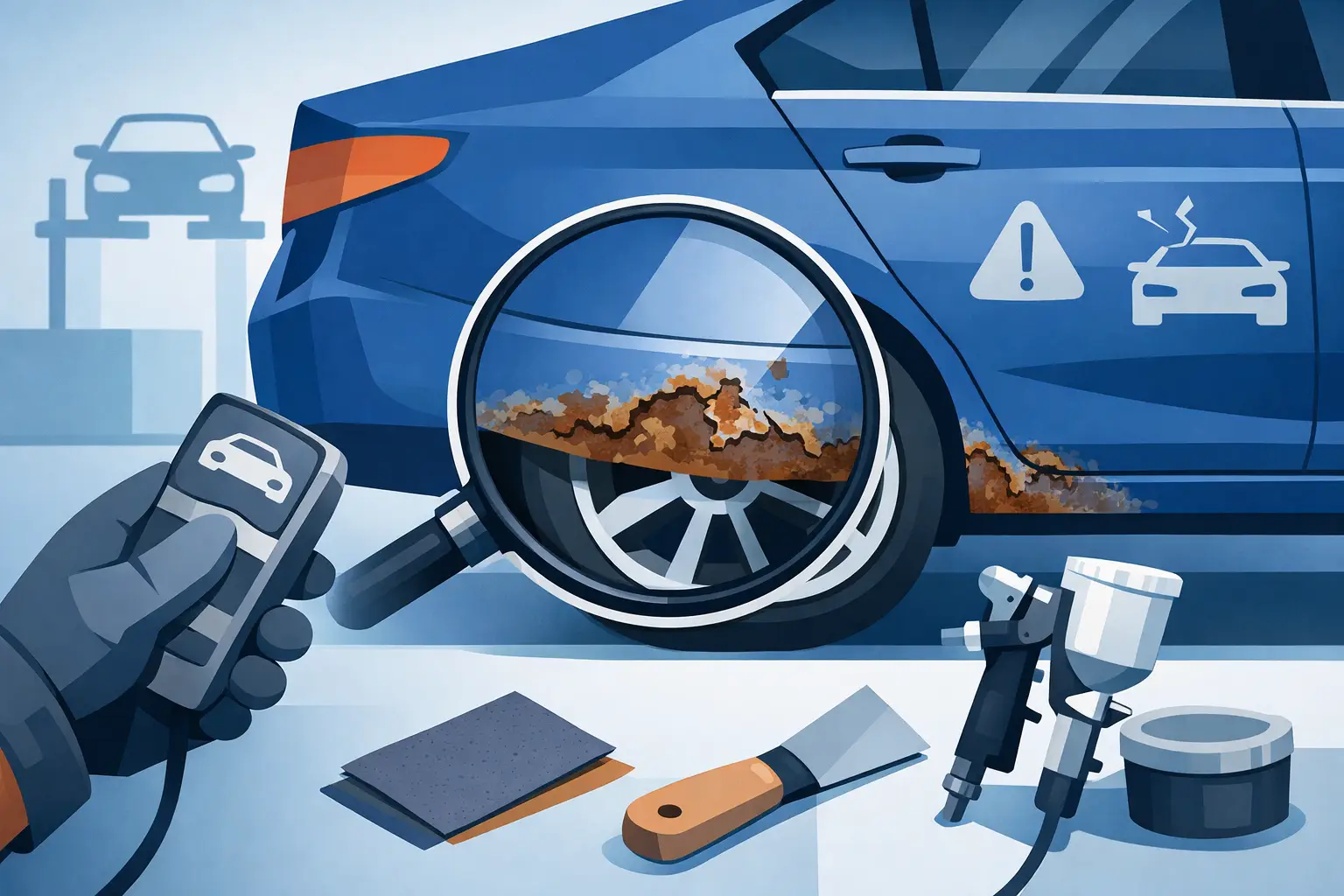
A small stone chip behind a wheel arch can look harmless after a wash. Give it a few wet weeks, road grime and a bit of salt air, though, and it can become the start of an expensive repair. Rust prevention for daily drivers is less about chasing a showroom-perfect car and more about stopping minor damage before moisture gets behind the paint.
For commuters, family cars, utes and work vehicles, the goal is practical: protect the body, preserve the vehicle’s value and avoid having a small paint issue turn into a WOF problem or a larger panel repair. The best approach combines regular cleaning, quick attention to paint damage and professional protection where it counts.
Why Daily Drivers Rust Faster Than You Expect
A daily driver faces the conditions that create corrosion over and over again. Rain sits in door shuts and window channels. Road grit sandblasts the lower panels. Mud gathers behind plastic liners, while water and dirt can settle in the seams around the boot, bonnet and guards.
Rust starts when bare or compromised metal is exposed to oxygen and moisture. The paint may still look mostly intact from the outside, but a deep chip, a cracked seam sealer or a dent that has split the coating can give water a path underneath. Once corrosion starts spreading beneath paint, the repair becomes more involved because the affected material needs to be removed, treated and refinished properly.
Cars near the coast need extra attention due to salt in the air. The same applies to vehicles that regularly travel on wet roads, park under trees, use gravel driveways or spend time near construction sites. You do not need to live beside the beach for corrosion to be a concern – everyday moisture and trapped debris are enough.
Rust Prevention for Daily Drivers Starts With Washing
Regular washing is one of the simplest forms of protection, provided it reaches more than the visible paintwork. A quick rinse of the bonnet and doors is better than nothing, but the lower body, wheel arches and underbody are where grime does the most damage.
Wash your car every couple of weeks as a sensible baseline, and more often after beach trips, muddy roads or long periods of rain. Pay attention to the inner wheel arches, behind mudflaps, around the sills and beneath the front and rear bumpers. These areas collect wet dirt that holds moisture against the body.
You do not need to attack every panel with a high-pressure washer at close range. Used carelessly, strong pressure can force water into worn seals or damage loose trim. A thorough rinse from a sensible distance, followed by normal washing, is usually the better move. If you notice packed mud behind a guard liner or under a sill, get it removed rather than leaving it there until the next service.
Drying matters too. Water left in door jambs, around number plates and beneath rubber trims does not always evaporate quickly. Open the doors and boot after washing, wipe the shuts, and check that drain holes are clear. Those little channels are designed to let water out. When they block, moisture stays where it should not.
Deal With Chips, Scratches and Dents Early
Not every scratch needs a full repaint, but every break in the paint should be assessed. The key question is whether the damage has reached metal, exposed an edge or allowed water behind the coating.
A light scuff that has only marked the clear coat may polish out. A stone chip on a bonnet, roof edge or front guard can often be carefully touched up before corrosion takes hold. A deeper scratch, crease or impact near a panel seam needs more attention, especially if you can see bare metal, bubbling paint or an orange-brown stain.
Touch-up paint is useful for tiny, clean chips, but it is not a cure for rust already underneath the paint. Applying colour over active corrosion may hide it temporarily while the damage continues to spread. Proper rust repairs involve removing the affected corrosion, preparing sound metal, applying the right treatment and primers, then refinishing the panel so it is sealed against moisture again.
This is where a professional inspection can save money. A repairer can tell the difference between a superficial mark and a panel that needs rust removed before it compromises the finish or structure. Fast Panel & Paint sees plenty of jobs that would have stayed small if the original chip or dent had been sorted sooner.
Protect the Areas You Cannot Easily See
Visible paintwork gets attention because it is easy to inspect. Hidden sections often need more care. Wheel arches, sills, floor pans, chassis sections, door bottoms and the back of bumper edges are exposed to water and road debris without being checked very often.
Undercoating can provide valuable protection for suitable vehicles, particularly those used on wet roads, gravel or near coastal areas. It creates a barrier against moisture and stone impact, but it must be applied to a clean, dry surface. Spraying product over dirt, loose rust or existing damage can trap moisture rather than solve the problem.
Cavity protection may also be worthwhile for older vehicles or cars with known rust-prone sections. This treatment is designed for enclosed spaces such as doors, pillars and internal seams where water can enter but cannot easily dry. It is not a one-size-fits-all job. The condition of the vehicle, its age and how it is used all affect what protection makes sense.
Be cautious with DIY underbody products. Some are fine for minor maintenance, but a thick coating can conceal deterioration if it is applied over a problem area. If you are unsure whether you are looking at surface corrosion, old underseal or something more serious, get clear advice before covering it up.
Check the Traps: Drains, Seals and Panel Edges
A five-minute check every month can catch issues well before they become major. Look around the bottom edges of doors, the boot opening, windscreen surrounds, wheel arches and the lower corners of the guards. Feel for bubbling beneath the paint and look for staining that returns soon after washing.
Also inspect rubber seals. A torn door seal, loose windscreen moulding or damaged weather strip can direct water into places it was not meant to go. Leaves and debris around the windscreen cowl are another common culprit, as they can block drainage and keep the area damp.
If the cabin smells musty, windows fog up more than usual, or you find damp carpet, do not ignore it. Water leaks can lead to corrosion beneath the carpet and around floor seams, where the damage may stay hidden for a long time. Fixing the source of the leak is just as important as treating any rust it has caused.
Parking and Driving Habits Make a Difference
A garage is helpful, but it is not a magic shield. Parking a wet, dirty vehicle in an unventilated garage can leave moisture sitting on the car for days. A covered, airy space is better than a damp enclosure.
Where possible, avoid leaving your vehicle parked on long wet grass, deep leaf litter or muddy ground. Moisture rises around the lower body and debris can block drainage. After a trip to the beach or a drive through flooded areas, rinse the underbody and wheel arches as soon as practical.
There is also a trade-off with car covers. A good, breathable cover can protect a clean, dry vehicle from sun and debris. A cheap cover over a dirty or damp car can rub the paint and hold moisture against it. For a vehicle driven every day, regular washing and sensible parking are usually more useful than constantly covering and uncovering it.
When Rust Needs Professional Repair
Surface rust on an exposed edge can sometimes be contained early. Bubbling paint, perforated metal, corrosion around structural areas or rust near seatbelt mounts and suspension points needs proper attention. These are not places for a quick cosmetic patch.
A quality repair is about more than making the panel look good on collection day. The affected section should be stripped back to sound material, repaired as needed, sealed with suitable products and painted to match. Done properly, the repair restores both appearance and protection. Done cheaply, rust can return through the new paint surprisingly quickly.
If you are preparing for a WOF, buying a used car or deciding whether to keep an older vehicle, ask for an honest assessment of the corrosion. Sometimes a targeted repair is the smart financial choice. Other times, extensive rust in multiple structural areas changes the equation. Clear advice helps you spend money where it delivers a lasting result.
Your daily driver does not need perfection to stay protected. It needs clean drains, clean wheel arches, intact paint and quick action when damage appears. Give small problems attention while they are still small, and your car will keep doing its job while looking after its value.