A small rust bubble on the guard can look harmless right up until the paint flakes off and you realise the metal underneath is already thinning out. That is where the real question starts – rust repair vs panel replacement. For most car owners, the right answer comes down to how far the rust has spread, where it sits on the vehicle, and whether a proper repair will last.
At our end of the trade, this is not a guess-and-patch job. A good result means finding the full extent of the corrosion, cutting out what cannot be trusted, and making sure the finish looks right once the paint goes on. Sometimes that means repairing the original panel. Sometimes the smarter move is replacing it altogether.
Rust repair vs panel replacement – what is the difference?
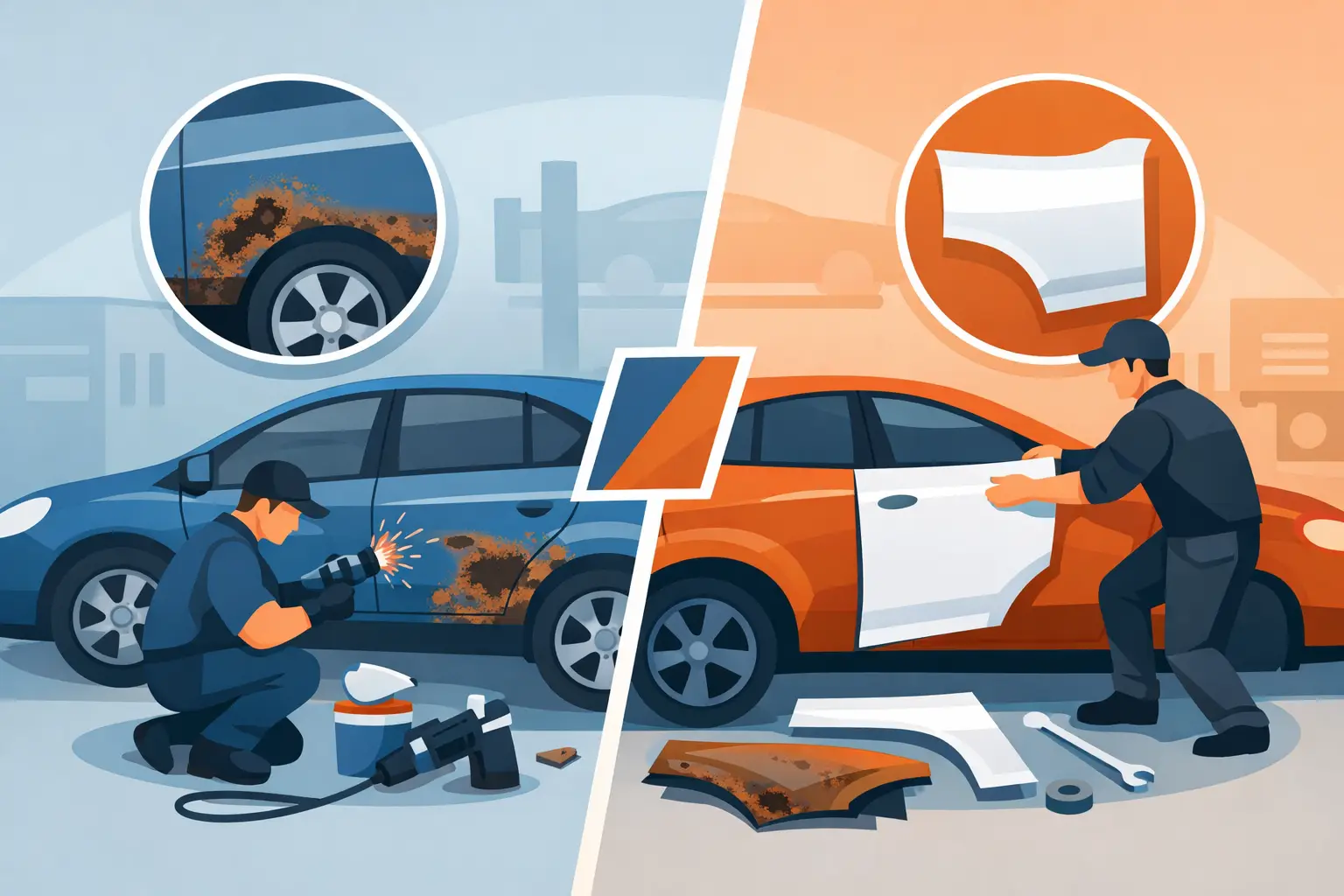
Rust repair means removing the corrosion from the affected section and restoring the damaged area so the panel is solid again. That can involve grinding back surface rust, cutting out small rusted sections, welding in fresh metal, treating the area properly, then refinishing it to match the rest of the car. When done well, it saves the original panel and keeps the repair localised.
Panel replacement means removing the rusted panel, or a major section of it, and fitting another one in its place. Depending on the vehicle, that might be a bolt-on panel like a guard, or a welded section such as a sill or quarter panel. Replacement is usually chosen when the damage is too widespread, the metal has lost strength, or repairing it would take more time and money than it is worth.
Neither option is automatically better. The best choice depends on condition, safety, cost, finish and long-term value.
When rust repair makes sense
If the rust is caught early, repair is often the better option. Surface rust or small localised corrosion can usually be dealt with before it spreads deeper into the panel. This is common around wheel arches, lower doors, bonnet edges and small paint chips that have been left exposed.
A repair also makes sense when the affected panel is hard to source, expensive to replace, or part of the car where keeping the original metal gives a cleaner result. On some vehicles, especially older models or uncommon trims, replacement panels are not always easy to find. In those cases, a skilled repair can be the most practical path.
The key point is that the metal around the rust still needs to be sound. If the corrosion has only affected a small area and the rest of the panel is strong, cutting out the damage and rebuilding that section can give a solid, lasting finish. It is not about covering the problem. It is about removing it properly.
The upside of repairing a panel
Panel repair can be more cost-effective when the damage is small. It also avoids replacing a larger section than necessary, which can help keep the job efficient. For customers who care about preserving the original body lines and factory fit, a good repair can be a very smart option.
But it only works when the rust is genuinely limited. If corrosion has spread inside the panel or into seams and joins, a small outside repair may only deal with part of the issue.
When panel replacement is the better call
There is a point where rust repair stops being good value. If the panel is badly weakened, full of pinholes, rusting through along edges, or corroded across a wide area, replacement is usually the more reliable option.
This matters even more when the affected area contributes to strength or safety. Sills, pillars, floor sections and structural body areas need to be solid. If rust has compromised the integrity of that part of the vehicle, the repair approach has to prioritise safety first, not just appearance.
Replacement can also make more sense when a bolt-on panel is readily available. If a guard, door or bonnet is heavily rusted and a quality replacement panel can be fitted and refinished efficiently, it may give a cleaner and more durable result than spending hours chasing corrosion through old metal.
Signs a panel may need replacing
You do not need to be a panel beater to spot a few warning signs. If the paint is bubbling in several places, the metal feels soft, the rust is coming through seams, or there are visible holes, the corrosion is likely beyond a simple tidy-up. Rust around windscreens, under door seals, inside wheel arches and underneath the vehicle can also be more serious than it first appears because moisture tends to sit there.
What looks like a coin-sized patch on the surface can turn into a much bigger job once the paint and filler are removed. That is why proper inspection matters.
Cost matters, but so does durability
A lot of customers start with the same question – which one is cheaper? Fair question. But the better question is which option gives you value for money and lasts.
A smaller repair can cost less upfront, especially if the rust is localised and the panel is still in good shape overall. On the other hand, if a panel is heavily affected, repeated repair work can end up costing more than replacement while still delivering a weaker result.
Replacement is sometimes more expensive at the start because of parts, fitting and paintwork. Still, it can be the better investment if it removes widespread corrosion and reduces the chance of the issue returning. Paying less for a patch job that fails in twelve months is not really saving money.
This is where honest quoting matters. A proper assessment should explain not just the repair price, but why one method is better for your vehicle than the other.
The finish you see is only as good as the metal underneath
A tidy paint finish can hide a lot for a little while. It cannot stop rust that has been left in place. If the preparation is poor, the corrosion will come back through the paint, often faster than people expect.
That is why quality rust work is never just cosmetic. The damaged metal has to be removed or properly treated, the area needs to be rebuilt correctly, and the refinishing has to seal and protect the repair. Done right, the finished job should not only look good on the day you pick up the car, it should stay looking good.
For everyday drivers, that matters because your car still has to handle weather, road grime, moisture and daily wear. For anyone thinking about resale, it matters even more. Buyers can spot poor rust work quickly, and so can mechanics during inspections.
Why location changes the answer
Not all rust is equal. Rust on a bolt-on front guard is a different conversation from rust in a sill, roof seam or rear quarter. The panel location affects labour, safety, access and the quality of the final outcome.
For example, a badly rusted bonnet or guard may be a straightforward replacement if parts are available. A rusted sill or lower quarter panel usually needs a more careful structural approach. In some cases, partial section replacement is the best middle ground – not just patching, but not changing the whole panel either.
This is why there is no one-size-fits-all answer to rust repair vs panel replacement. The same amount of visible rust can lead to two very different repair plans depending on where it is and what sits behind it.
What a good workshop will tell you
A decent repairer will not promise a miracle before inspecting the car properly. They will look beyond the visible damage, explain whether the rust is surface-level or deep, and talk you through the trade-offs. If a repair is worthwhile, they should be able to tell you why. If replacement is the safer and more cost-effective path, they should be upfront about that too.
That straight-up approach is what saves people money and disappointment later. At Fast Panel & Paint, that means treating rust as a real body issue, not just a paint problem, and giving customers clear advice based on what will hold up on the road.
If you have spotted bubbling paint, flaking edges or corrosion around a panel, the best move is to get it checked before it spreads. Catch it early and repair may be enough. Leave it too long and replacement becomes much more likely. Either way, the right fix is the one that restores the vehicle properly and gives you confidence every time you walk back to it in the car park.