That shopping trolley crease in the door, the cracked bumper from a low-speed bump, the rust starting to bubble near the wheel arch – they might look like separate problems, but they often fall under the same trade. If you’ve ever asked what does panel beating include, the short answer is this: it covers the repair, reshaping and restoration of your vehicle’s body so it looks right, fits right and protects you properly again.
For most drivers, panel beating is not just about knocking out a dent. It’s the work that brings damaged body panels, bumpers and paint back to standard after an accident, a scrape, weather damage or plain old wear and tear. Depending on the job, that can mean anything from a small cosmetic tidy-up to more involved structural repairs.
What does panel beating include in real terms?
In a proper repair shop, panel beating usually starts with an assessment of the damage. Some issues are obvious, like a bent guard or a dented tailgate. Others sit underneath the surface, such as shifted alignment, hidden cracks in plastic parts, or impact damage behind the bumper.
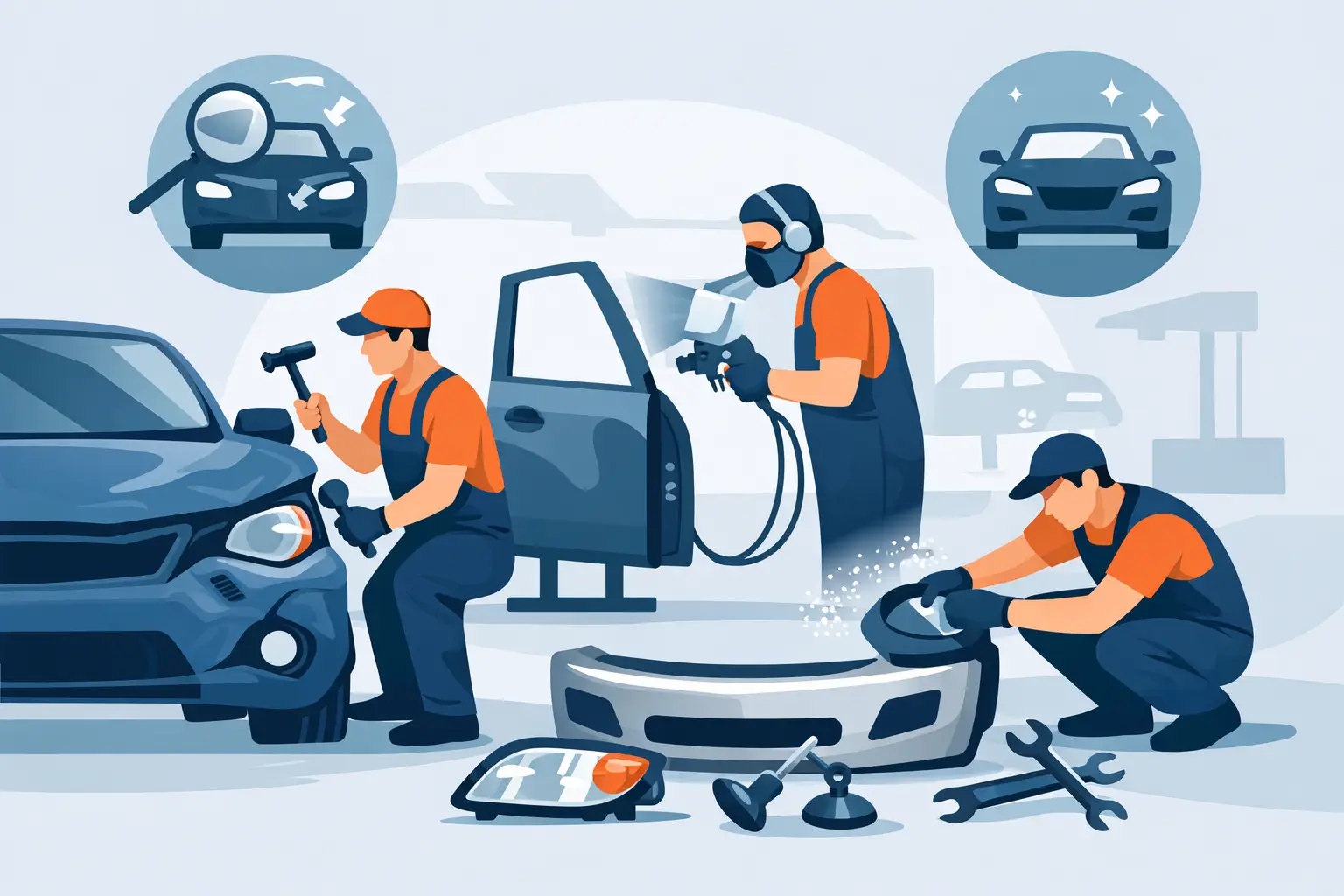
Once the damage is mapped out, the repair process can include straightening metal panels, removing dents, repairing or replacing damaged sections, preparing surfaces, and refinishing the area so the repair blends with the rest of the vehicle. If the impact has affected how panels line up, the job also includes correcting gaps and fitment so doors, bonnets and boots open and close as they should.
That matters more than many people realise. A car can look acceptable from a few metres away and still have poor alignment, weak filler work or paint that will fail early. Good panel beating is about appearance, but it’s also about safety, durability and keeping the value of the vehicle intact.
Cosmetic repairs and dent removal
A large part of panel beating work is cosmetic. That includes dents, creases, minor collision marks and damaged body lines on doors, guards, quarter panels and bonnets. In some cases, the panel can be reshaped and finished without needing replacement. In others, the metal has stretched too far or cracked, which means a more involved repair is needed.
Paintless dent removal can sometimes be an option for smaller dents where the paint surface is still intact. It’s a smart solution when the damage is shallow and easy to access from behind the panel. But it is not right for every job. If the paint is chipped, the dent sits on a sharp body line, or the metal has been badly distorted, standard panel repair and refinishing usually gives the better result.
This is one of those areas where cheap work can stand out for all the wrong reasons. A dent may be filled quickly and painted over, but if the shape is not restored properly first, you’ll still catch the ripple in the light.
Bumper repairs, plastic welding and body part restoration
Modern vehicles use plenty of plastic in bumpers, trims and exterior components. So when people ask what does panel beating include, bumper repairs are firmly on the list. Scrapes, splits, dents and mounting damage can often be repaired rather than replaced, depending on how severe the damage is.
Plastic welding is commonly used to restore cracked bumper bars and other plastic parts. This can save money and reduce waste, especially when the damage is localised. The key is whether the repaired part will still hold its shape, mount securely and finish cleanly after painting.
If a bumper has torn badly, lost pieces, or suffered heavy impact damage, replacement may be the better option. A decent repairer will tell you straight whether it’s worth repairing or whether you’re better off fitting a new or replacement part.
Structural and collision-related repairs
Not all panel beating is cosmetic. After a bigger hit, body repairs can involve structural work to restore the strength and alignment of the vehicle. This may include pulling damaged sections back into specification, repairing impact areas and checking that adjoining panels and mounting points are sitting where they should.
This type of work is especially important after front-end or rear-end collisions. What looks like a damaged bumper and grille on the outside can hide crushed supports, bent brackets or shifted panels underneath. If those issues are ignored, the car may never fit together properly again.
Quality structural repair work relies on proper measuring, the right equipment and a repair plan that follows safe methods. It is not a guess-and-go job. If you’re dealing with insurance repairs, this is also where clear documentation and communication make a big difference.
Surface preparation and paintwork
Panel beating and paintwork usually go hand in hand. Once a panel is repaired, it needs to be prepared properly before colour goes on. That means sanding, smoothing, priming and making sure the surface is clean and stable. Skip these steps or rush them, and even a good paint match can fail.
Refinishing may involve spot repairs, paint touch-ups or painting an entire panel to get the blend right. On larger jobs, surrounding panels may also need blending so the repaired area does not stand out against older paint.
A strong finish is not just about gloss. It should match the vehicle’s colour and texture, hold up in the weather, and look consistent in daylight rather than only under workshop lights. That’s why material quality matters. OEM-approved products and proper spray processes tend to give a more durable result than bargain shortcuts.
Rust repairs are often part of the job
Rust is one of those problems that starts small and gets expensive when left alone. If bubbling paint, flaky edges or corrosion around wheel arches, sills or door bottoms has appeared, panel beating may include cutting out rusted material, treating the affected area, repairing the panel and repainting it.
The approach depends on how far the rust has spread. Surface rust can sometimes be treated early. Deeper rust that has eaten through the metal usually needs more than a quick sand and respray. If it’s not removed properly, it nearly always comes back.
For many vehicle owners, especially those keeping an older car on the road, honest advice matters here. Sometimes a rust repair is worthwhile and cost-effective. Sometimes the corrosion is extensive enough that the owner needs a realistic picture before spending money.
Panel alignment, finishing and the details people notice
A proper panel beating job does not end when the dent is gone and the paint dries. Final fit and finish are part of the work. That includes checking panel gaps, making sure lights, trims and mouldings sit correctly, and confirming moving parts work as they should.
This is often where the difference between average and high-quality repairs becomes obvious. Uneven gaps around a bonnet, a bumper corner that sits proud, or overspray on trims can make a car feel poorly repaired even if the damage was technically fixed.
Finishing work may also include buff and polish services to refine the painted area and improve the overall appearance. On some jobs, undercoating or protective treatments may be recommended as part of restoring the vehicle properly, especially where repairs affect vulnerable lower sections.
What panel beating may not include
Panel beating covers a lot, but not every vehicle problem falls under it. Mechanical repairs, tyre issues, engine faults and transmission work are separate trades. That said, accident damage can cross into multiple areas. A collision repair may involve panel work, paint, auto electrical repairs and replacement of damaged exterior components all in the same job.
The best workshops make that process easier by coordinating the work and explaining what is body repair and what sits outside it. For the customer, that means fewer surprises and a clearer quote.
How to tell if you’re getting a proper repair
If you’re booking in body repairs, ask how the damage will be repaired, not just how much it costs. A solid repairer should be able to explain whether the panel will be repaired or replaced, whether paint blending is needed, and what the turnaround looks like.
Good signs include a detailed quote, realistic timing, insurer-friendly communication if relevant, and a willingness to talk through options. For local drivers, that’s often the difference between a repair that simply looks acceptable on collection day and one that still looks right months later. At Fast Panel & Paint, that’s the standard the work should meet.
When people ask what does panel beating include, the real answer is peace of mind as much as metal and paint. You’re not just fixing a dent – you’re restoring the way your car looks, feels and holds up on the road, and that job is worth doing properly.