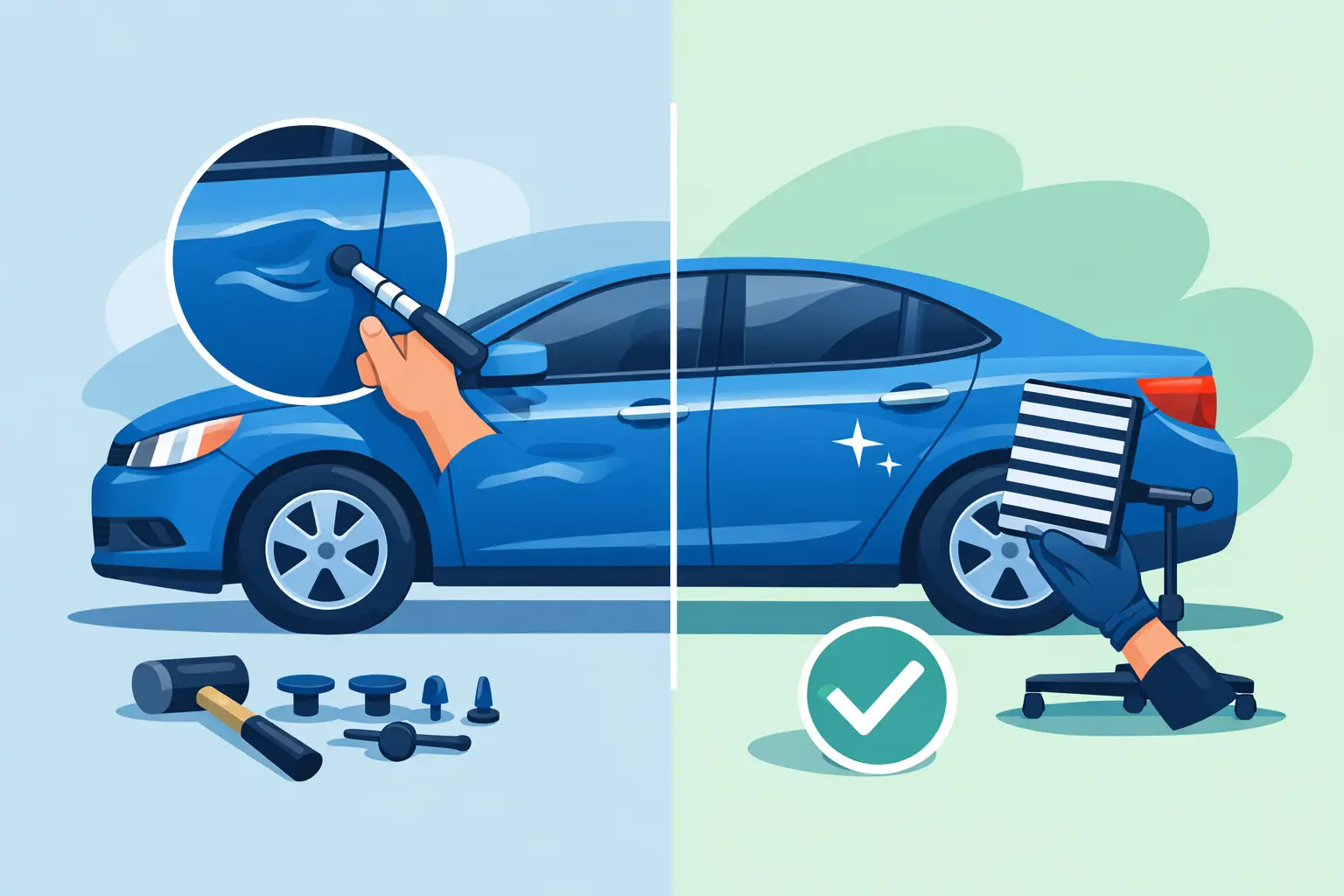
A scratch can look like it has ruined an otherwise tidy car, especially when it catches the light across a door, bumper or bonnet. So, does buffing remove deep scratches? Usually, no. Buffing can dramatically improve light surface marks, but a genuinely deep scratch needs more than polish to disappear properly.
The good news is that deep damage does not always mean a full respray. The right repair depends on how far the scratch has travelled through the paint, where it sits on the vehicle, and the finish you expect once the job is done. A proper assessment saves money, avoids false promises and protects the paint that is still in good condition.
What buffing actually does to car paint
Buffing is a controlled polishing process. A technician uses an appropriate compound, pad and machine speed to level out very fine imperfections in the uppermost clear coat. Modern vehicle paint usually has several layers: primer, colour coat and clear coat. The clear coat provides gloss and protection, and it is the layer buffing works on.
Fine swirl marks from washing, light scuffs, haze, oxidation and shallow scratches can often be reduced or removed because their edges sit within that clear coat. By carefully removing a tiny amount of surrounding clear coat, polishing levels the surface so light no longer catches in the mark. The result can look remarkably clean and glossy.
That process has limits. Buffing does not add paint back. Every time paint is polished, a small amount of clear coat is removed. If a scratch has cut through the clear coat and into the colour, primer or bare metal, aggressive buffing will not make it vanish. It can actually thin the surrounding clear coat without fixing the real problem.
Does buffing remove deep scratches, or just hide them?
A deep scratch is not something a good buff should simply be expected to erase. At best, polishing may soften the sharp edges, improve the gloss around it and make it less noticeable from a few steps back. But the groove remains if material has been removed from the paint surface.
Some products marketed as scratch removers contain fillers or oils that temporarily mask marks. Straight after application, the panel may look better. After rain, washing or a few weeks of driving, the scratch can reappear because it was concealed rather than repaired. There is nothing wrong with improving a minor blemish, but it is worth knowing whether you are paying for a temporary cover-up or a durable repair.
A professional buff and polish is different from a quick hand application. It uses measured correction, suitable compounds and a proper finishing polish to restore clarity. Even so, professional work cannot safely polish through a deep scratch and somehow recreate the missing paint.
The fingernail test is a useful starting point
Run a clean fingernail gently across the scratch, not along it. If your nail does not catch, there is a fair chance it is a clear-coat mark that may respond well to machine polishing. If it catches distinctly, the scratch is more likely to be too deep for buffing alone.
This is only a guide. Dark-coloured cars can make a shallow mark look deeper than it is, while light-coloured vehicles can hide damage that has reached primer. Plastic bumpers also behave differently from metal panels. An experienced repairer will inspect the panel under proper lighting before recommending a fix.
Signs the scratch needs paint repair
If you can see a white, grey or black line beneath the body colour, the scratch has probably broken through the colour coat. A silver or rusty mark on a steel panel means bare metal may be exposed. These are clear signs that polishing alone is not enough.
Rust deserves prompt attention. Once moisture reaches exposed steel, corrosion can creep under surrounding paint. What started as a small scratch on a guard or door edge can become bubbling paint and a larger repair later. Touch-up may be suitable for a very small chip, but it needs to be cleaned, treated and sealed correctly first.
The right repair for a deep scratch
There is no one-size-fits-all answer. A quality repair should be matched to the damage rather than selling you more work than the car needs.
For a small, narrow scratch that has reached the colour coat, colour-matched touch-up and careful refining can be a practical option. It will protect the panel and reduce how obvious the mark is, although it may still be visible up close. This is often a sensible solution for an older daily driver where durability matters more than a perfect show finish.
When a scratch is wider, has sharp torn edges or sits prominently on a door, quarter panel or bonnet, a more involved repair may deliver a much better result. The damaged area can be prepared, primed where needed, colour matched and blended into the surrounding panel before clear coat is applied. Once cured, the finish is refined to restore an even gloss.
For damage across a bumper corner, creased panel or multiple sections of paint, the repair may include minor panel work before painting. Bumpers are plastic, so they cannot rust, but scratches can still expose material, tear the surface or leave a patchy finish. Correct preparation and flexible repair materials matter if you want the paint to last rather than crack or peel.
The aim is not just to make the scratch less visible on collection day. It is to create a stable repair with proper adhesion, colour consistency and a finish that holds up to sun, road grime and regular washing.
Why DIY buffing can make deep scratches worse
DIY polishing can work well for light wash marks when the right products are used carefully. The risk rises when someone keeps working a deep scratch, hoping it will eventually disappear. Heat, poor pad control and overly aggressive compound can burn through edges, leave holograms or create dull patches in the clear coat.
Factory paint is not endlessly thick. Previous polishing, ageing, sun exposure and past repairs all affect how much correction a panel can safely handle. This is why the same scratch might be buffable on one car but unsuitable for heavy correction on another.
Touch-up pens have their place, but they are easy to overapply. A blob of mismatched paint may protect the panel while looking worse than the original thin mark. Colour codes can also vary between batches, paint fades over time, and metallic colours need correct application to blend naturally. If the scratch is in a highly visible area, a professional colour match is usually the better value option.
What to do before booking a repair
Wash the affected area gently so dirt is not hiding the true damage. Avoid scrubbing it hard or applying harsh compound before it is assessed. Take a few clear photos in daylight, including one from further back to show the panel and one close-up to show the scratch.
If bare metal is visible and you cannot arrange repairs immediately, keep the area clean and dry. A temporary protective touch-up can reduce the risk of corrosion, but it should not replace a proper repair where rust has already started. Avoid pressure washing directly over lifting paint or damaged bumper coatings.
When requesting a quote, mention whether the scratch followed a car park scrape, a branch, a low-speed impact or an accident. The cause can reveal hidden issues such as a dent, cracked bumper tabs or damage behind the paint. Clear information helps a repairer give you an honest recommendation from the start.
Choosing between improvement and perfection
The best solution comes down to your expectations and the car’s role in your life. A quick polish and touch-up may be ideal for a work ute, family runabout or vehicle you are preparing to sell. A blended paint repair may be the right choice for a newer vehicle, a prestige finish or a panel that is impossible to ignore every time you walk up to it.
At Fast Panel & Paint, the focus is on explaining that difference clearly: what buffing can improve, what requires paintwork, and what result you can realistically expect before work begins. Good body repair should never rely on vague promises or surprise costs.
A scratch does not have to become a bigger problem. Get it looked at while the damage is contained, choose the repair that suits the vehicle and your budget, and let the finish do what it should – make you glad to see your car in the driveway again.