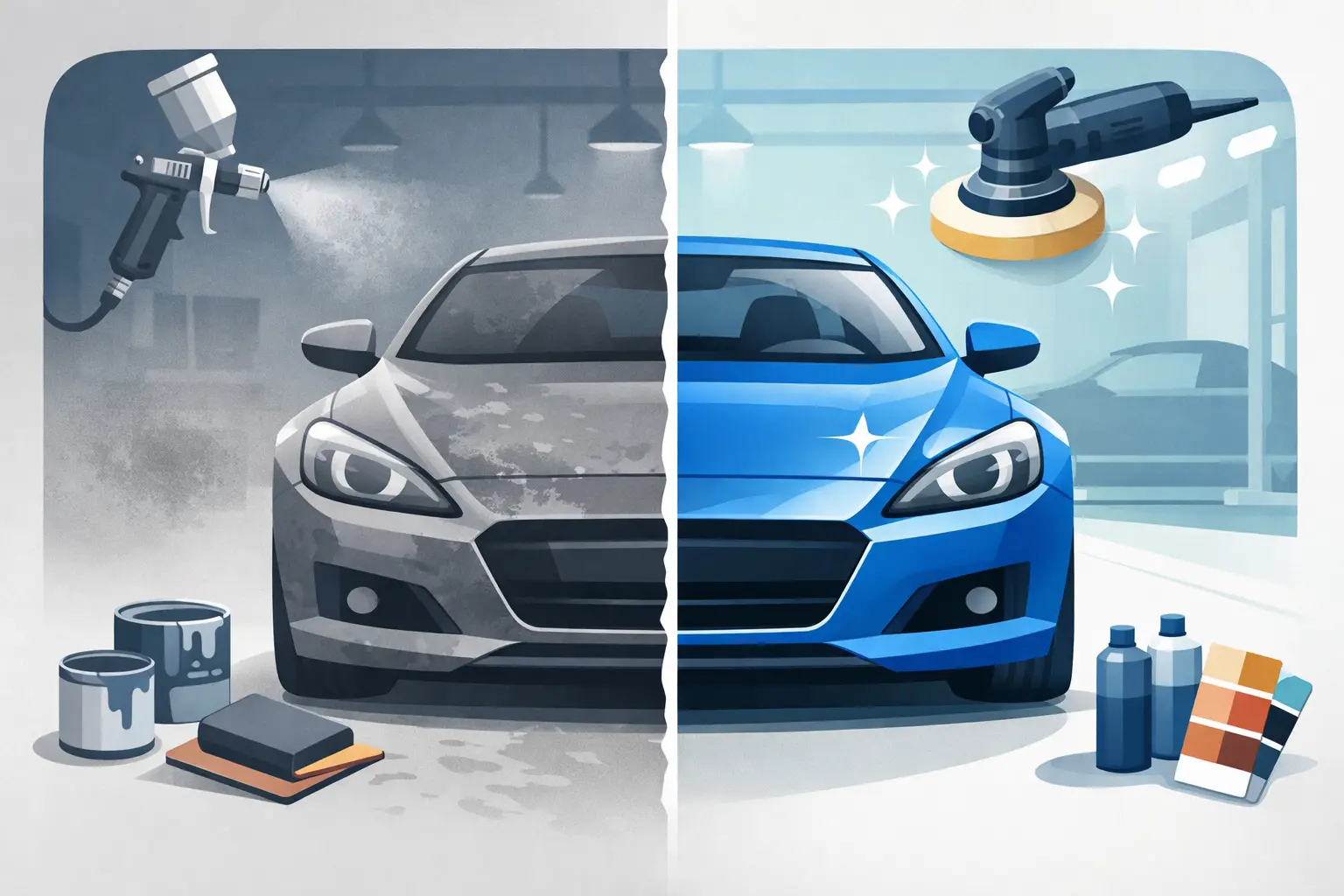
A bumper scrape can look minor on Monday and become the first thing you notice every time you walk back to the car. This guide to bumper plastic repairs explains what can be restored, what needs more than filler and paint, and why the right repair matters to both the finish and the protection underneath.
Modern bumpers are designed to absorb low-speed impacts without passing all that force into more expensive panels. That is good news after a car park knock, a brush with a bollard, or a tight driveway mishap. But because the outer bumper cover is plastic, it needs a different repair approach from a steel guard or door.
What Bumper Plastic Repairs Can Fix
A professional plastic bumper repair can deal with a wide range of everyday damage: scuffs, paint transfer, gouges, dents, small splits, mounting-tab damage and cracks around corners. The best option depends on the type of plastic, where the damage sits, and whether the bumper has been distorted or weakened.
Surface scuffs are usually the straightforward jobs. If the scratch has only marked the clear coat or colour layer, the area may need sanding, preparation, colour application and refinishing. Paint transfer from another vehicle or object can sometimes be removed or reduced with careful polishing, although deeper marks still need paintwork to achieve a clean result.
Gouges and deeper scratches require more preparation. A repairer removes damaged material, shapes the area correctly, applies flexible repair products where suitable, and primes it before paint. The aim is not simply to make the mark less obvious. It is to restore a smooth, even surface that will hold up to heat, rain, road grime and regular washing.
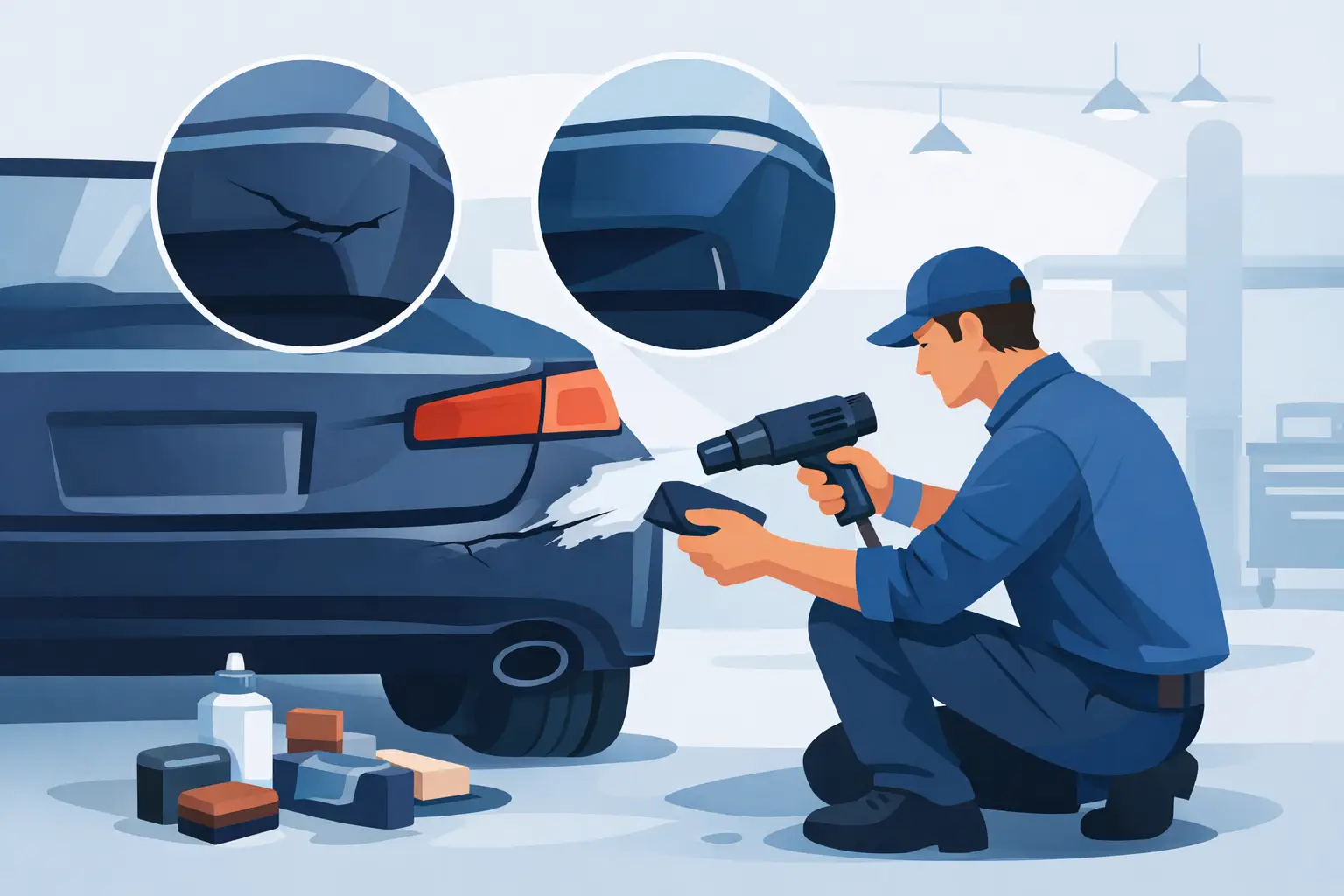
Cracks and splits need closer attention. Painting over a crack may hide it briefly, but movement in the plastic can bring the damage straight back through the finish. Proper repair often involves plastic welding or reinforcement from behind, followed by reshaping and refinishing the front surface.
Why Plastic Welding Makes a Difference
Plastic welding is one of the most effective methods for repairing cracked bumper covers when the damage is suitable. Rather than relying only on adhesive or filler, the repair process fuses compatible plastic material into the crack. This helps rebuild strength while keeping the bumper flexible enough to do its job.
Not every crack can be welded, and not every plastic responds the same way. Bumpers can be made from different materials, including polypropylene blends that require specific preparation and repair products. An experienced repairer identifies the material and chooses a method that will bond properly. Using the wrong product can lead to peeling paint, a visible repair line or another split after the first hot day or speed bump.
Plastic welding is especially valuable around bumper corners, lower edges and mounting points. These areas flex often, so they need more than a cosmetic cover-up. When tabs are broken, the repair may also involve rebuilding or reinforcing the mounting area so the bumper sits securely and aligns properly with the guards, headlights and grille.
When a Bumper Should Be Repaired Instead of Replaced
Replacement is not automatically the better answer. If the bumper cover is mostly intact and the damage is localised, repairing it can be more cost-effective and avoids replacing a large part for a small issue. It can also be quicker when a new bumper is difficult to source or needs painting and fitting anyway.
Repair is often a sensible choice when there are light scuffs, isolated dents, small cracks, minor tears or damaged tabs. A quality repair should leave the bumper sitting correctly, with a finish that matches the surrounding panels as closely as possible.
There are times when replacement makes more sense. A bumper that is severely torn, heavily distorted, missing large sections or damaged across multiple mounting points may not offer a reliable long-term repair. The same applies when impact damage has affected the reinforcement bar, absorber, brackets, guards, lights or sensors behind the cover.
The honest answer is that it depends on the damage. A good repairer should explain whether a repair will be durable, what it will involve, and when replacement is the safer value-for-money option. The cheapest quote is not always the lowest-cost outcome if the bumper needs to be redone a few months later.
The Repair Process Behind a Flawless Finish
A proper bumper repair is a process, not a quick coat of paint. It starts with inspection. The bumper is checked for cracks, distortion, loose sections, damaged clips and hidden impact damage. If the bumper needs to come off to access the repair properly, it should be removed rather than worked around poorly.
The damaged area is then cleaned and prepared. This matters more than many drivers realise. Bumper plastics can hold road film, tyre dressing, wax and contaminants that interfere with adhesion. Thorough cleaning, sanding and the correct adhesion promoter help the new finish bond to the plastic.
Where the bumper is cracked or torn, the structure is repaired first. The surface is then shaped and smoothed, using flexible materials designed for bumper movement. After priming, the repairer blocks and sands the area to remove imperfections before colour is applied.
Paint matching is where skilled refinishing shows. Vehicle paint can fade over time, and factory colour codes are a starting point rather than a guarantee of a perfect match. The paint may need tinting, and in some cases the colour is blended into an adjacent panel for the most natural result. Clear coat is then applied, cured and polished where required.
Finally, the bumper is refitted and checked for alignment. Panel gaps, clips, trims, fog lights, grilles and sensor openings all need to sit as they should. A freshly painted bumper that does not line up cleanly is not a finished repair.
Sensors, Cameras and Safety Systems Need Care
Many late-model vehicles have parking sensors, reversing cameras, radar units, blind-spot monitoring or other driver-assistance technology mounted in or behind the bumper. That changes the repair conversation.
A deep impact can damage more than the visible plastic. It may affect sensor brackets, wiring, radar mounts or the bumper reinforcement behind the cover. Paint thickness and the products used around some sensor areas can also matter. These components should be inspected during the repair, and calibration may be required after removal or replacement depending on the vehicle.
If a warning light appears after a bumper impact, or your parking sensors start behaving strangely, do not treat it as a purely cosmetic issue. Let the workshop know before the work begins so the repair can be planned properly.
Can You Repair a Plastic Bumper Yourself?
For a very light scuff on an older vehicle, a DIY touch-up may be enough if you are comfortable with the finish being less than perfect. It can reduce the appearance of a mark and protect exposed areas in the short term.
The trade-off is usually visible. Aerosol colour can be difficult to match, especially on metallic, pearl and tri-coat finishes. Poor preparation can cause paint to lift, and heavy filler on a flexible bumper can crack. DIY repairs also tend to struggle with dents, tears, broken tabs and damage near sensors.
If the car is newer, leased, insured, being prepared for sale, or simply worth keeping sharp, professional repair usually delivers better value. The result should look right in sunlight, not just from two metres away in a dim garage.
How to Look After a Repaired Bumper
Once repaired, treat the bumper as you would any newly painted panel. Avoid harsh washing and abrasive products during the initial curing period advised by the repairer. Keep solvents, petrol spills and strong tyre chemicals away from the fresh finish where possible.
More importantly, deal with new scrapes early. A small gouge can collect moisture and grime, while a crack can grow with vibration and bumper movement. Early attention is normally simpler, faster and less expensive than waiting for a minor issue to become a split or loose bumper corner.
Your bumper takes the knocks so the rest of the vehicle does not have to. When it is repaired properly, it should protect well, fit cleanly and look like the damage never happened. For Manukau drivers, Fast Panel & Paint can assess the damage clearly and recommend the repair that gives your vehicle the right result, without the run-around.