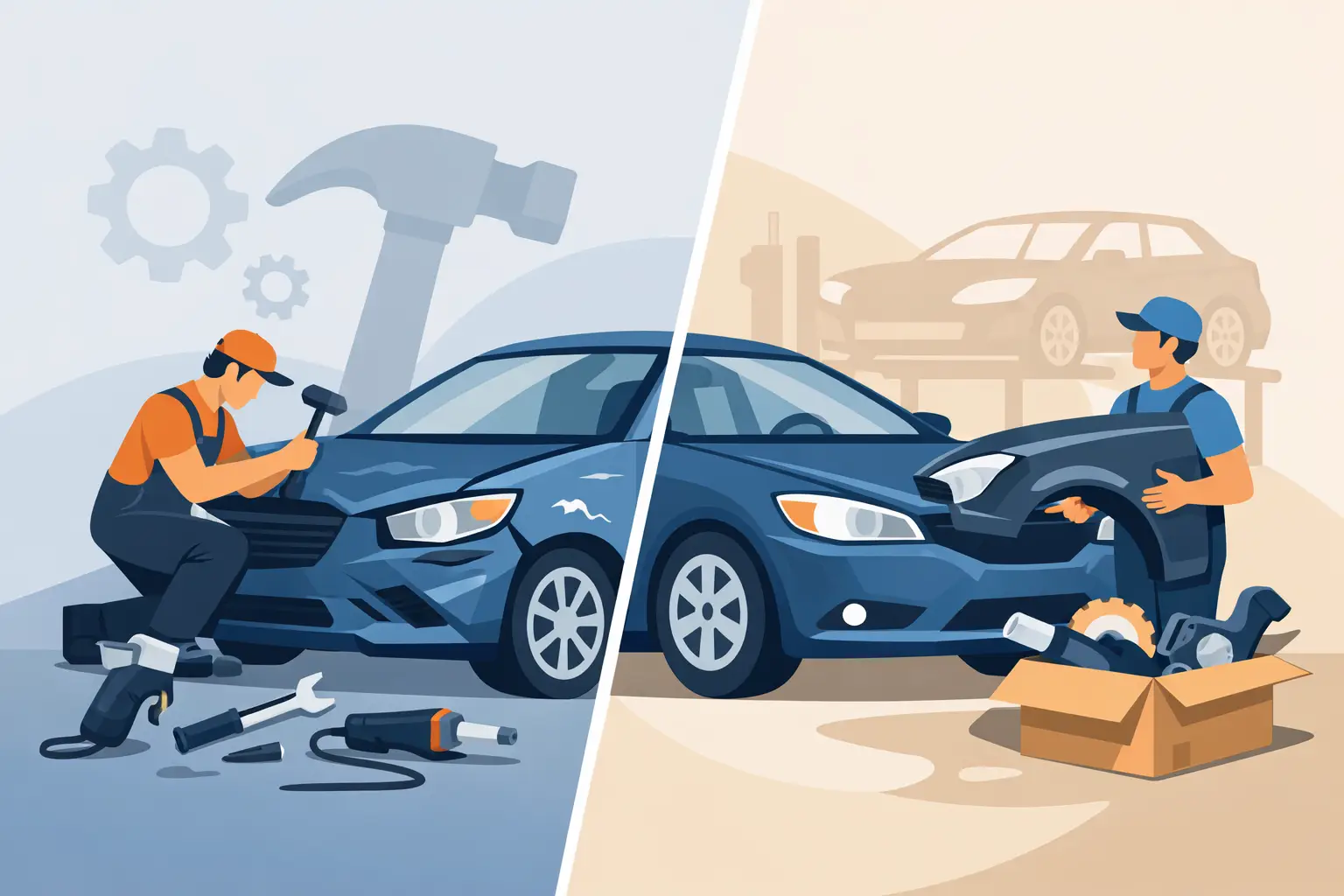
A scraped bumper in the supermarket car park, a dented guard after a tight driveway turn, or accident damage that looks worse in daylight – this is where panel beating vs replacement becomes a real question, not just workshop jargon. Most car owners want the same thing: get the vehicle back to its best without paying for work that is not needed.
The right answer depends on the damage, the panel, the vehicle’s age, and the finish you expect once the job is done. Sometimes a skilled repair is the smarter option. Sometimes replacement is the only way to restore safety, shape, and appearance properly. The key is knowing the difference before you approve the work.
Panel beating vs replacement: what is the actual difference?
Panel beating means repairing the original damaged section of the vehicle. That can involve reshaping metal, removing dents, straightening panels, treating minor rust, filling where appropriate, and refinishing the area so it matches the rest of the car. On modern repairs, it can also include plastic repair, bumper reshaping, and paintless dent removal when the damage allows for it.
Replacement means the damaged part comes off and another one goes on. That could be a new OEM panel, an approved aftermarket part, or in some cases a second-hand component if it is suitable for the job. The replacement part still needs proper fitting, alignment, prep, and paint so it sits right and looks right.
On the surface, replacement can sound simpler. In practice, it is not always cheaper, faster, or better. A panel that can be professionally repaired may deliver an excellent result without the added cost of sourcing, fitting, and painting a new part. On the other hand, a badly crushed panel may take more time to repair than it is worth, and replacement becomes the cleaner solution.
When panel beating is the better option
If the damage is localised and the panel structure is still sound, panel beating often makes the most sense. Small to moderate dents, creases, bumper scuffs, minor collision damage, and cosmetic issues can frequently be repaired without replacing the whole panel.
This matters for cost-conscious drivers. If a repair can restore the panel properly, you may avoid the price of a new part and the extra labour that comes with fitting it. In many cases, especially on older vehicles, that can be the difference between a practical repair and a bill that feels hard to justify.
There is also the fit factor. Your original factory panel already matches the car’s lines and gaps. A good repair keeps that original fitment in place. That can be especially valuable on vehicles where aftermarket panels do not always line up as neatly as people expect.
For minor damage, repair can also reduce downtime. If the part does not need to be ordered and the damage is straightforward, the job may move faster through the workshop. That said, speed depends on damage severity, paint requirements, and parts availability either way.
Common examples where repair works well
A parking dent in a door, a scuffed plastic bumper, a crease in a guard, hail damage, or a rust spot caught early are all situations where repair may be the smarter path. The same goes for paint damage where the panel underneath is still structurally fine.
Good panel beating is not about covering damage and hoping for the best. It is about restoring shape, surface, and strength as close as possible to pre-damage condition, then refinishing it so the repair blends cleanly with the vehicle.
When replacement makes more sense
There are times when replacing the panel is the honest recommendation. If a panel is heavily torn, sharply stretched, badly folded, rusted through, or structurally compromised, repairing it may not deliver the standard the vehicle needs.
This is especially true after bigger accidents. If mounting points are damaged, panel edges are distorted, or the part no longer holds its original strength, replacement may be the safer and more durable option. The same applies when a bumper, bonnet, boot lid, or door shell has taken a hit that affects how it opens, closes, or protects the car.
Replacement can also be the better choice when repair labour would outweigh the cost of a new part. A panel might be technically repairable but still not be worth repairing. That is where experience matters. A good workshop does not just ask, “Can we fix it?” It asks, “Will this be worth it for the customer, and will the result last?”
Safety and structure come first
Cosmetic damage is one thing. Structural integrity is another. If the panel plays a role in crash performance or proper alignment, cutting corners is not an option. A vehicle should leave the workshop looking right and functioning as it should.
That is why any honest assessment needs to consider more than appearance. A job that seems cheaper upfront can become expensive later if the panel was never going to hold up properly.
Cost, finish, and value: what most drivers really want to know
For most people, the real question behind panel beating vs replacement is simple: what gives me the best result for a fair price?
Repair is often cheaper when the damage is moderate and contained. You save on the cost of a new part, and in some cases you keep more of the original factory finish and fit. But that only works if the repair is done properly. A cheap-looking repair is no bargain.
Replacement can cost more because you are paying for the part itself, plus fitting, prep, paint, and blending where needed. But if the panel is too far gone, replacement may actually be better value because it avoids excessive labour on a poor candidate for repair.
Finish matters too. A well-repaired original panel can look excellent. A badly fitted replacement panel can stand out for all the wrong reasons. The reverse is also true. A panel that should have been replaced may never look quite right if someone tries to save it beyond its limit.
That is why the best decision is rarely based on one factor alone. It is usually a balance of damage severity, repair time, parts cost, paint matching, and how long you expect to keep the vehicle.
Panel beating vs replacement for insurance repairs
If you are going through insurance, the repair method may be guided by the assessor as well as the workshop. Insurers generally look at repair cost versus replacement cost, along with safety and manufacturer standards.
That does not mean every repair should default to the cheapest line item. The vehicle still needs to be restored correctly. A proper repairer will work within the insurance process while making sure the result meets a professional standard, not just a paper estimate.
For private work, there is often more room to tailor the approach to your budget and goals. If your car is older and you want a tidy, solid result without overspending, repair may be the better route. If you want the cleanest long-term outcome on a newer vehicle, replacement may be worth it.
How a quality workshop makes the call
The difference between a good outcome and a frustrating one usually starts with the quote. A proper assessment should look at visible damage, hidden damage, the material involved, and the finish required once the job is complete.
Metal panels, plastic bumpers, and rusted areas all behave differently. Some dents can be reshaped cleanly. Some plastics can be repaired and plastic welded with great results. Some damage that looks minor from the outside reveals deeper issues once the panel is stripped down.
This is where clear communication matters. You should be told what can be repaired, what should be replaced, and why. You should also know if there are trade-offs. For example, a lower-cost repair might be perfectly suitable on an older runabout, while a premium replacement and repaint may be the better call on a late-model family SUV.
At Fast Panel & Paint, that practical, straight-up approach matters because people do not just want body work. They want confidence that the job is worth doing.
What should you choose?
If the panel is repairable, structurally sound, and likely to finish well, panel beating is often the smarter option. If the damage has affected safety, shape, mounting points, or long-term durability, replacement is usually the better investment.
The best choice is not the one that sounds cheaper in the moment. It is the one that gets your car back on the road looking right, driving right, and holding up over time. A proper repair should leave you with one less thing to worry about every time you walk up to your vehicle.