A car that will not start on a busy morning is frustrating. A warning light that comes and goes, headlights that dim at idle, or a central locking system that suddenly stops working can be just as concerning. Auto electrical repairs are about finding the real cause behind those faults, fixing it properly, and keeping your vehicle safe and dependable on the road.
Modern vehicles rely on electrical systems for far more than starting the engine. Your battery, alternator, starter motor, lighting, sensors, airbags, reversing camera, windows, charging ports and entertainment system all depend on sound wiring and stable power. When one part starts failing, the symptom can look minor at first. Left alone, it may turn into a no-start, a safety issue or a more expensive repair.
When Auto Electrical Repairs Are Needed
Electrical faults are not always obvious. Sometimes the issue is immediate, such as a flat battery or dead headlight. Other times, it is intermittent: the dash flickers after rain, the radio resets, or the car starts perfectly one day and struggles the next. Those inconsistent problems are worth checking early, especially when you rely on the vehicle for work, school runs or daily commuting.
A battery warning light is one of the clearest signs to act. It does not necessarily mean the battery itself needs replacing. The light can point to an alternator that is not charging correctly, a damaged drive belt, loose connections or a wiring fault. Replacing the battery without testing the charging system may only mask the problem for a short time.
Slow cranking is another common warning. If the engine turns over sluggishly, clicks repeatedly, or only starts after several attempts, the cause could be a tired battery, corroded terminals, a failing starter motor or poor earth connections. Each fault requires a different fix, which is why proper testing matters.
Other signs to book an inspection include:
- headlights, brake lights or indicators that are dim, flickering or unreliable
- blown fuses that keep blowing after replacement
- burnt smells, hot electrical components or damaged wiring
- power windows, mirrors, central locking or wipers working intermittently
- warning lights for airbags, ABS, engine management or traction control
- accessories such as reverse cameras, stereos or USB chargers cutting in and out
Not every warning light means an emergency, but airbags, brakes, steering-related alerts and overheating electrical smells should never be ignored. If you suspect exposed wiring, smoke, or a serious charging fault, avoid driving the vehicle until it has been assessed.
Why Electrical Problems Need Proper Diagnosis
The visible symptom is rarely the full story. A tail light that stops working may be a globe, but it could also be moisture in the housing, corrosion at a connector, a damaged wire near the boot hinge or a fault in the body control module. The right repair depends on knowing which one it is.
Good diagnosis starts with listening to what the vehicle has been doing. Was there recent accident damage? Has water entered through a damaged door seal, cracked bumper or leaking light? Did the problem begin after a new accessory was installed? These details give a technician a practical starting point.
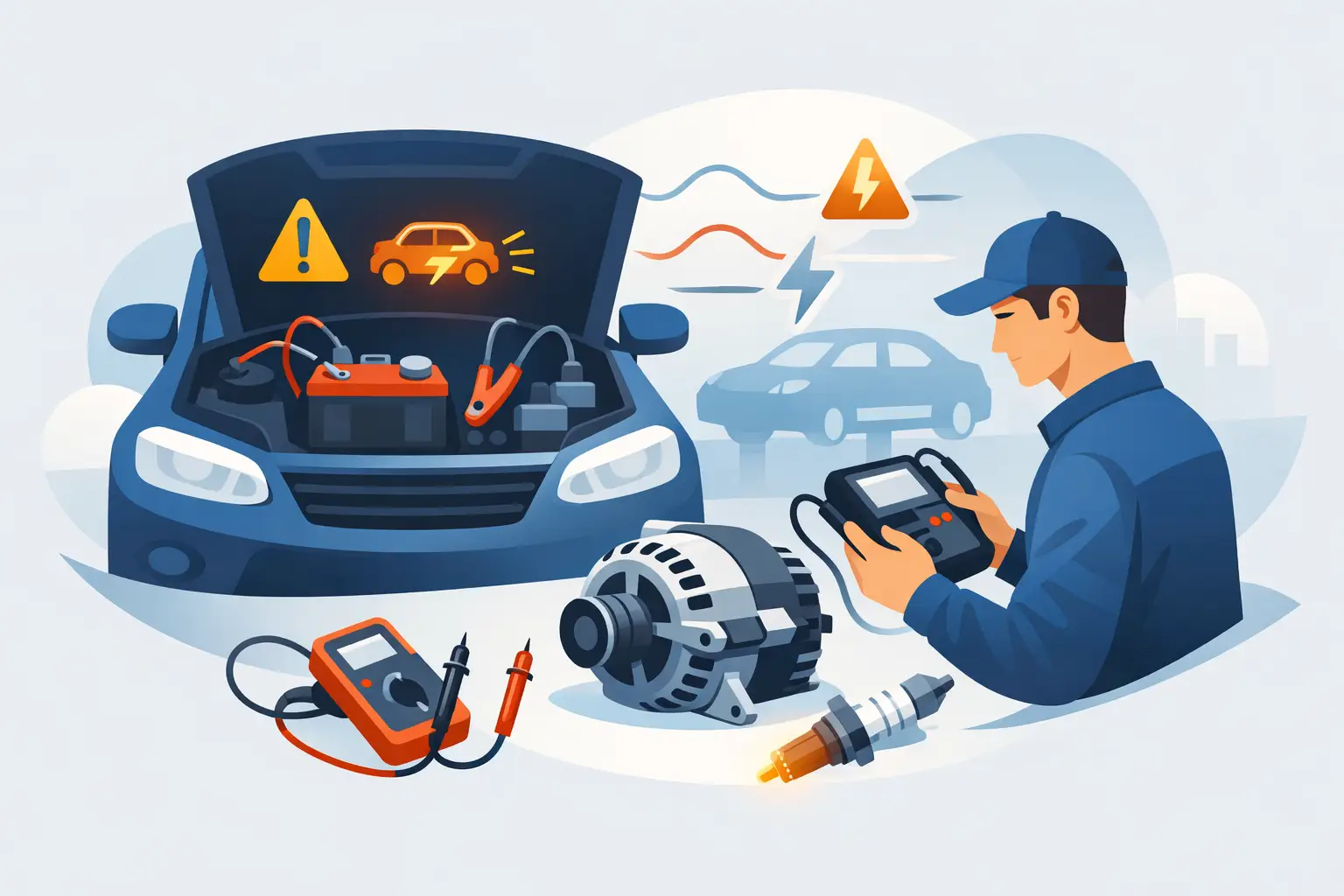
From there, the system should be tested rather than guessed at. This may include checking battery condition and charging voltage, inspecting fuses and relays, testing earth points, scanning fault codes and tracing wires or connectors. A scan tool is useful, but it is not a magic answer. Fault codes identify where the vehicle has noticed an issue. They do not always identify the failed part.
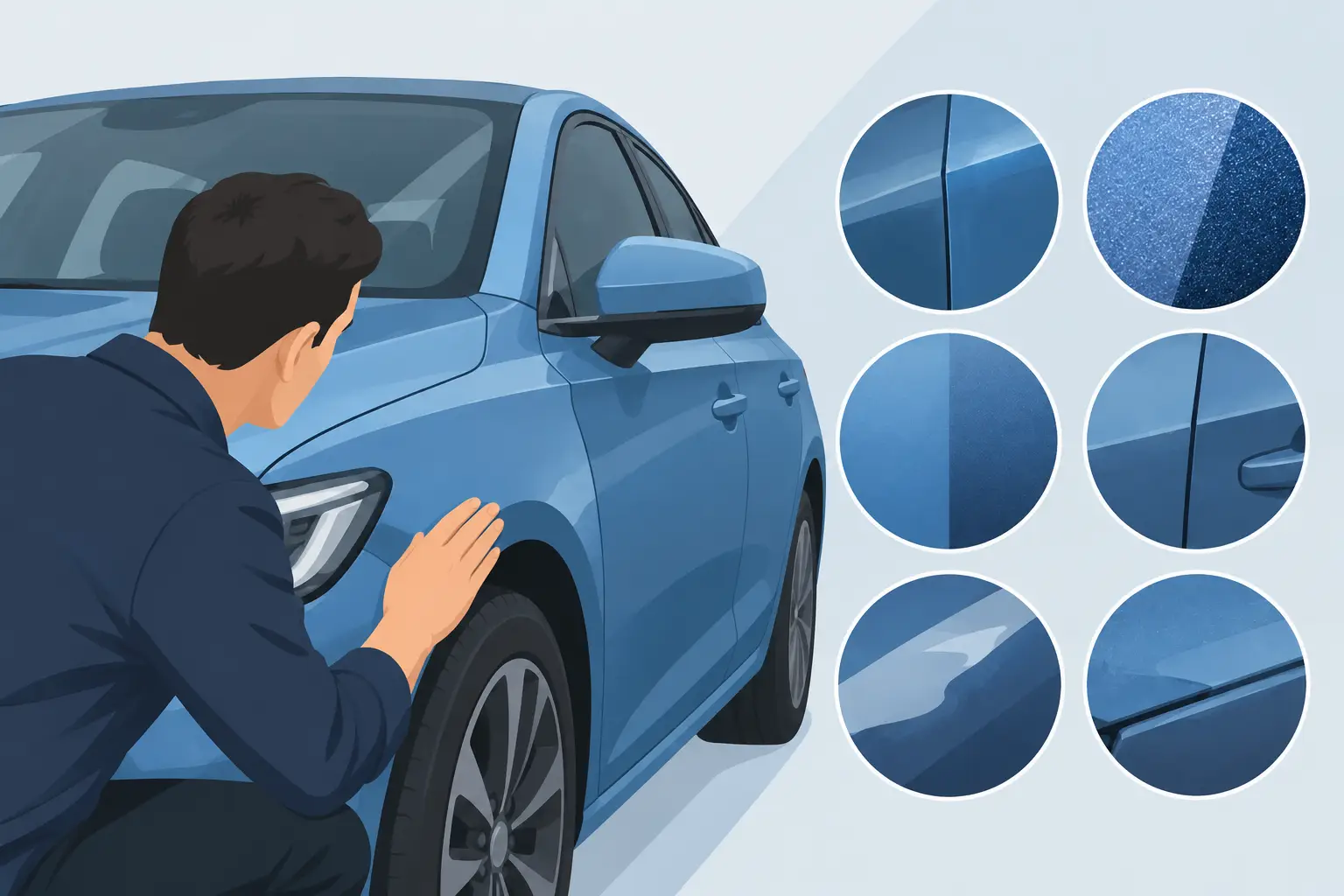
This is especially relevant after a collision. Even a low-speed knock can damage a sensor bracket, pinch wiring behind a bumper, crack a lamp connector or affect camera and parking sensor operation. Body repairs and electrical repairs often go hand in hand. Restoring the panel finish is only part of getting the car back to the standard it should be.
The difference between a battery fault and a charging fault
A flat battery is one of the most misdiagnosed vehicle problems. Batteries naturally lose capacity with age, particularly in stop-start traffic and short-trip driving. But a battery that repeatedly goes flat may be the victim, not the cause.
If the alternator is undercharging, the battery never receives enough power to recover after starting. If there is a parasitic drain, something continues drawing power after the car is parked. A glovebox light, faulty module, aftermarket accessory or wiring issue can all be responsible. Fitting a new battery may get the car going, but it will not solve an underlying drain.
A proper test checks the battery’s health, the alternator’s output and whether the vehicle is using abnormal current while switched off. It saves money compared with swapping parts until the symptom disappears.
Common Repairs and What They Involve
Auto electrical work covers a wide range of repairs, from straightforward maintenance to detailed fault-finding. Battery terminal cleaning and replacement may be quick, while tracing an intermittent wiring fault can take more time. Honest communication matters because the workshop should explain what has been found, what needs fixing now, and what can reasonably wait.
Lighting repairs are among the most common jobs. Safe, working lights help you see and be seen, and they are essential for roadworthiness. Depending on the fault, the repair may involve replacing a globe, repairing a connector, sealing a leaking housing, restoring damaged wiring or replacing a faulty switch.
Starter and alternator repairs are also regular requirements. A starter motor has the job of turning the engine over. The alternator recharges the battery while you drive and supplies power to the vehicle’s systems. Both deal with heat, vibration and normal wear, so failure is not unusual as kilometres build up.
Wiring repairs need particular care. A quick twist of tape around a damaged wire may look like a bargain, but it can lead to corrosion, poor connections and repeat faults. Quality work involves correctly joining, insulating and securing the wiring so it is protected from heat, movement and moisture. On a vehicle that has had collision damage, wires must also be routed safely away from sharp edges and moving parts.
What to Do Before You Book It In
You do not need to diagnose the problem yourself, but a few details can make the process faster. Note when the fault occurs: only when the engine is cold, after rain, when turning, at night, or after the vehicle has been parked for several days. Take a photo of warning lights if they disappear before the appointment.
Avoid repeatedly jump-starting a vehicle without finding out why the battery is flat. One jump-start can be a practical short-term solution. Frequent jump-starts can hide a charging issue and may leave you stranded at the worst moment. If you are using jumper leads, follow the vehicle manufacturer’s instructions and do not connect them near damaged batteries or leaking fluid.
It is also worth mentioning any recent work, accident damage or accessories fitted to the vehicle. A tow bar, dash camera, new stereo, trailer plug or LED lighting upgrade can be perfectly safe when installed correctly, but poor connections can create hard-to-find faults later.
Choosing a Repairer You Can Trust
Electrical repairs should be clear, not confusing. Look for a repairer who explains the diagnosis in plain language, gives you an upfront view of likely costs and contacts you if the job changes after testing. The cheapest quote is not always the lowest-cost outcome if it replaces parts unnecessarily or leaves the original fault behind.
For accident-related work, choose a workshop that considers the whole vehicle. At Fast Panel & Paint, electrical concerns can be assessed alongside panel, bumper, paint and sensor-related damage, helping ensure the car does not just look restored – it functions as it should.
There is also a trade-off between speed and certainty. A simple blown fuse or loose terminal may be fixed quickly. An intermittent fault may need longer testing because the problem must be reproduced and traced properly. That time is worthwhile when it prevents repeat visits and protects critical systems.
A vehicle does not have to be completely dead before it deserves attention. If something electrical is acting differently, get it checked while the fault is still small enough to fix without disrupting your week.