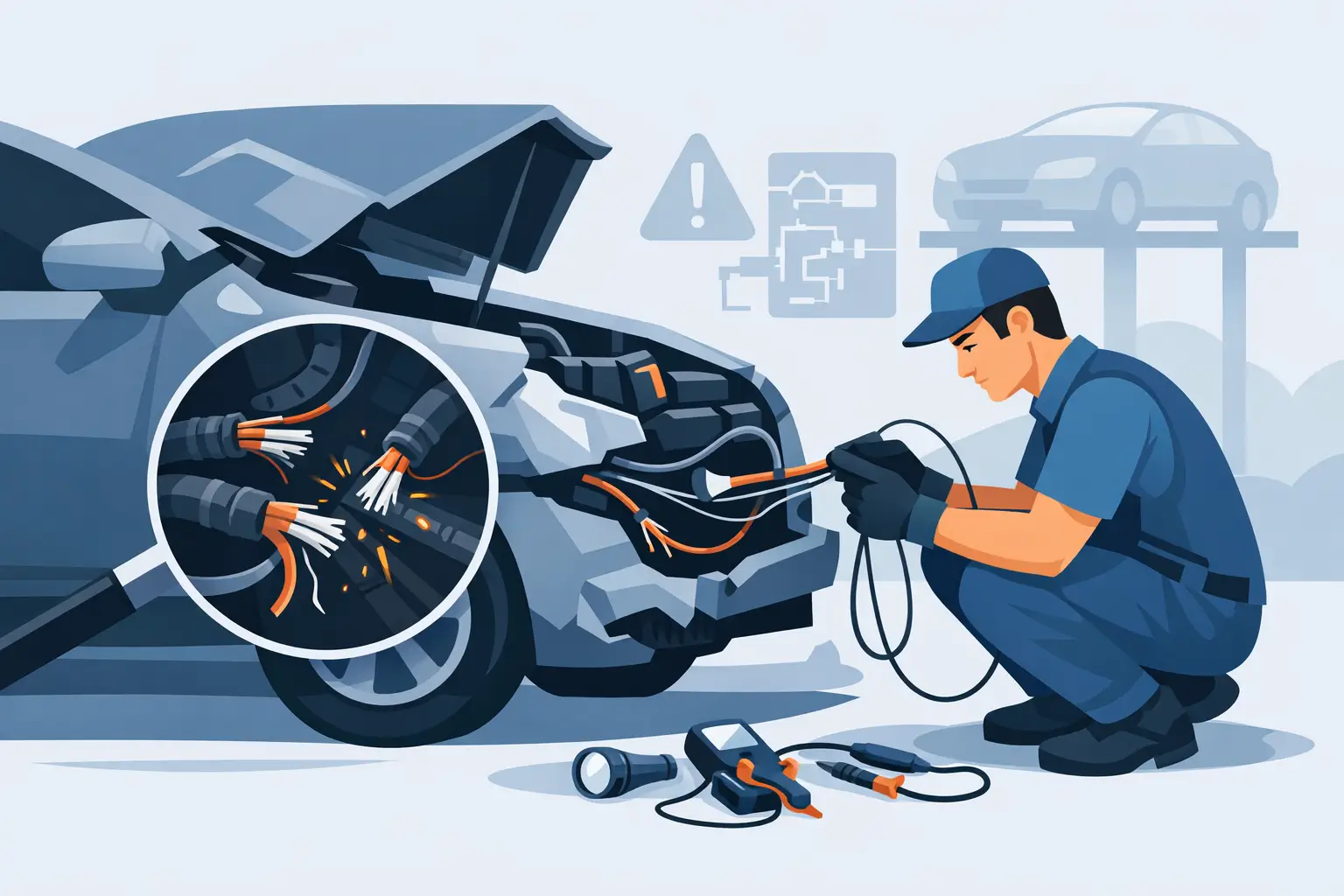
A bumper can look like it has taken the worst of an accident, while the real problem sits behind it: a pinched loom, cracked connector or damaged sensor wire. Wiring damage after collision is easy to miss because modern vehicles hide a great deal of electrical equipment behind panels, under seats, in doors and around the engine bay. If it is not found early, a small impact repair can turn into recurring warning lights, unreliable accessories or a safety system that does not work as intended.
At Fast Panel & Paint, we look beyond the visible dent and paint damage. A proper collision repair means checking what the impact may have disturbed underneath, then restoring the vehicle so it looks right and functions properly.
Why wiring damage after collision is not always obvious
Vehicle wiring is designed to be protected, but it is not indestructible. Even a low-speed knock can push a bumper reinforcement, guard liner, headlight housing or boot panel into a wiring harness. The wire itself may be stretched, insulation can be cut, and connectors can come loose or take on moisture.
The difficult part is timing. Some electrical faults appear immediately, such as a headlight that will not turn on. Others develop after a few days or weeks, when vibration, rain or heat worsens a weak connection. This is why a car that drives normally after an accident should not automatically be treated as fully repaired.
Modern cars also rely on electronics for far more than lights and the radio. Parking sensors, reversing cameras, blind-spot monitoring, airbags, electric mirrors, central locking, engine management and advanced driver assistance systems can all depend on wiring routed through collision-prone areas. The more features your vehicle has, the more reason there is to inspect it carefully.
Signs your vehicle may have electrical damage
A dashboard warning light is the clearest clue, but it is not the only one. Pay attention to changes that started after the impact, even if they seem minor. A good repairer will want to know exactly when you first noticed the issue.
Common warning signs include:
- headlights, indicators, brake lights or fog lights working intermittently
- parking sensors, cameras or radar features failing or giving false alerts
- a flat battery, hard starting or warning messages that come and go
- windows, mirrors, door locks or the boot release not working as they should
- blown fuses, a burning-plastic smell, flickering interior lights or exposed wiring
Intermittent faults deserve just as much attention as a complete failure. If a reverse camera only drops out on wet days, for example, moisture may be reaching a damaged plug or section of wiring. Waiting for the problem to become constant can make fault-finding harder and may allow corrosion to spread through a connector.
Warning lights are not a diagnosis
A warning light tells you a system has detected a fault. It does not tell you whether the cause is a damaged wire, sensor, module, fuse, weak battery or unrelated mechanical issue. Reading fault codes is a useful starting point, but a proper diagnosis also involves visual checks, circuit testing and checking the affected system after the bodywork is aligned.
That distinction matters after a crash. Replacing a sensor without finding a crushed wire behind the bumper may get the warning light off briefly, only for the fault to return. Good repairs solve the cause, not just the message on the dash.
Areas most likely to be affected
The location of the impact shapes the inspection. A front-end collision can affect headlight wiring, horn circuits, radiator fan wiring, airbag sensors, parking sensors and active safety equipment. Damage around a guard or wheel arch may disturb ABS sensor wiring, which is exposed to water, road grit and wheel movement.
Rear impacts often affect tail lights, reversing cameras, parking sensors, boot wiring and rear radar units. A knock to a door can damage the wiring that runs between the door and body, causing trouble with electric windows, central locking, speakers or mirrors. Underbody impacts also need care, particularly where wiring is held in clips near splash guards and protective covers.
In hybrid and electric vehicles, the stakes are higher. These vehicles use high-voltage systems with distinctive cabling and components that must only be inspected and repaired by appropriately trained technicians. Do not touch exposed orange high-voltage cables, and do not continue driving if there is visible cable damage, smoke, fluid leakage or a serious electrical warning. Arrange safe transport instead.
What a proper electrical inspection involves
A sound repair process starts by assessing the collision damage before panels are closed up and paintwork is completed. This gives the repairer access to the areas where wiring, plugs, mounting points and sensors sit behind trims, bumpers and guards.
First, the vehicle is scanned for relevant fault codes and warning-system errors. Technicians then inspect harnesses for stretched sections, crushed insulation, loose clips, broken plugs and water entry. Where needed, they test voltage, earth connections and continuity to identify whether the circuit is intact. This is more reliable than guessing from the visible damage alone.
If wires need repair, the work should be protected from future vibration and moisture. Depending on the vehicle and damage, that may mean replacing a damaged section or loom, fitting the correct connector, sealing the repair and securing the harness in its original route. A wire twisted together and wrapped in tape may look acceptable for a short time, but it is not the standard you want behind a freshly repaired panel.
The final stage is verification. Lights, locks, cameras, sensors and warning systems should be checked once components are refitted. Vehicles with driver-assistance features may also require calibration after bumper, windscreen, suspension or alignment-related work. Calibration is not an optional extra when a system relies on accurately positioned cameras or radar sensors. It is part of making sure the vehicle can recognise its surroundings as designed.
Why quick cosmetic fixes can create bigger problems
A fast bumper repair has its place when the damage is genuinely limited to the outer cover. But if the bumper has been pushed in, torn, misaligned or has taken a hit near a sensor, wiring and mounting brackets need attention before the finish work begins.
The trade-off is straightforward. A thorough inspection can add time to a repair, especially if parts or calibration are required. Skipping it may feel cheaper on the day, but it can lead to repeat workshop visits, a failed roadworthy inspection, battery trouble or a safety feature that cannot be relied on. Clear quotes should explain what has been found, what needs repair now and what may need further investigation.
Insurance repairs can add another layer, particularly where hidden damage becomes apparent after the first assessment. This is normal in collision work. Once trims and panels are removed, the full extent of damage is easier to see. A repairer who communicates clearly can document the additional work and help keep the process moving without surprises.
What to do after an accident
If your vehicle has been in a collision, take note of any warning lights and test basic functions before relying on the car for normal use. Check exterior lights, indicators, brake lights, windows, locks, mirrors and the reversing camera if fitted. Do not keep replacing blown fuses or ignore a burning smell. Those are reasons to stop using the affected system and have the vehicle checked promptly.
Avoid pressure-washing a damaged area or driving through deep water before an inspection if panels, light fittings or wiring covers are broken. Water can turn a minor wiring issue into corrosion inside connectors, creating faults well after the collision itself.
Photos from the accident can also help. A repairer can use them to understand the direction and height of the impact, particularly if an outside panel has sprung back or has already been temporarily refitted.
Your vehicle should leave a collision repair looking sharp, but looks are only part of the job. When a warning light appears, a light flickers or a sensor behaves differently after an impact, trust what the car is telling you and get it checked before a small hidden fault has the chance to grow.