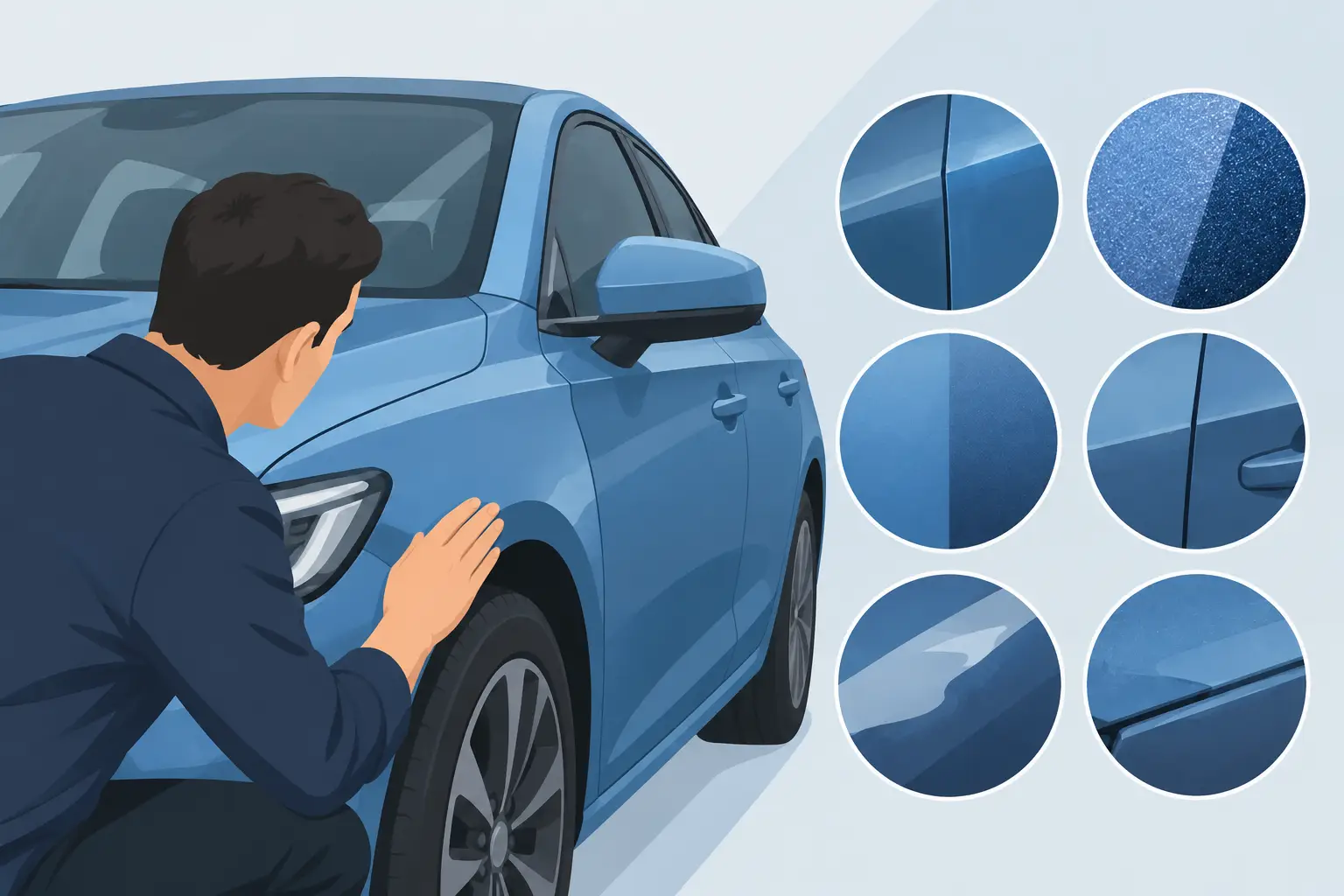
A fresh repair should disappear into the rest of your vehicle, not stand out every time you walk towards it in the car park. The signs of poor paint matching are often easy to spot once you know where to look, and they can turn a minor scrape repair into something that affects the whole look and value of your car.
Paint matching is more than finding the colour code inside the door jamb. Vehicle paint changes over time through sun exposure, washing, road grime and previous repairs. A proper refinishing job accounts for those changes, then blends the new paint carefully so the repaired panel looks right in real-world light.
1. The repaired panel looks lighter or darker
The most obvious issue is a panel that appears noticeably lighter or darker than the panels beside it. You may see it on a door, bumper, guard or quarter panel after an accident repair. White, silver, grey and black cars can all show this problem, even though people often assume darker colours are the hardest to match.
Check the vehicle outdoors, not only under workshop or garage lighting. Stand back a few metres, then look along the side of the car from different angles. If one panel reads as a different shade, the match may be off.
A slight change in appearance can sometimes be caused by dirt, tyre shine overspray or a panel that has not been polished. But if the difference remains after a clean, it needs a professional assessment. Repainting only the damaged panel without blending into neighbouring panels is a common reason for this result.
2. The colour changes when you move around the car
Metallic, pearl and mica paints are designed to reflect light differently as you move around them. That is part of what gives modern vehicle colours their depth. It also means poor application can create a mismatch that is invisible from straight on but obvious from the side.
You might notice the repaired section looks too bright, too dull or slightly warmer than the original paint at a certain angle. On a silver car, for example, the repaired area may look more blue, darker or flatter when sunlight hits it.
This is often called a flop difference. It can happen when metallic particles have not been applied evenly, the spray gun settings were wrong, or the painter used an unsuitable technique for that particular colour. Colour code alone is not enough. The paint needs to be tinted, tested and applied with the right process.
3. The bumper does not match the body panels
A bumper is plastic, while most surrounding panels are metal. Those materials can reflect light differently, so a small variation is possible even from the factory. However, a strong contrast between the bumper and guards is one of the clearest signs of poor paint matching.
Look for a bumper that appears creamier than a white body, bluer than a silver body, or noticeably darker than the adjacent guard. This may be especially visible on newer cars with pearl whites, tri-coat colours and metallic finishes.
The right repairer understands that plastic needs its own preparation and may require colour adjustment to achieve a close visual match. A bumper should complement the rest of the vehicle, not look like it belongs to another car.
4. You can see a hard line at the edge of the repair
A quality repair should transition smoothly into the original finish. If you can see a distinct edge where new paint stops and old paint begins, the work has not been blended properly.
Hard paint lines are most noticeable near panel edges, mouldings, door handles, mirrors and wheel arches. In some cases, the line looks like a faint halo. In others, it is a sharp difference in colour or gloss that catches your eye immediately.
Not every repair requires a full respray, and a smaller repair can be the sensible option where damage is localised. The trade-off is that the preparation, colour blending and clear coat application need to be even more precise. Cutting corners to save time can leave a repair that looks patchy from day one.
5. The gloss level is different
Colour is only part of a good match. The sheen of the paint matters just as much. A repaired section may have the correct colour but still look wrong if it is much glossier, flatter or hazier than the surrounding panels.
Compare the reflection of the sky, nearby cars or a straight building line across the panel. A well-finished surface should reflect evenly. If the repaired area looks cloudy, wavy or unusually shiny, it may point to issues with clear coat application, curing, sanding or polishing.
This does not always mean the paint itself is the wrong colour. It can be a finishing problem, and the solution depends on the cause. Minor haze may be corrected through careful machine polishing. Uneven clear coat or a poor blend may require further refinishing.
6. The repair looks different in sun, shade and under lights
Do not judge paint matching in one location. Pull the car into daylight if possible, then look again in shade and under artificial lighting. Different light sources reveal different tones in automotive paint.
A colour that looks acceptable under fluorescent workshop lights may show a green, blue, red or yellow cast in daylight. This is particularly common with greys, silvers, whites and colours containing pearl or metallic flakes.
Professional painters use colour spray-out cards and compare them against the vehicle in suitable lighting before committing to the repair. That extra checking takes time, but it avoids the frustrating situation where the vehicle looks fine at collection and wrong when you see it at home the next morning.
7. The mismatch sits beside other poor finish details
Poor paint matching rarely appears completely on its own. If the colour looks questionable and you also notice rough texture, dust in the clear coat, sanding marks, overspray or peeling around the repair, the panel deserves a closer look.
Run your hand lightly over the area once the vehicle is clean and cool. It should feel smooth and consistent. A gritty finish can indicate overspray, while a noticeably rippled texture can suggest poor preparation or application. Keep in mind that some factory paint finishes have a mild orange-peel texture, so the goal is consistency with the rest of the car rather than a surface that looks unnaturally flat.
Why paint matching goes wrong
There are several reasons a repair can miss the mark. The vehicle’s paint code may have multiple factory variants. Ageing and UV exposure can alter the original colour. A previous repair may not match the factory paint, leaving the next repairer with an even harder starting point.
Then there is the repair process itself. Inadequate panel preparation, incorrect paint mixing, unsuitable spray pressure, poor blending technique or rushing the clear coat can all affect the finished result. Modern colours are sophisticated systems, not just a tin of paint in a familiar shade.
A cheap quote can be tempting after a scrape or accident, especially when you are paying out of pocket. But the lowest price can leave out the work that makes a repair invisible: correct colour testing, masking, blending into adjacent panels and finishing the surface properly. The best value is a repair that looks right and stays looking right.
What to do if you suspect a poor paint match
Start by cleaning the vehicle and inspecting it in good daylight. Take clear photos from straight on and from angles where the mismatch is visible. If the work was completed recently, contact the repairer promptly and explain what you are seeing. A reputable workshop should inspect the concern rather than dismiss it over the phone.
Avoid aggressive polishing compounds, touch-up paint or DIY fixes before the panel has been assessed. They can make it harder to identify the original issue and may affect any repair warranty. If the panel needs correction, an experienced refinisher can determine whether it can be polished, blended again or repainted.
Your car should leave a repairer looking cared for, not leaving you second-guessing every panel in the driveway. At Fast Panel & Paint, the focus is on careful preparation, accurate colour work and a finish you can feel confident seeing in every light.