A tiny stone chip on the bonnet can look harmless this week, then become a bubbling paint patch that spreads across the panel months later. The best ways to prevent rust on your car come down to one simple principle: keep water, salt and road grime away from exposed metal, and deal with paint damage before corrosion gets underneath.
Rust is not just a cosmetic problem. Once it reaches seams, wheel arches, sills or structural areas, the repair can become more involved and more expensive. A little regular care protects your vehicle’s finish, resale value and long-term safety.
Why rust can spread faster than you expect
Vehicle paint is a protective system, not just a layer of colour. Primer, paint and clear coat work together to seal the steel beneath. When that barrier is chipped, scratched or worn through, moisture and oxygen can reach the metal and start the corrosion process.
Salt makes the problem worse. That can mean coastal air, salty roads, muddy winter driving or even residue carried home after a trip to the beach. Add trapped moisture under mud, leaves or plastic trim, and rust can keep growing where you cannot easily see it.
Modern vehicles have good factory corrosion protection, but no car is immune to impact damage, blocked drains or neglected paintwork. Prevention is always easier than cutting out and repairing rusted metal later.
The best ways to prevent rust before it starts
Wash road grime off regularly
A clean car is easier to inspect and far less likely to hold damaging contaminants against the paint. Wash it regularly, paying proper attention to the lower doors, wheel arches, sills, bumpers and underbody. These are the areas that collect mud, dust, salt and loose debris.
If you live near the coast, park near the sea, or often drive on wet and unsealed roads, increase the frequency. You do not need an elaborate detailing routine, but a thorough wash after beach trips and long winter drives makes a real difference. Avoid leaving mud packed into wheel guards for weeks at a time.
Dry the spots that hold water
Water left on the outside of a car will usually dry without causing trouble. Water trapped in gaps is another story. Check around the boot seal, bonnet edges, door jambs, windscreen surrounds and fuel filler area after washing or heavy rain.
Keep an eye on leaves gathering beneath the windscreen cowl and around drain channels. Wet leaves behave like a sponge, holding moisture against paint and metal. Clearing them out takes minutes and can prevent a hidden rust issue from forming in an expensive area.
Repair stone chips and scratches early
Paint chips are one of the most common starting points for rust. They are especially common on bonnets, front bumpers, mirror edges, wheel arches and the lower sections of doors. A chip that exposes bare metal needs attention, even if it is smaller than a fingernail.
A quality touch-up may be enough for a clean, minor chip. If there is already brown staining, bubbling paint or a dent around the damage, it needs a closer inspection. Simply brushing paint over active rust can hide the problem briefly, but it will not stop corrosion underneath. The affected area must be properly cleaned, treated, primed and refinished so the new paint can seal it.
Keep protective coatings in good condition
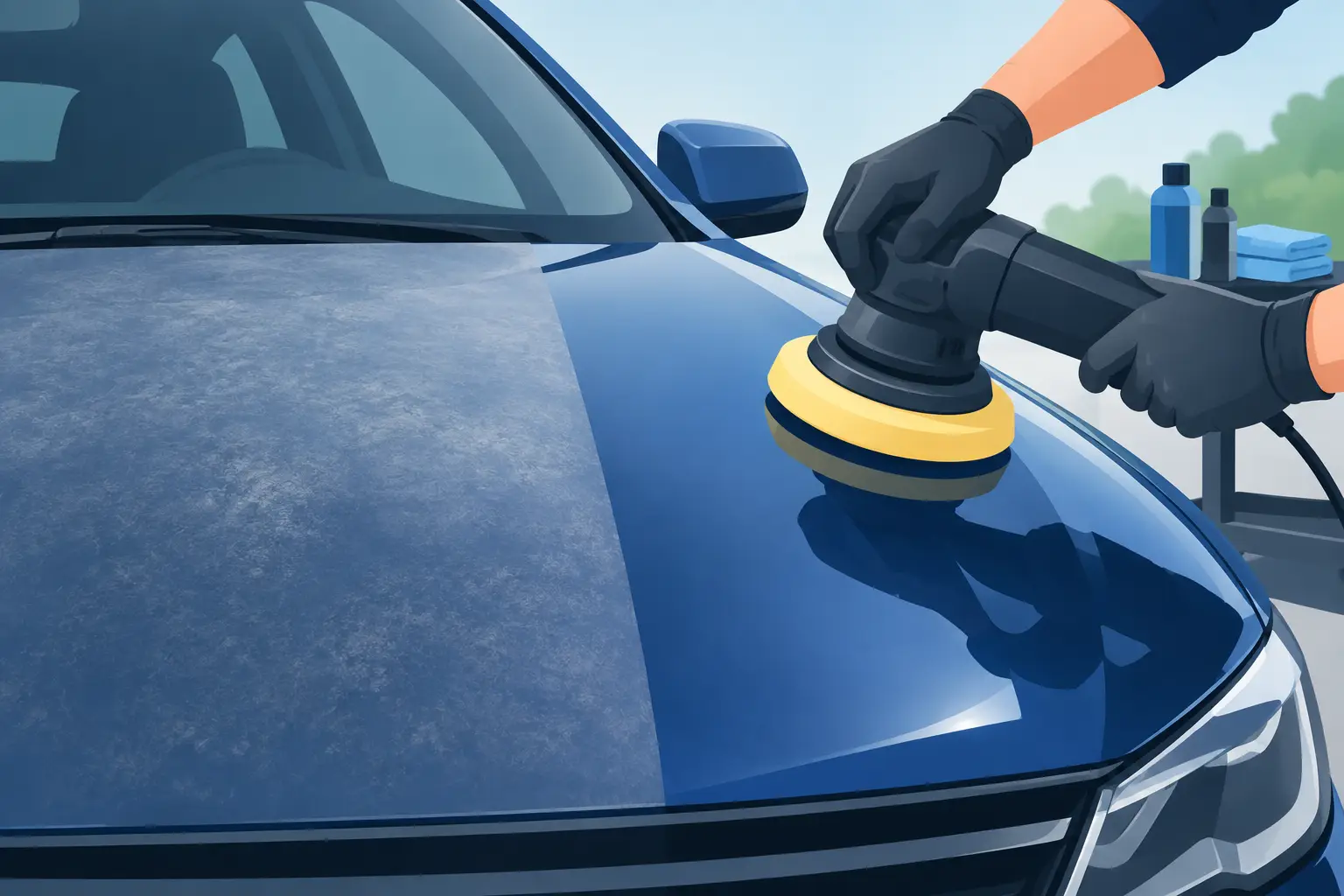
Wax, paint sealants and ceramic protection can help water and grime slide off painted surfaces more easily. They are useful maintenance measures, especially for a vehicle parked outdoors, but they are not a substitute for fixing damaged paint.
Think of protection as an extra layer of defence. A freshly polished and protected finish is easier to wash, easier to inspect and less likely to hold contaminants. If the clear coat is badly faded or peeling, professional paint restoration may offer better long-term value than continually applying products over a failing surface.
Protect the areas you do not see every day
Rust often begins in concealed places long before it becomes visible on the outside. A vehicle can look tidy from the driveway while corrosion is developing behind a wheel arch liner or underneath the floor.
Inspect the underbody and wheel arches
The underside of your car takes the hardest hit from water, stones and road debris. Periodically look beneath the vehicle and inside the wheel arches for missing underseal, scraped coatings, rust spots or packed mud. Pay attention after driving through deep water, on rough roads or where stones have struck the underside.
Underbody protection can be an excellent investment when applied correctly. The surface needs to be clean, dry and properly prepared first. Spraying a heavy coating over existing flaky rust can trap moisture and make future repairs harder to assess. It also must not block factory drain points or cover components that should remain accessible for servicing.
Make sure drains and seals can do their job
Doors, boot lids and other panels are designed with drain holes so any water that gets inside can escape. These small openings can block with dirt, polish residue or debris. When water sits inside a door, it attacks the panel from the inside out.
Check door bottoms and the boot area occasionally, particularly after heavy rain. If you notice a sloshing sound, damp carpet, water in the spare-wheel well or musty smells, do not ignore it. Find the source before moisture creates corrosion or electrical issues.
Door, boot and bonnet seals also deserve attention. Clean them gently and look for tears, loose sections or areas where water seems to be getting past. A worn seal may seem minor until water reaches a seam, carpet lining or hidden metal cavity.
Be careful with car covers and outdoor parking
A cover can protect paint from bird droppings, tree sap and UV exposure, but only when the car is clean and dry first. Putting a cover over a wet or dirty vehicle can trap moisture and grit against the paint. In windy conditions, a poorly fitted cover can also rub the finish.
Where possible, park under cover and keep clear of dripping trees. If outdoor parking is unavoidable, regular washing and prompt touch-ups become even more worthwhile. The goal is not a perfect garage-kept car. It is preventing small issues from sitting unattended.
Know when surface rust needs professional repair
Early surface rust can sometimes be dealt with before it becomes serious, but the warning signs matter. Look for paint bubbles, orange staining around chips, cracking at seams, rust along wheel arches, or rough patches beneath the paint. These usually mean the corrosion has moved beyond a simple cosmetic mark.
Rust repair is not a job for shortcuts. A durable repair involves removing the corrosion fully, assessing the metal beneath, repairing or replacing weakened sections where needed, then applying the correct rust treatment, primer, seam sealer, paint and protective coatings. The visible colour match is only part of the result. Proper preparation is what stops the repair from coming back.
At Fast Panel & Paint, rust repairs are assessed with the surrounding paintwork and panel condition in mind, so you know whether a focused repair, repaint or more extensive body work is the sensible option. Clear advice upfront helps avoid paying twice for a patch that will not last.
Rust prevention depends on how you use your car
A commuter car parked in a covered garage needs different care from a ute used on worksites, a family vehicle making frequent beach trips, or an older car with previous repairs. Older vehicles and cars with aftermarket body modifications may need more frequent checks around seams, fasteners and altered panels.
If your vehicle has been in a collision, inspect repaired areas over time. A quality repair should restore protection as well as appearance, but fresh chips or damage around any panel should still be dealt with promptly. Do not wait for a WOF check or a sale date to find out there is a rust issue developing.
Make washing the lower body, clearing drains and checking paint chips part of normal vehicle care. That small routine gives you the best chance of keeping rust out of sight, out of mind and off your repair bill.