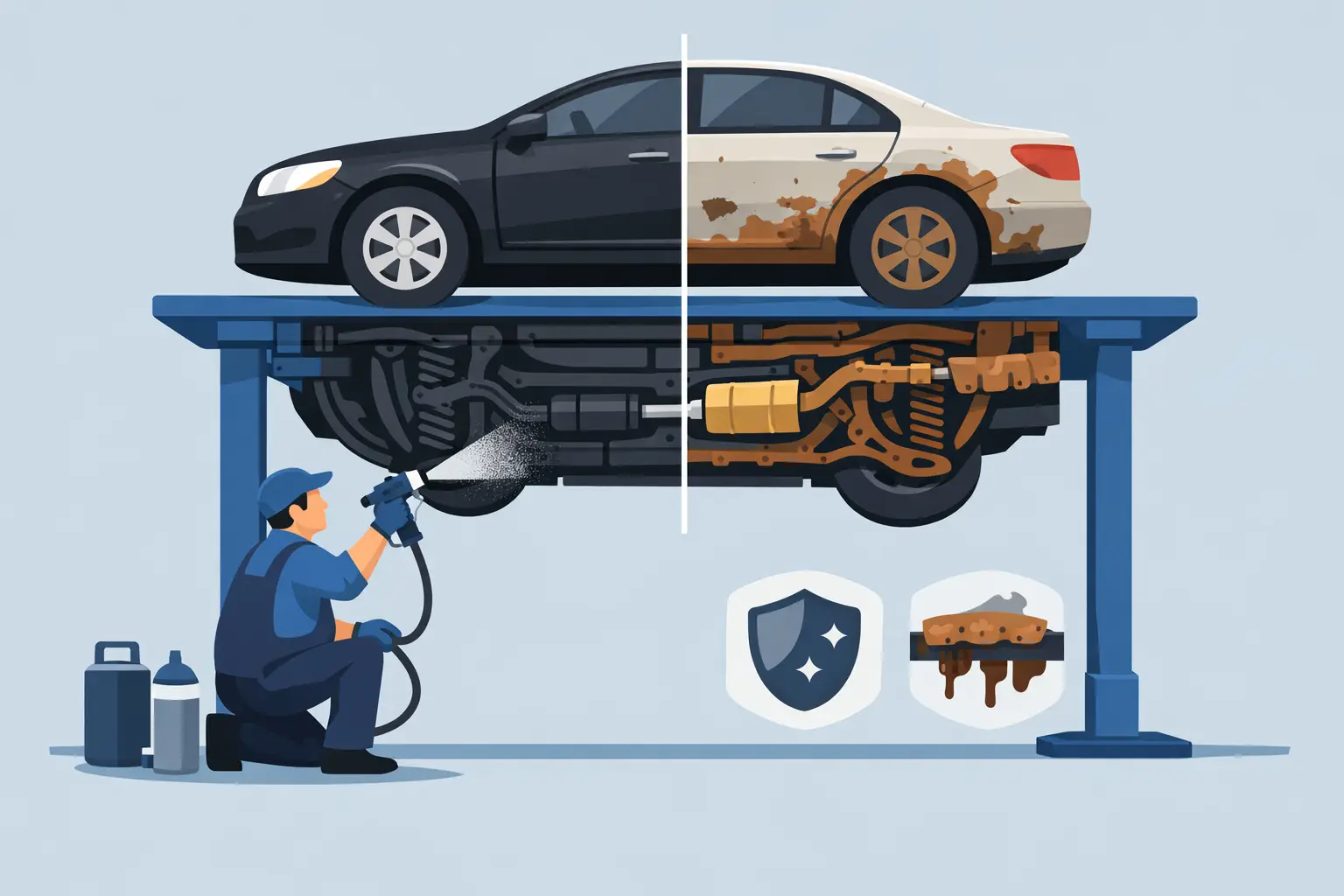
You usually don’t think about the underside of your car until a mechanic points out rust, damaged coatings or grime packed into places you can’t see from the driveway. That is exactly why a car undercoating service matters. It protects one of the hardest-working parts of your vehicle – the floorpan, wheel arches, chassis sections and other exposed metal that cops moisture, road debris and everyday wear every time you drive.
For many drivers, undercoating sounds optional, like one of those add-ons that gets pitched without much explanation. Sometimes it is unnecessary. Sometimes it is one of the smartest preventative jobs you can book. The difference comes down to your car’s age, condition, how you use it, and whether there is already damage underneath that needs proper attention first.
What a car undercoating service actually does
A car undercoating service is designed to create a protective barrier on the underside of the vehicle. That barrier helps reduce direct exposure to water, salt, mud, road grime and small stone impacts. On cars that are still structurally sound underneath, this can slow down corrosion and help preserve the condition of vulnerable metal surfaces.
The key word there is help. Undercoating is not magic, and it is not a fix for existing rust that has already taken hold. If corrosion is active, the right process starts with inspection, cleaning and rust repair where needed. Sealing over a problem does not solve it. It usually makes it harder to spot until the damage gets worse.
A proper job should begin with checking the underside, identifying any loose rust, previous damage or worn factory coatings, and preparing the surface properly. Only then should the protective product be applied. That preparation is what separates durable results from a coating that peels, traps moisture or fails early.
When undercoating is worth it
The best candidates for undercoating are vehicles that still have a decent base condition underneath and are exposed to rougher use. That includes daily commuters, family cars that spend plenty of time on wet roads, tradie vehicles, utes, and older cars you want to keep on the road longer.
It also makes sense after certain repair work. If a vehicle has had rust repairs, panel work near wheel arches, or restoration work underneath, undercoating can be part of finishing the job properly. It adds another layer of defence once damaged sections have been repaired and sealed.
Newer vehicles can benefit too, but it depends on what protection is already there from the factory. Some come with decent coverage. Others have thinner protection in areas that take a beating over time. That is why a real inspection matters more than a blanket yes or no.
When a car undercoating service may not be the right move
There are cases where booking a car undercoating service straight away is not the smartest decision. If the underside is already heavily rusted, the priority is repair, not concealment. If there are oil leaks, caked-on grime or damaged sections, those issues need sorting first. Otherwise the coating may not bond properly, and the underlying problems remain.
There is also a difference between preventative maintenance and overspending on a vehicle that may not justify the job. If a car is near the end of its life, has major structural corrosion or needs extensive mechanical and body repairs, you have to weigh up whether undercoating is a sensible investment.
That does not mean it is only for expensive cars. Far from it. Plenty of cost-conscious owners choose undercoating because keeping a reliable older car healthy is often cheaper than replacing it. The point is to be honest about the condition of the vehicle and the result you can realistically expect.
The biggest factor is prep work
If you ask why some undercoating jobs last and others do not, the answer is usually in the prep. A rushed application over dirt, loose rust or moisture is asking for trouble. Good workmanship starts with getting the underside clean, dry and ready.
That may involve pressure cleaning, drying time, mechanical removal of loose corrosion, and treating affected areas before any protective coating goes on. On some vehicles, certain components also need masking or careful application around them. Exhaust parts, brakes and moving suspension components are not areas for sloppy overspray.
This is where experience matters. The underside of a car is not a flat, simple surface. It has seams, joins, recesses and high-impact zones that all need proper coverage without trapping contaminants. A tidy-looking finish means very little if the product has been applied over the wrong surface or into the wrong places.
What undercoating can and cannot protect against
Undercoating is useful, but it has limits. It can help guard against moisture, road grime and everyday abrasion. It can reduce the chances of surface corrosion developing quickly in exposed areas. It can also help preserve previous repair work by adding a protective outer layer.
What it cannot do is reverse rust, repair structural damage or make neglect disappear. If the underside is already compromised, coating it is not a substitute for proper rust removal and panel repair. It also does not replace regular checks. Even coated vehicles should still be inspected from time to time, especially if they see rough roads or wet conditions.
That honesty matters. Too many people have been sold protective treatments as a cure-all. A good workshop will tell you where undercoating helps, where repairs come first, and whether the vehicle is actually worth doing.
How to tell if your car might need attention underneath
You do not need to be a panel beater to notice a few warning signs. Surface rust around the wheel arches, flaky metal underneath, peeling factory coatings, musty moisture build-up, or damage from road debris can all point to trouble below. On some cars, you may also notice rust stains around seams or underbody areas during a service.
Another common issue is buying a used vehicle that looks tidy on top but has had a harder life underneath. A clean paint finish does not tell the whole story. The underside often reveals whether the car has been well protected or left exposed for years.
If you are unsure, get it checked before the problem grows. Small areas of corrosion are far easier and cheaper to deal with than advanced rust that spreads into structural sections.
Choosing the right workshop for car undercoating service
Not every workshop treats undercoating with the same level of care. Some will simply spray and send. Others will inspect, explain what they have found, and recommend the right approach based on the actual condition of the car.
That is the standard worth looking for. You want clear advice, honest quotes and no nonsense. If repairs are needed before coating, that should be explained. If your vehicle already has solid protection and does not need extra work yet, you should hear that too.
For local drivers in places like Manukau, practical value matters. You want workmanship that holds up, pricing that makes sense, and a team that treats your vehicle like it is worth looking after properly. Fast Panel & Paint approaches underbody protection the same way it handles body repairs and refinishing – with attention to prep, lasting results and straight-up communication from start to finish.
So, is it worth it?
For the right vehicle, yes. A car undercoating service can be a smart preventative step that helps protect your investment, especially if the underside is still in sound condition and the car sees regular exposure to wet roads, grime or harsh daily use. It is not a shortcut, and it is not a substitute for rust repair, but when done properly it can extend the life of the vehicle and reduce future headaches.
The real value is not in simply adding a coating. It is in knowing what condition your car is in now, fixing what needs fixing, and protecting what is still solid. That is how you avoid bigger repair bills later and keep your car safer, cleaner and in better nick for longer.
If you have not looked underneath your vehicle in a while, now is a good time. The part you cannot see is often the part that decides how well the whole car holds up.