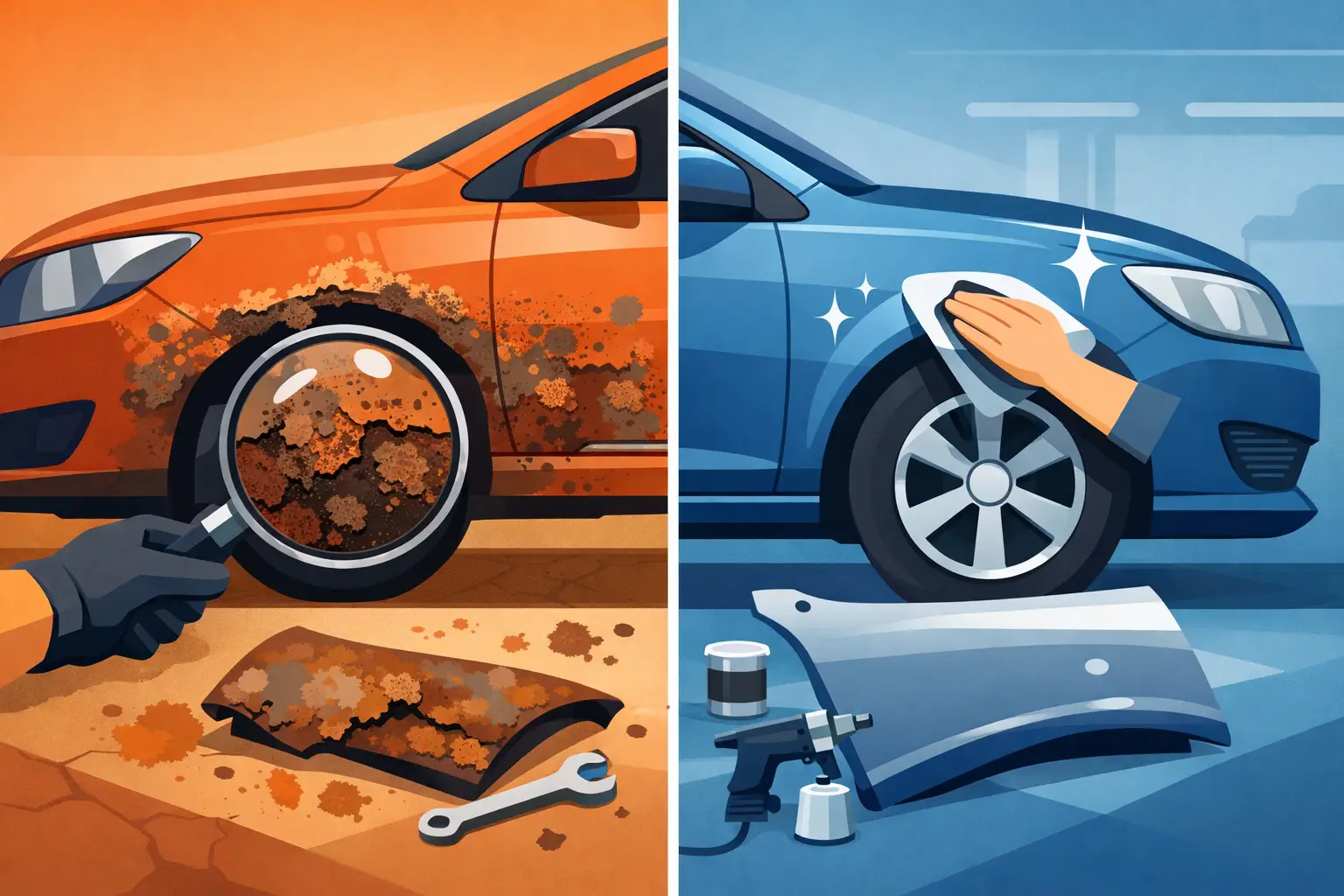
A small rust bubble near a wheel arch can look harmless one month and turn into a hole by the next. So, can rusted car panels be saved? Often, yes – but only when the repair deals with the corrosion beneath the paint, not just the mark you can see on the surface.
Rust is not merely a cosmetic issue. It spreads through steel, weakens the panel and can eventually affect a vehicle’s safety, weather sealing and WOF condition. The good news is that a proper assessment will tell you whether your panel needs targeted rust repair, a fabricated metal section or full replacement. The right answer depends on the location, depth and extent of the damage.
Can Rusted Car Panels Be Saved Before They Spread?
Panels with light surface rust are usually very repairable. This commonly appears as a scratch, stone chip or paint blister where moisture has reached bare metal. If the steel underneath remains solid, a panel beater can remove the corrosion, treat the area, prime it correctly and repaint the affected section for a durable finish.
The decision becomes less straightforward when rust has begun eating through the metal. A soft area around the wheel arch, bubbling along a sill, flaky metal under a door or a visible hole means the rust has moved beyond the surface. It may still be repairable, but the weak metal must be cut out completely. Filling over it may look tidy for a short time, but the corrosion will continue behind the repair and reappear through the paint.
A worthwhile rust repair starts with an honest inspection. That means checking both sides of the panel where possible, including behind trims, wheel-arch liners, door cards and underbody coatings. The visible spot is often only part of the problem.
Where Rust Causes the Biggest Problems
Not all rust carries the same risk. A small patch on a non-structural outer panel is different from corrosion around areas that support the vehicle or protect its occupants.
Rust around wheel arches is common because tyres throw water, grit and road debris into the area. It can be repaired well when caught early, although the inner arch also needs attention or the issue can return. Lower door skins, boot lids, bonnets and guards are also common trouble spots, particularly where drainage points have blocked or paint has been chipped.
Sills, chassis sections, suspension mounting areas, seatbelt anchor points and structural pillars need more careful consideration. These parts contribute to the vehicle’s integrity. Repair may involve cutting out affected steel and welding in properly shaped replacement sections, rather than applying filler or a cosmetic patch. For WOF-related rust, the quality and placement of the repair matter just as much as its appearance.
Surface Rust, Scale Rust and Perforation
Knowing the difference helps you make a sensible call before spending money.
Surface rust
Surface rust sits on top of the metal. It may look orange-brown, feel rough or appear beneath a paint chip, but the steel is still firm. This is the best-case scenario. Early treatment is generally quicker, more affordable and far less invasive than waiting for a hole to develop.
Scale rust
Scale rust has started breaking down the metal. The surface becomes flaky, pitted and uneven, and tapping it may reveal thin sections beneath. A technician needs to remove corrosion until sound steel is reached. Depending on the panel, this may require metal shaping and welding to restore strength and contour.
Perforation rust
Perforation means rust has created holes in the panel. At this point, filler alone is not a repair. The corroded section needs to be removed and replaced with new metal, or the complete panel may need replacing if the affected area is extensive. It is more work, but it is the only approach that gives the repair a fair chance of lasting.
What a Proper Rust Repair Looks Like
Quality rust repair is a process, not a quick cover-up. First, the technician identifies how far the corrosion has travelled. Paint, filler, seam sealer and underbody coating may need to be removed to expose the true condition of the metal.
If the rust is confined to the surface, the area is stripped back to clean steel and treated before primer is applied. Where metal is thin or perforated, the affected section is cut away. A new steel patch is shaped to suit the panel, welded carefully into place and finished so the body line remains true.
From there, the panel is sealed, primed and prepared for paint. Colour matching matters, especially on modern metallic, pearl and tri-coat finishes. A professional refinishing job may blend colour into adjacent panels so the repair does not stand out in direct sun or under workshop lights.
The hidden side of the repair also deserves attention. Seams need sealing, cavities may need rust protection, and wheel-arch or underbody areas should be recoated where required. This is what separates a repair that looks good on collection day from one that holds up through wet weather, road grit and everyday driving.
When Replacing a Panel Makes More Sense
Saving the original panel is not always the best value. If corrosion has spread across a large area, reached multiple seams or affected hard-to-access internal sections, replacement can be more reliable and sometimes more economical than extensive fabrication.
A bolt-on guard, bonnet, boot lid or door may be a practical replacement option if a sound panel is available. However, replacement panels still need careful fitting, corrosion protection and paintwork to match the vehicle. A cheap second-hand panel with rust hidden along an edge is not a bargain if it creates the same problem again.
For welded body sections, the decision is more involved. A repairer should explain whether a localised metal repair will restore the area properly or whether a larger section is needed. Clear photos and a straightforward quote make it easier to understand what you are paying for and why.
Why Quick Rust Fixes Usually Fail
Rust repairs fail when moisture and corrosion are left trapped beneath paint, filler or sealant. Sanding the top of a bubble, applying filler and spraying colour over it can make the panel look better temporarily. But rust works from the inside out. If the contaminated or weakened steel remains, it will keep spreading.
Poor preparation can also cause paint lifting, visible repair edges and mismatched colour. Skipping cavity protection or seam sealing leaves a fresh repair exposed from behind. These shortcuts may reduce the upfront cost, but they often lead to repeat work and a larger repair later.
A good repairer will be upfront if the panel is too far gone to repair economically. That is not bad news or upselling. It is the difference between spending money once on a sound solution and paying twice for a patch that does not last.
How to Slow Rust Down Between Repairs
You cannot reverse corrosion at home, but you can reduce the conditions that help it spread. Wash road grime from wheel arches, sills and underneath the vehicle, particularly after wet or coastal driving. Keep door drains and sunroof drains clear, and deal with stone chips or damaged paint before moisture reaches bare metal.
After minor damage, do not assume a scratch is only a paint issue. A deep scrape on a bumper may be cosmetic, but a scrape through paint on a steel guard or door can start corrosion quickly. Getting it inspected early usually gives you more repair options and a better chance of preserving the original panel.
If you notice bubbling paint, flaking edges or a soft spot near a structural area, book an assessment rather than waiting for the next WOF. At Fast Panel & Paint, the focus is on identifying what is really happening beneath the finish, then recommending a repair that suits your vehicle, budget and the condition of the panel.
Rust does not improve with time, but it does not always mean the end of a panel. Catch it early, insist on sound metal and proper protection, and your car can leave the workshop looking right and ready for the road ahead.