A crack in your bumper can make an otherwise tidy car look like it has had a hard week. The good news is that can a cracked bumper be repaired is usually a question with a positive answer – provided the damage is assessed properly and the repair is matched to the type of plastic, location of the crack and condition of the bumper underneath.
A quality bumper repair is not just about covering the damage with filler and paint. Done properly, it restores strength, shape and finish, so the repair holds up to daily driving, car parks, weather and road vibration. In some cases, though, replacement is the smarter and safer option. Here is how to tell the difference.
Can a cracked bumper be repaired or does it need replacing?
Most modern bumpers are plastic covers fitted over reinforcement components designed to absorb impact. Minor to moderate cracks in the outer plastic cover can often be repaired with plastic welding, reinforcement and refinishing. This is especially true where the bumper is still largely in shape and the mounting points are intact.
The location matters. A clean crack through a flat or gently curved section of the bumper is generally a strong candidate for repair. Damage around a corner, wheel arch or lower valance may also be repairable, but these areas flex more and need careful reinforcement. A repairer must make sure the bumper can still move naturally without reopening the crack.
Replacement is more likely to be recommended when the bumper is badly distorted, torn in several places, missing material, or damaged around critical mounting tabs. It may also be necessary if the impact has affected brackets, sensors, wiring, lights, grille components or the reinforcement bar behind the cover.
If your vehicle has parking sensors, radar equipment, cameras or advanced driver-assistance systems in the bumper, the decision needs extra care. The cover can sometimes still be repaired, but any affected equipment must be checked and, where required, recalibrated after the job. A bumper that looks good but interferes with safety systems is not a proper repair.
What a lasting cracked bumper repair involves
A durable repair begins with inspection, not paint. The bumper is checked for hidden splits, stretched plastic, broken tabs and impact damage behind the visible crack. It is also identified by plastic type, because the wrong repair material can fail even if the surface initially looks fine.
Many bumper covers use flexible plastics such as polypropylene blends. These materials need compatible welding rods, adhesives and primers. Ordinary body filler alone is not designed to bridge a flexible crack. It can look smooth at first, then fracture again once the bumper flexes over a driveway, speed hump or rough road.
Plastic welding restores the bumper from behind
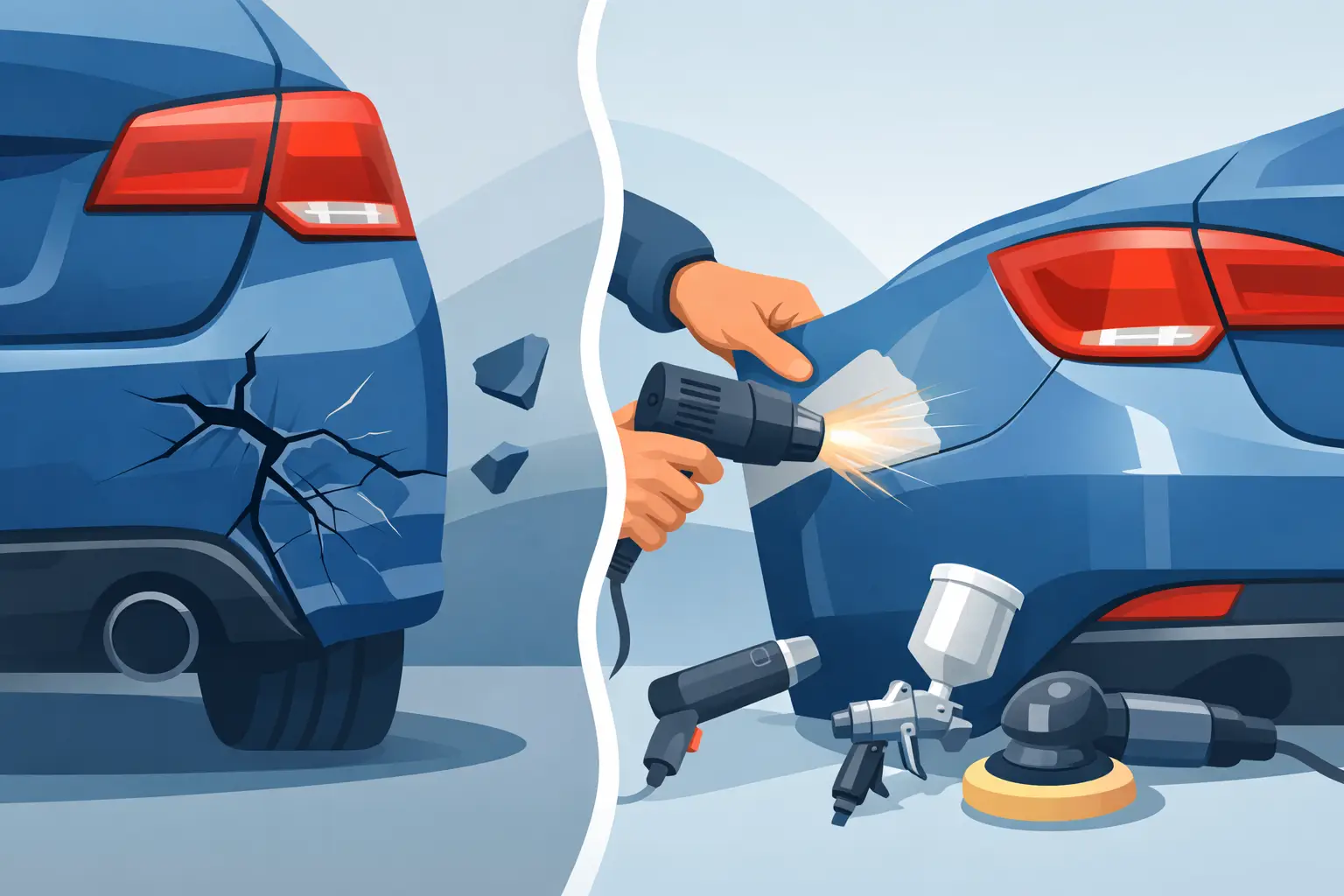
For suitable damage, plastic welding is often the backbone of a proper repair. The crack is cleaned and prepared, then welded from the rear to reconnect the material. Depending on the damage, reinforcing material may be added behind the crack for additional strength.
The front of the bumper is then shaped carefully to restore its original contour. Any necessary flexible repair products are applied in thin, controlled layers. The aim is not to bury the crack under material. It is to rebuild the damaged section so it remains stable and looks right from every angle.
Good preparation is where much of the workmanship sits. The repaired area is feathered into the surrounding bumper, primed with products made for plastic, and sanded smooth before colour is applied. Skipping those stages might save time initially, but it often leads to visible repair edges, peeling paint or a crack that returns.
Paint matching is more than finding the paint code
Even when the vehicle paint code is known, matching the colour takes skill. Paint fades over time, panels weather differently and metallic or pearl colours can change appearance depending on how they are sprayed. A bumper can also look slightly different to metal panels because plastic and steel reflect light differently.
A professional refinishing process accounts for that. The colour is checked against the vehicle, then applied using the right technique and blended where needed to avoid an obvious colour shift. Clear coat is applied for gloss and protection, followed by polishing once the finish has cured.
The result should not draw attention to itself. You should be able to walk up to the car, look across the repaired section in daylight and see a clean, even finish rather than a patchy colour, rough texture or a tell-tale line around the repair.
Signs your bumper is a good candidate for repair
A cracked bumper is commonly repairable when the crack is limited, the plastic remains present and the bumper still fits correctly against the guards, headlights and grille. Small splits from low-speed parking knocks, minor scrapes and cracks around the lower edge are frequent repair jobs.
It is also encouraging if the bumper has not been pushed deeply inward or pulled away from its mounts. Minor scuffing and paint damage alongside a crack are usually dealt with as part of the refinishing work.
On the other hand, be cautious if the bumper is hanging loose, the gaps around it have changed, or you can see damage behind it. Those signs do not automatically mean the bumper cannot be saved, but they do mean the repairer should remove or inspect it properly before quoting a final repair plan.
When replacement is the better value
Repair is not always the cheapest choice in the long run. A bumper with extensive cracking, heavy distortion or multiple failed previous repairs may take significant labour to restore. If its mounting tabs are broken away, its shape cannot be returned accurately, or the plastic has become brittle, a replacement bumper may give a better result.
The same applies after a more serious collision. The bumper cover is only one part of the front or rear impact area. A damaged reinforcement bar, absorber, brackets or body structure needs attention before cosmetic work begins. Covering up exterior damage without addressing what sits behind it can create alignment problems and compromise the vehicle’s intended impact protection.
A straight answer matters here. The right workshop should explain whether repair or replacement offers the best outcome for your vehicle, budget and timeframe. The lowest quote is not always the best value if it relies on shortcuts that leave you paying for the same damage twice.
Can you repair a cracked bumper yourself?
DIY bumper repair kits can be tempting, particularly for a small crack on an older car. They may be suitable for a temporary tidy-up where appearance is not a major concern. But matching flexible plastic, restoring the bumper’s profile and achieving a clean paint finish is harder than most people expect.
Common DIY issues include paint that does not match, filler that cracks, repair mesh showing through, rough sanding marks and clear coat that peels. Aerosol paint can also struggle to match metallic colours and factory gloss. Once an unsuccessful repair has been attempted, it can take longer to strip back and rectify properly.
For a vehicle you use every day, plan to sell, or take pride in, professional repair is usually the more sensible investment. It protects the appearance of the car and helps preserve its value without turning a small bumper crack into a bigger job.
What to do after the bumper is cracked
Take a few clear photos of the damage before cleaning it or trying to push it back into shape. If the crack followed an accident, check whether your insurer needs to be notified before repairs begin. Keep an eye out for warning lights, loose pieces, sensor faults or changes in the way the bumper sits.
Avoid forcing a cracked bumper back into place with screws, cable ties or tape unless it is only a short-term safety measure. These fixes can damage mounting points and make a clean repair more difficult. If there are sharp edges or loose sections, secure the vehicle and arrange an inspection promptly.
At Fast Panel & Paint, the focus is on giving vehicle owners a clear repair path: assess the damage, explain what is needed, and restore the finish properly. Whether plastic welding is the answer or replacement makes more sense, the goal is the same – a bumper that fits right, looks right and stands up to the road ahead.
A cracked bumper does not have to become a permanent eyesore or an automatic replacement bill. Get it assessed while the damage is contained, and you have the best chance of a strong repair, a faithful colour match and a finish you can feel good about every time you walk back to your car.