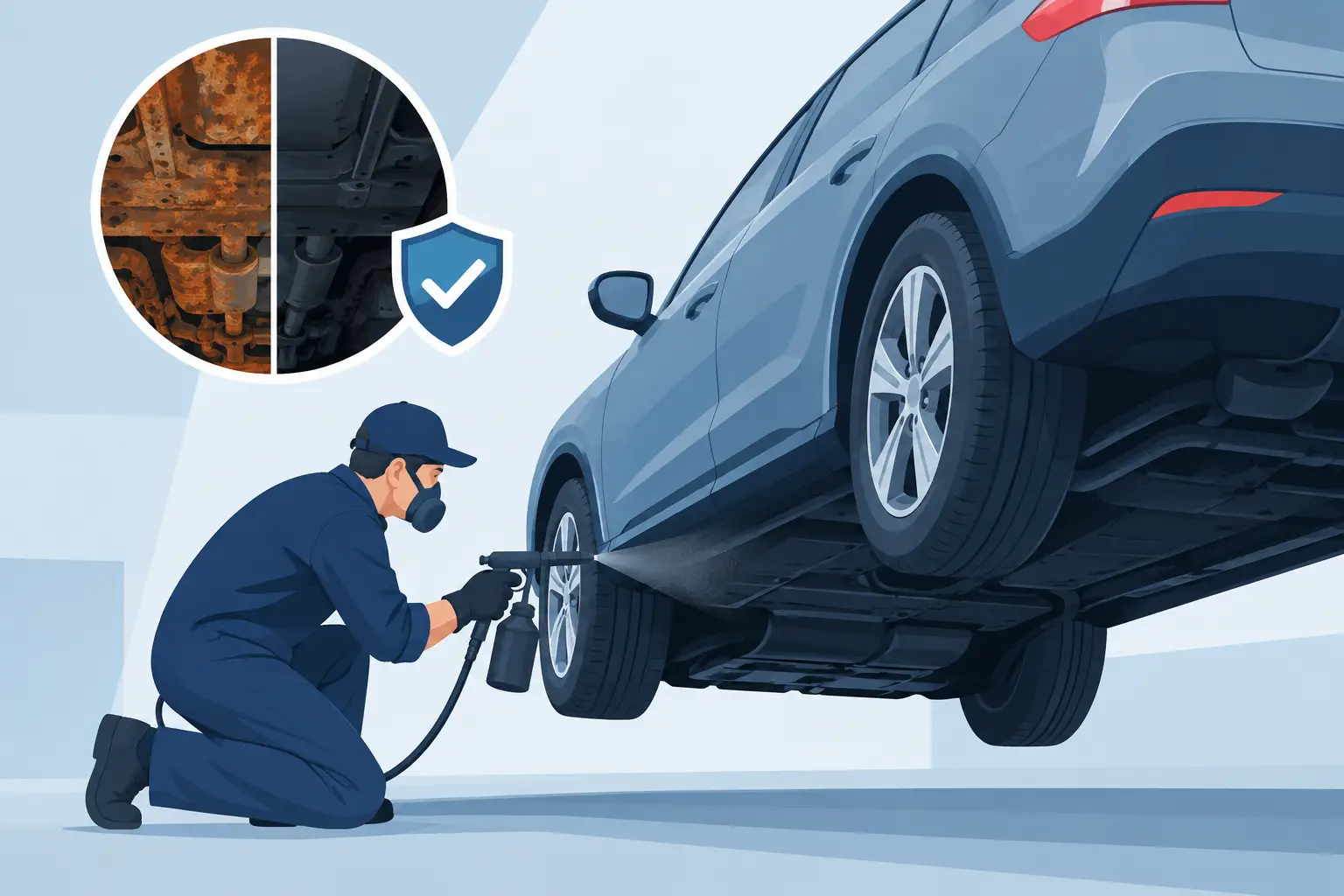
Road grime does not just make the underside of your car look rough. It holds moisture against seams, bolts, suspension mounts and bare edges where damage can begin. That is one of the best reasons to undercoat cars: it protects the parts you rarely see before corrosion becomes an expensive body repair.
For everyday drivers, undercoating is not about making a car look modified or over-serviced. Done properly, it is preventative maintenance that helps preserve the metal beneath the paint. It is especially worthwhile for vehicles that live near the coast, spend time on wet roads, travel gravel tracks, or regularly carry kids, tools and gear through all sorts of weather.
Why undercoating is worth considering
An undercoat is a protective coating applied to vulnerable areas beneath a vehicle. Depending on the product and the vehicle, it may be applied to the floor pan, wheel arches, chassis sections, subframes and other exposed metal. The right material creates a barrier that helps keep water, salt, mud and road debris away from the surface.
It is not a one-size-fits-all treatment. A newer vehicle with strong factory corrosion protection may only need targeted protection in high-impact areas. An older car, ute or family SUV may need more careful preparation and treatment, particularly if it has started collecting surface corrosion. The quality of preparation matters just as much as the coating itself.
1. It helps stop rust where it starts
Rust often begins out of sight. A small stone chip beneath a wheel arch, moisture trapped in a seam, or mud packed behind a plastic liner can expose metal over time. Once corrosion takes hold, it can spread beneath coatings and paint, turning a minor issue into a much larger repair.
A professionally applied undercoat helps seal vulnerable surfaces from water and contaminants. This is particularly valuable around wheel arches and underbody sections that take the full hit from spray, grit and loose stones. Protecting those areas early is usually far more affordable than cutting out rusted metal and refinishing the panel later.
2. It protects against coastal air and wet-road grime
You do not need to drive directly on the beach for salt to affect your vehicle. Coastal air carries salt, and wet roads can throw salty residue, dirt and grit onto the underside of your car. That mix sticks to metal and holds moisture in place, creating ideal conditions for corrosion.
Regular washing helps, but a hose-down cannot always reach every seam and cavity. Undercoating adds another layer of defence where cleaning is difficult. For drivers in coastal suburbs, frequent rain areas or rural locations with unsealed roads, that extra protection can make a real difference over several years.
3. It reduces damage from stones and road debris
Every drive exposes the underside of your car to small impacts. Tyres flick stones, gravel and road rubbish into wheel arches and along the lower body. These impacts can chip factory coatings and expose metal, even if the paintwork above the sill still looks tidy.
A durable underbody coating absorbs some of that impact and helps reduce chipping. It will not make the vehicle invincible, and it cannot prevent physical damage from a hard strike, but it gives vulnerable sections more protection from the everyday wear that builds up quietly.
This is one of the strongest reasons to undercoat cars used on gravel roads, worksites or country routes. It can also suit utes and SUVs that regularly head away for camping, towing or weekend trips.
4. It can make the cabin feel quieter
Some undercoating products have sound-deadening qualities. When applied to suitable areas, they can soften the sound of road spray, stone flick and tyre noise entering through the floor and wheel arches. The improvement varies by vehicle and product, so it should be seen as a useful bonus rather than the main reason to book the job.
If road noise is your main concern, ask about the best approach for your vehicle. A thick coating in the wrong place is not a shortcut to a quiet cabin. Proper application must never interfere with drainage points, moving components, heat shields or safety systems.
Undercoating protects value, not just metal
A clean, well-maintained underbody gives future buyers confidence. Most people know that paint can be polished and a bumper can be repaired, but hidden corrosion raises bigger questions about a vehicle’s long-term condition. Rust around structural sections, suspension mounts or lower body seams can affect safety, repair costs and saleability.
Keeping the underside protected supports the overall condition of the car. That matters whether you plan to sell in a few years, trade it in, or keep it in the family for the long haul. It also gives you a better chance of spotting problems early during servicing, rather than finding them when rust has already spread.
There is a trade-off here. Undercoating will not automatically add a fixed dollar amount to your resale price, and buyers still judge the vehicle on kilometres, service history, tyres, paint condition and mechanical health. But avoiding visible corrosion and showing that the car has been cared for can strengthen its appeal.
When undercoating will not fix the problem
Undercoat is preventative protection, not a cover-up for existing rust. Applying a thick black coating over flaky corrosion can trap moisture and hide damage until it becomes worse. It may make the underside look better for a short time, but it does not restore weakened metal.
If rust is already present, the area should be assessed first. Light surface rust may be treated, cleaned and sealed correctly. More advanced corrosion may need the damaged metal removed, repaired and refinished before any protective coating goes on. Honest preparation is what gives an undercoating job its value.
The same applies after accident damage. If a wheel arch, sill, floor section or bumper mounting area has been repaired, protecting the repaired zone can be a smart next step. The repair should be fully finished and properly cured before the appropriate underbody protection is applied.
What a proper undercoating job should include
Good results begin with access and preparation. The underside needs to be inspected for corrosion, impact damage, loose coatings and dirt build-up. It then needs to be thoroughly cleaned and dried, because coating over moisture or mud is asking for trouble.
Any rust or failed material should be dealt with first. From there, the correct coating can be applied to suitable surfaces at an even thickness. A careful technician will avoid brake components, exhaust parts, sensors, drains, rubber bushes and moving suspension sections where product does not belong.
Ask what areas are being treated, what preparation is included and whether existing rust has been found. Clear answers are a good sign. You should know what the coating is designed to do, what it cannot do, and whether it will need checking after heavy off-road use or future repairs.
Is now the right time to undercoat your car?
The best time is before corrosion starts, but it is never too early to inspect. Consider it if your vehicle is exposed to coastal air, wet roads, gravel, worksite conditions or regular long-distance driving. It also makes sense after body repairs where the underbody protection has been disturbed, provided the repair has been completed properly.
At Fast Panel & Paint, we see how easily small chips and untreated lower-body damage can grow into rust repairs that cost far more than expected. A professional inspection gives you a clear picture of what is happening underneath, without guesswork or unnecessary work.
Your car works hard out of sight. Give its underside the same level of care you expect from its paintwork, and deal with small vulnerabilities while they are still small.