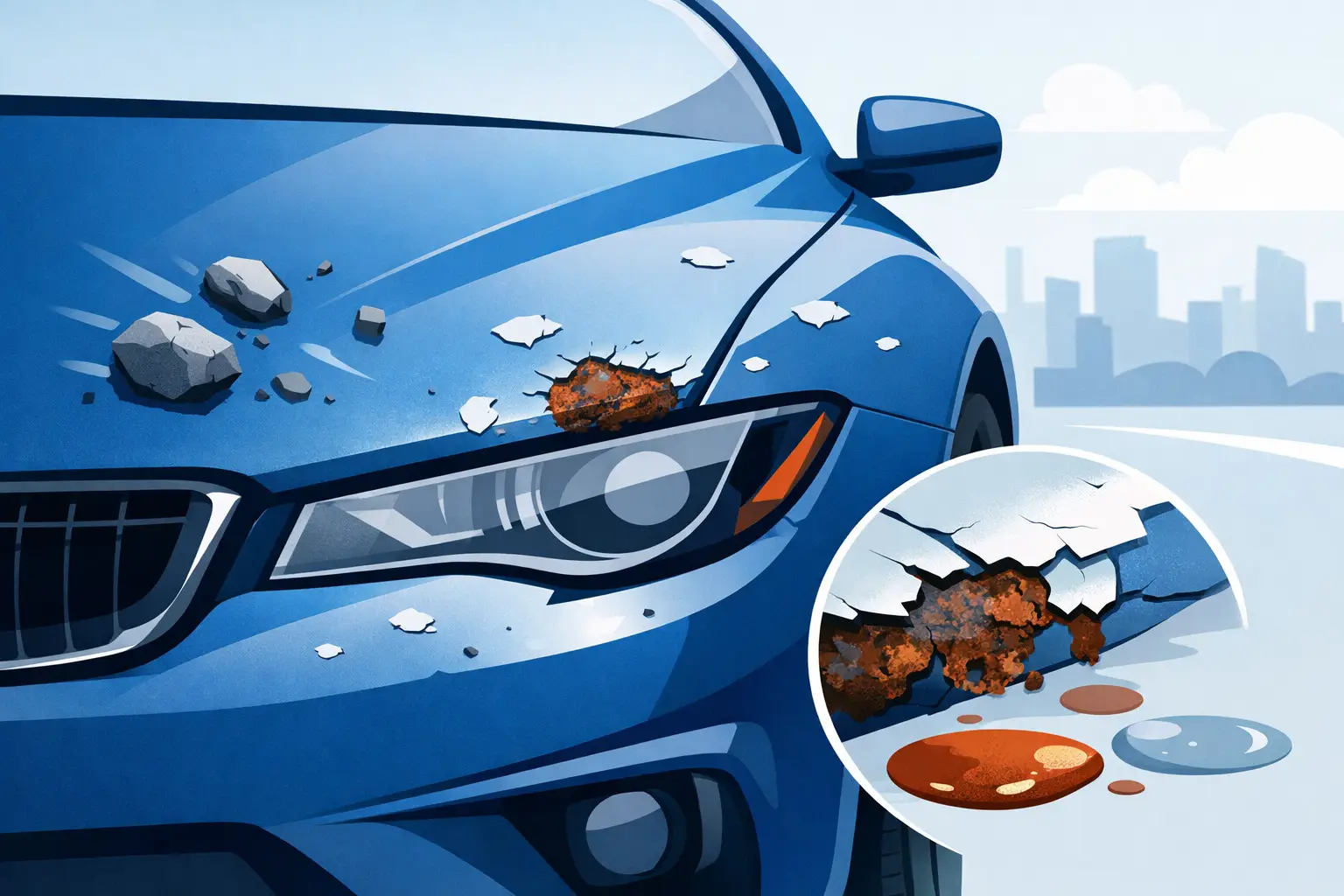
A sharp crack against the bonnet or front bumper can seem minor, especially when the mark is no bigger than a grain of rice. But can stone chips cause rust? Yes – if a chip breaks through the paint and exposes bare steel, moisture and air can start corrosion beneath the surface.
The good news is that most stone-chip damage is straightforward to repair when it is caught early. The key is not judging the problem by the size of the mark alone. A tiny chip in the wrong spot, left through wet weather and regular washing, can turn into bubbling paint or a proper rust repair later on.
How Stone Chips Lead to Rust
Your vehicle’s paintwork is more than just its colour coat. It is a protective system made up of primer, colour and clear coat, designed to keep water, salt, road grime and oxygen away from the metal panel underneath.
When a stone strikes hard enough to crack or remove those layers, it creates a gap in that protection. If bare steel is visible, even as a small dark dot, water can settle in the damaged area. Oxygen reacts with the exposed metal and corrosion begins.
Rust does not always stay where the original chip landed. Once it starts, it can creep under the surrounding paint. This is why a chip that once looked harmless can later show as a raised bubble, a brown stain or a section of peeling paint around the wheel arch, bonnet edge or lower door.
Not every chip will rust immediately. It depends on how deep the impact is, whether the primer remains intact, where the chip is located and what conditions the car is driven and parked in. Cars regularly exposed to rain, coastal air, muddy roads or damp covered parking face a higher risk than vehicles kept clean and dry.
Where Stone Chips Are Most Likely to Cause Rust
The front of the car takes the hardest hit from loose stones, grit and road debris. Bonnet leading edges, front guards, lower doors, side skirts, wheel arches and the area behind the wheels are common trouble spots. Utes and SUVs that travel on unsealed roads can also pick up repeated chipping along lower panels.
A chip on a flat, easy-to-see bonnet panel is usually noticed quickly. The more concerning damage is often hidden around arch lips, door edges, sill panels and underneath mudflaps. These areas collect water and road grime, which gives corrosion more time to develop.
Panel edges deserve extra attention. Paint is naturally thinner on sharp folds and edges, so a stone strike can break through more easily. If a chip is near a seam, trim piece or moulding, moisture can work its way into places you cannot properly inspect from the outside.
Steel, aluminium and plastic panels are different
Steel panels can rust. That includes many bonnets, guards, doors, roofs and structural sections, depending on the vehicle.
Aluminium does not rust in the same way as steel, but it can corrode when its protective coating is damaged. The corrosion often looks different, sometimes appearing as a pale, chalky or blistered area. It still needs professional attention because it can affect paint adhesion and spread under the finish.
Plastic bumpers do not rust at all. However, chips in bumper paint can still look rough, let moisture reach mounting hardware, and leave the surrounding finish vulnerable to further peeling. A proper bumper repair and repaint keeps the vehicle looking cared for and prevents a small cosmetic issue from becoming a larger refinishing job.
How Quickly Can Rust Start After a Stone Chip?
There is no single deadline. In dry conditions, a shallow chip may sit for months without obvious change. In wet weather or salt-heavy coastal conditions, corrosion can begin much sooner – sometimes before you see any brown colour at all.
Surface rust can form first as a small orange or brown speck. At this stage, the metal may still be sound, and repair is generally simpler. Once rust lifts the paint, spreads beneath it or creates pitting in the panel, the repair requires more preparation. The affected area must be taken back to clean metal, treated correctly, primed, refinished and blended where needed for a durable result.
The biggest risk is leaving it because it is “only a chip”. Rust works from the inside of the paint film outward. By the time the damage looks serious, the repair area may be much larger than the original impact mark.
Check a Chip Before You Cover It Up
A quick inspection can help you decide whether you need a touch-up or a workshop repair. Wash the area gently first so you are not mistaking road tar or dirt for paint damage. Once dry, look closely in good light.
If you can see bare metal, a dark crater, orange staining, loose paint edges or bubbling around the chip, arrange a repair sooner rather than later. Run a clean fingernail lightly across the area. A rough edge or paint lifting around the impact can indicate that the chip has gone beyond the clear coat.
Avoid picking at the paint or using aggressive abrasives. It is easy to turn a small chip into a larger exposed area. Likewise, do not apply touch-up paint over active rust, moisture or loose material. It may hide the problem briefly, but it will not stop corrosion underneath.
Is a DIY touch-up enough?
For a fresh, pin-sized chip that has not reached bare metal, a careful touch-up can be a reasonable short-term option. The surface needs to be clean, dry and free from wax. Use a small amount of matching paint rather than flooding the area, and allow it to cure properly.
The trade-off is finish quality. DIY touch-up paint can protect a small mark, but it rarely disappears completely. Colour matching, paint depth and clear-coat blending are difficult without the right preparation and refinishing equipment.
If the chip exposes metal, sits on a panel edge, has started rusting, or is one of many marks across the bonnet or guards, professional repair is the smarter call. The job is not just about making the spot look better. It is about rebuilding the protective layers that stop the issue returning.
What a Proper Stone-Chip Repair Involves
A lasting repair starts with assessing the damage, not guessing from a photo or covering the mark with paint. The panel is cleaned and the damaged coating is prepared back to a stable edge. Any corrosion is removed and the exposed area is treated so the repair begins on sound material.
From there, the technician applies the correct primers and refinishing products, then colour-matches and blends the repair as needed. A clear coat restores protection and gloss, while polishing helps the repaired area sit naturally with the surrounding paintwork.
For widespread stone chipping, such as a heavily marked bonnet or front bumper, spot repairs may not always give the best visual result. Refinishing the full panel can provide a cleaner, more consistent finish. It costs more than touching up individual marks, but it avoids a patchy appearance and gives the panel even protection.
At Fast Panel & Paint, the focus is on fixing the cause as well as the visible damage. That means honest advice on whether a simple touch-up, localised repair or full-panel repaint will give your vehicle the best long-term result.
Preventing More Chips and Corrosion
You cannot keep every stone off the road, but a few practical habits make a difference. Keep a sensible distance behind trucks, roadworks vehicles and cars on loose-chip surfaces. Wash the front end, wheel arches and lower panels regularly, especially after wet or gravel-road driving. This removes grit and road film that can sit against existing paint damage.
Paint protection film can be worthwhile for high-impact areas on vehicles that do plenty of motorway or rural-road kilometres. It is an upfront cost, and it will not repair existing damage, but quality film can take the hit before stones reach the paint. Mudflaps and correctly fitted guards can also reduce debris thrown at lower panels.
Most of all, inspect your paintwork after long trips and before winter. Catching a chip while it is still clean and small gives you more repair options, a better finish and a better chance of keeping rust out of the panel altogether.
A stone chip does not have to become a rust problem. Give it attention early, keep the area clean, and get a proper assessment when bare metal or bubbling paint is involved. Your car will stay sharper now and better protected for the kilometres ahead.