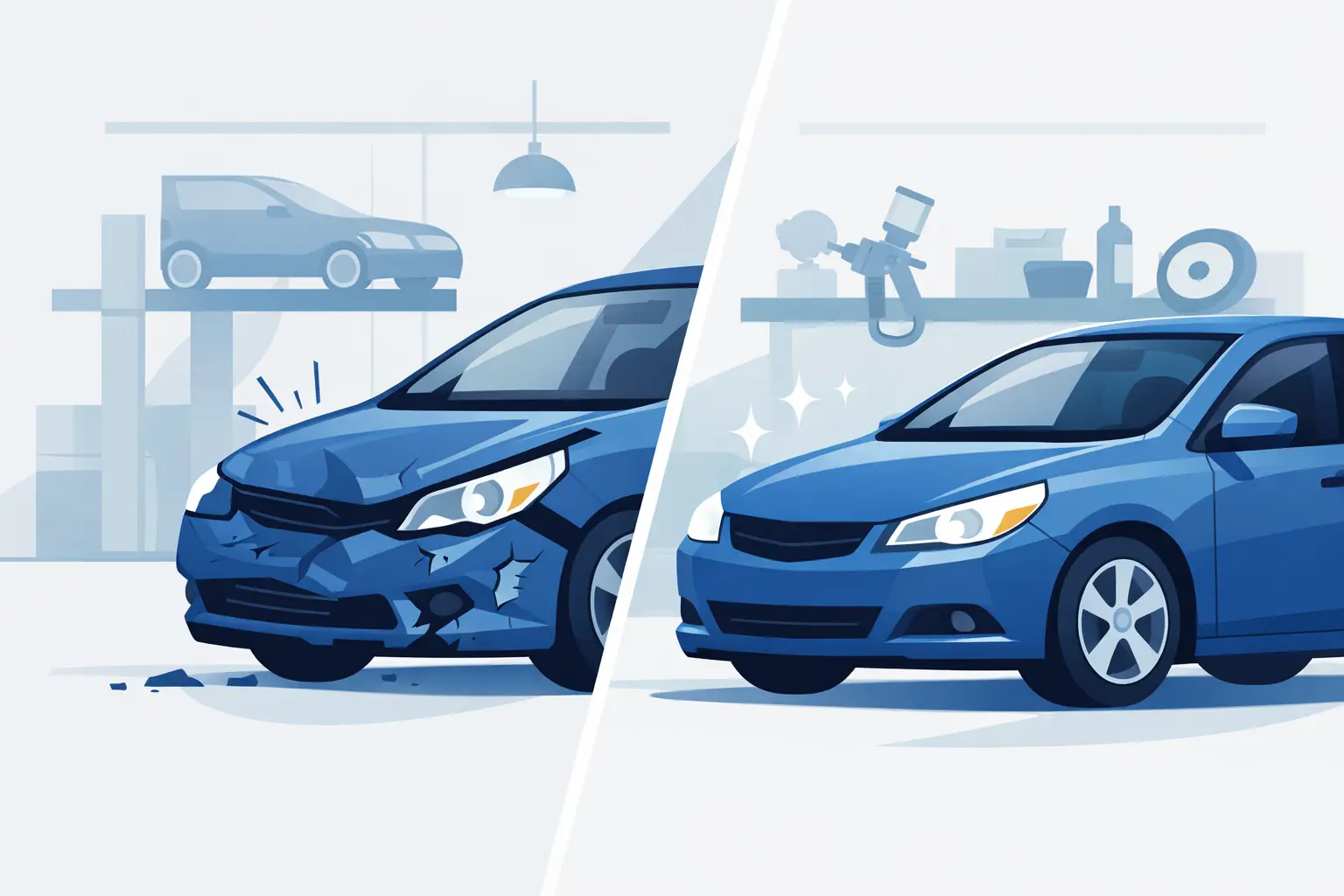
A scraped bumper in the supermarket car park or a low-speed nudge at the lights can leave your car looking rough fast. When people search for minor collision repair before and after, they usually want one simple answer – can this actually be fixed properly, or will it always look repaired?
The honest answer is that small collision damage can often be restored to a very high standard, but the result depends on how the repair is handled. A quick cosmetic patch might hide the problem for now. A proper repair brings the shape, finish and protection of the panel back so the damage does not keep costing you later.
What minor collision repair before and after really means
Before and after photos can make any repair look dramatic, but the real value is in what changed beyond the obvious dent or scrape. Before, you might be dealing with cracked paint, a pushed-in guard, a bumper that no longer lines up, or plastic damage that seems minor until you look closer. After, the goal is not just for the panel to look smoother. It should sit correctly, the paint should match properly, and the repaired area should hold up in daily driving.
That matters because even light collision damage can do more than spoil the appearance of the car. Broken paint can expose metal. Misaligned panels can affect gaps around doors, headlights or the boot. A bumper scuff can hide split plastic mounts underneath. What looks small on the surface is not always small once the panel is inspected properly.
The kind of damage that can usually be repaired well
Most minor collision jobs fall into a few common categories. Parking dents, bumper scuffs, paint transfer, cracked plastic bumper corners, shallow creases in doors and light front or rear impact damage are all regularly repairable. In many cases, the panel does not need replacing. It may need reshaping, filling in the right areas, sanding, priming and repainting, or in some cases paintless dent removal if the paint has stayed intact.
That said, there is always a line between minor and more involved damage. If the impact has distorted structural areas, damaged sensors, broken headlight mounts, or affected wheel alignment, the repair process becomes more than cosmetic. This is why a proper assessment matters more than guessing from a photo on your mobile.
Why some before and after results look flawless and others do not
The difference usually comes down to preparation, materials and workmanship. Anyone can sand a damaged area and spray over it. The problem is that shortcuts show up later. You may see mismatched colour in sunlight, sanding marks under the clear coat, peeling paint at the edge of the repair, or panel lines that still look slightly off.
A strong repair starts with getting the shape right first. If the metal or plastic is not restored properly, the paint will never save it. After that, the surface has to be prepared carefully so the primer, basecoat and clear coat bond as they should. Colour matching also matters more than many people realise. Modern paint finishes can shift depending on light, metallic content and how the paint is blended into adjacent panels.
This is why good before and after results are not just about making damage disappear for the day you pick up the car. They are about making the repair look right next month, next summer and after plenty of washing and weather.
Minor collision repair before and after on bumpers, doors and guards
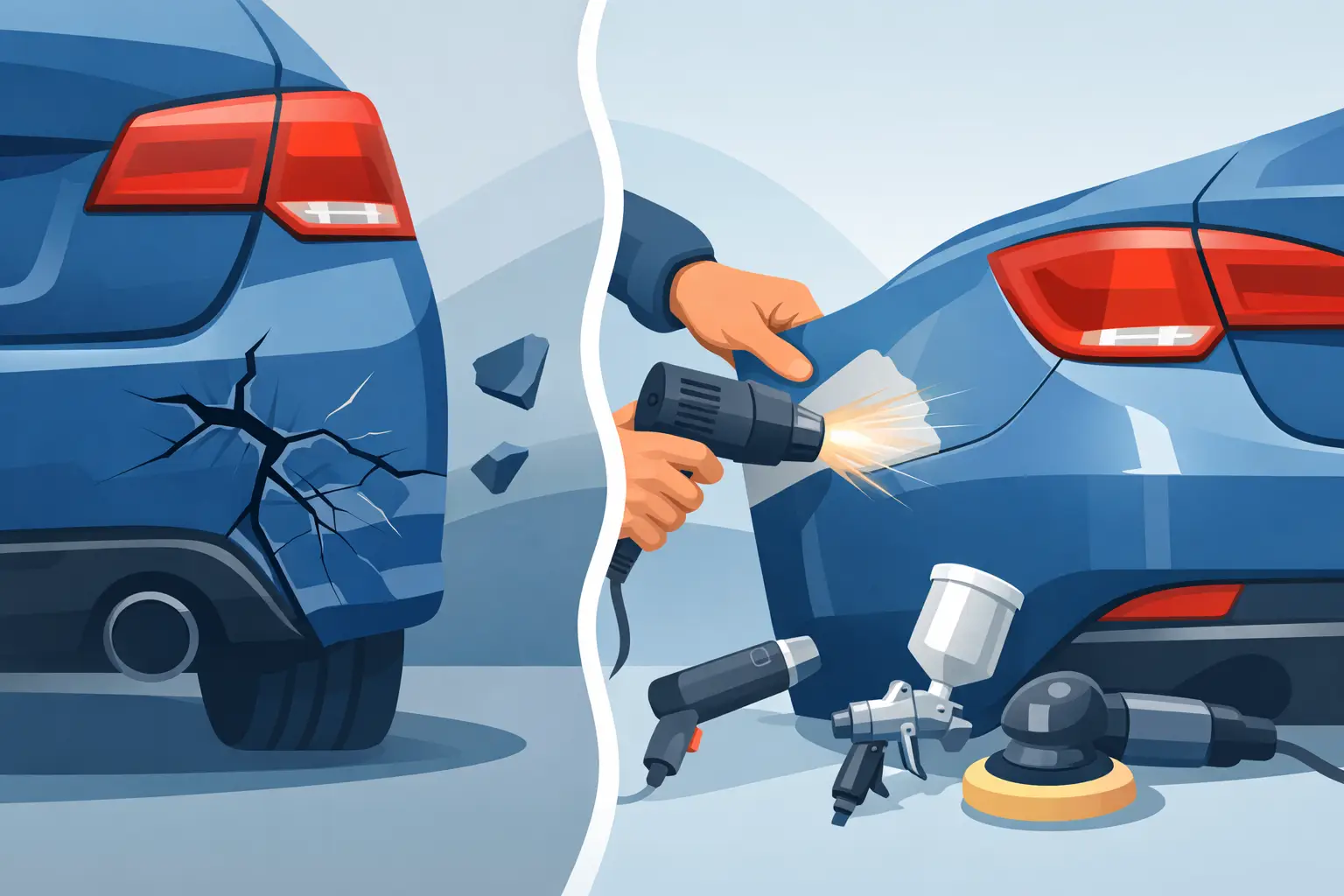
Bumpers are one of the most common repair areas because they take the hits most often. Before repair, a bumper may show paint scuffs, cracked corners, dents, scrapes or popped clips that leave it sagging. After a proper repair, the finish should be smooth, the mounting points secure and the fitment even along the body line.
Doors and guards are slightly different because panel shape is easier to notice. A shallow dent in a door can throw reflections badly, even if the paint damage looks small. Before repair, you may only notice a crease near the handle or a ripple along the lower edge. After repair, the panel should reflect evenly again, with no waving, no obvious filler edge and no mismatch where the new paint meets the old.
For everyday drivers, this is where quality shows itself. You do not want to collect the car and feel happy in the workshop lighting, only to spot the repair straight away in the sun outside.
What happens during a proper repair
A quality repair process is fairly straightforward when explained clearly. First comes inspection. The damaged area is checked for visible and hidden issues, including panel alignment, paint damage, cracked mounts and surrounding impact signs.
Next comes the repair itself. Depending on the damage, that could involve dent removal, plastic welding, bumper reshaping, panel beating or minor filling to restore the original contour. Once the shape is right, the area is sanded and primed to create a stable base for paint.
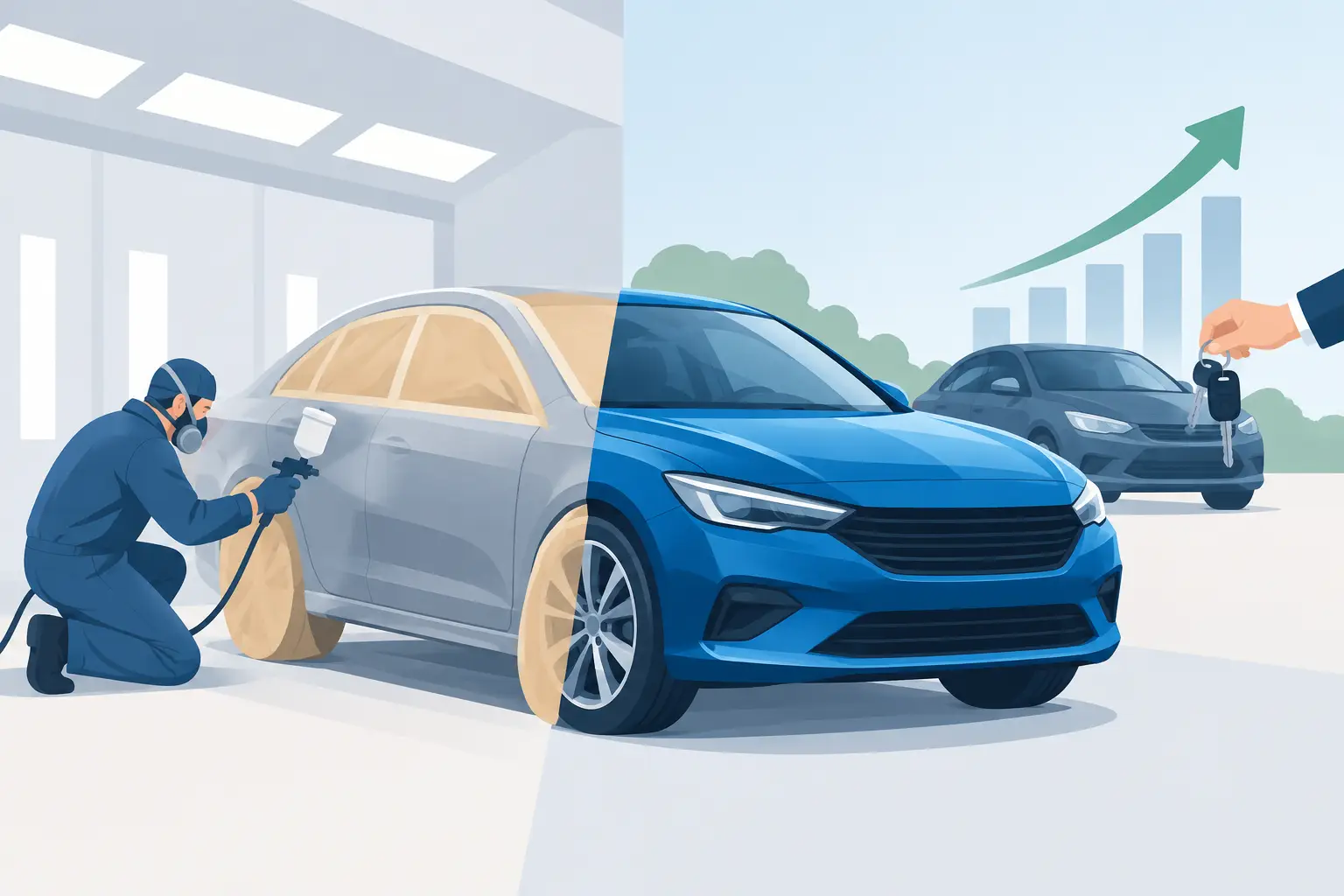
Then the refinishing work begins. Paint is colour matched to the vehicle, applied correctly, and blended where needed so the repaired section does not stand out. Once cured, the surface may be polished and checked again for finish quality, fit and consistency.
For customers, the main thing is not memorising every workshop step. It is knowing that a proper job does not start and end with paint.
When a cheap fix can cost more later
Price matters. Most people with minor collision damage are trying to balance cost, appearance and urgency. That is fair enough. But the cheapest quote is not always the best value if it only covers a surface tidy-up.
A rushed repair may skip deeper checks, use lower-grade materials, or avoid the prep needed for a lasting finish. At first glance it can look acceptable. A few months later, paint edges lift, filler sinks, or the colour difference becomes obvious. Then you are paying twice.
There is also the resale side. Even if you are not planning to sell soon, visible poor-quality repairs can drag down buyer confidence. Clean, well-finished bodywork tells a very different story from a bumper or guard that looks like it was patched in a hurry.
Choosing the right repairer for visible results
If you are comparing repairers, ask practical questions. Will they assess for hidden damage, or only quote the visible mark? Will they match the paint properly? Are they repairing the panel where possible, or replacing parts that may not need replacing? How do they handle communication and timeframes?
Good repairers do not hide behind vague language. They explain what is damaged, what needs doing and why. They are also honest about trade-offs. For example, some repairs may be near-perfect without needing a full respray, while others need extra blending work to avoid a noticeable paint difference. Straight answers matter.
That is where a workshop with proper panel and paint experience stands apart. At Fast Panel & Paint, the focus is on workmanship you can actually see – straight panels, strong paint finish and a repair that looks right when the car goes back into real life, not just under workshop lights.
Before and after is about confidence as much as cosmetics
A car with minor collision damage often still drives fine, but it does not feel the same. Every time you walk up to it, the damage catches your eye. You put off fixing it because it seems cosmetic, then start wondering if the scrape is getting worse, if the paint will peel, or if the bumper is looser than it should be.
A proper before and after result changes that. It restores pride in the car, but it also removes uncertainty. You know the panel is repaired properly, the finish is protected, and the damage is not left to turn into a bigger job later.
That is the real point of minor collision repair. Not just making a dent disappear, but bringing the vehicle back to the standard it should have been in all along.
If your car has picked up light damage, do not judge the outcome by the dent alone. Judge it by what the repair looks like afterwards, how well it lasts, and whether you can walk away from the job feeling like your car has been properly put right.