A kerb strike can feel minor. A low-speed crash can leave only a cracked bumper and a scuffed guard. But if the force travelled beyond the visible panels, the question becomes more serious: how to tell if chassis is bent before it affects the way your vehicle drives, wears tyres or protects you in another impact.
A bent chassis is not always obvious from the driveway. Modern vehicles are designed with crumple zones, rails and reinforced sections that manage crash energy in controlled ways. That is good for occupant safety, but it can also mean structural damage sits behind otherwise repairable-looking bodywork. The right answer is not to guess from one symptom. It is to look at the full picture, then have the vehicle measured properly if there is any doubt.
What people mean by a bent chassis
On older vehicles, the chassis may be a separate, heavy frame beneath the body. On many modern cars, SUVs and utes, the body structure itself does much of that work. You may hear a repairer refer to a chassis rail, subframe, apron, floor pan or structural section rather than simply “the chassis”.
In practical terms, a bent chassis means an important structural part is no longer sitting where the manufacturer designed it to sit. It may be pushed sideways, pulled down, twisted, buckled or shortened after an impact. Even a small movement can alter suspension geometry, panel gaps and wheel alignment.
Not every accident causes structural damage. A bumper cover, light, guard or door can be repaired or replaced without affecting the chassis. The concern rises when the impact was hard enough to move a wheel, crease metal near the engine bay or boot floor, deploy airbags, or leave the vehicle driving differently afterwards.
Signs that can point to chassis damage
The vehicle pulls or will not stay aligned
One of the most common warning signs is a vehicle that pulls to one side on a flat, straight road. You may find yourself holding the steering wheel slightly off-centre just to travel straight. After a wheel alignment, the issue may improve but return quickly, or the workshop may tell you the alignment angles cannot be brought back into specification.
This symptom does not automatically mean the chassis is bent. It could be a damaged control arm, bent steering component, worn suspension bush or tyre problem. Still, it is a reason to investigate, especially after a collision or heavy pothole impact.
Uneven or unusually fast tyre wear
Check the tread across each tyre, not just the outside edge. Feathering, bald patches, excessive inner-edge wear or noticeably different wear between left and right tyres can point to an alignment problem. A bent structural section can prevent the suspension from sitting at the correct camber, caster or toe settings.
Tyres do not diagnose chassis damage on their own. Incorrect tyre pressures and normal suspension wear also cause uneven wear. But replacing tyres without finding the reason for the wear can become an expensive cycle.
Uneven gaps around doors, bonnet or boot
Stand back and compare the gaps between body panels. Look at the bonnet-to-guard gaps, the doors against the guards and sills, and the boot lid around the rear quarters. A fresh misalignment after an accident, particularly where one gap is tight and another is wide, can suggest the structure underneath has shifted.
Doors that suddenly need a hard push to latch, scrape on the striker, sit proud of the body or allow wind noise are also worth checking. Keep some perspective, though. A damaged door, loose hinge or poorly fitted replacement panel can produce similar issues without chassis damage.
Creases, ripples or fresh seam sealer underneath
A careful visual inspection can reveal clues. With the vehicle safely parked, look in the engine bay, around the radiator support, inside the boot and along accessible underbody sections. Buckled metal, ripples in flat panels, cracked paint around seams, split seam sealer or a chassis rail that no longer looks straight deserve professional attention.
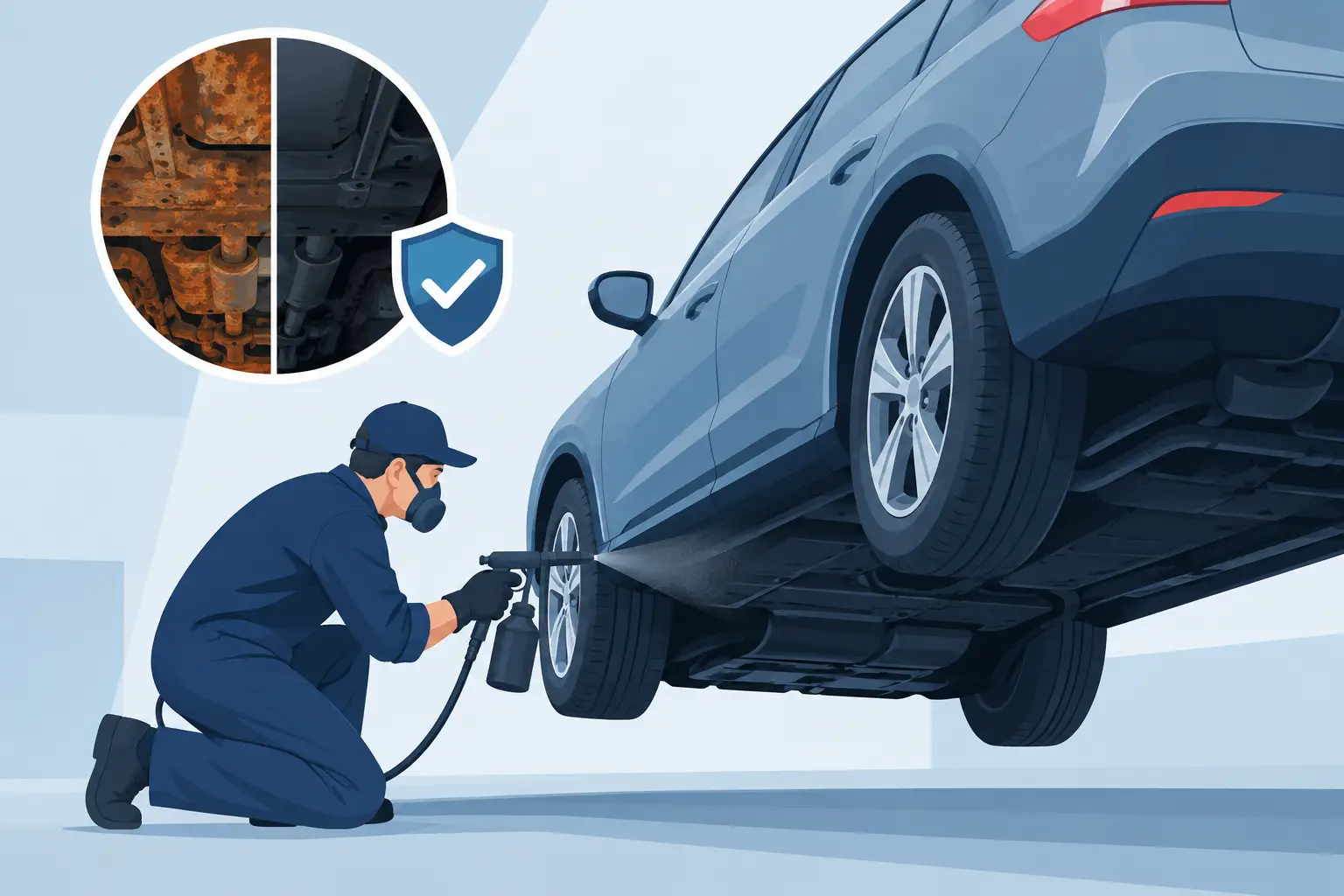
Do not crawl under a vehicle supported only by a jack. Structural checks need clear access and safe lifting equipment. Also be wary of freshly applied underseal, thick paint or new seam sealer in one small area. These materials have legitimate repair uses, but they can hide old collision work when applied poorly.
A wheel sits oddly in its arch
Compare each wheel’s position within its wheel arch. If one wheel looks too far forward, too far back, or noticeably closer to one side of the arch, something may have moved. This is particularly concerning after a front-corner or rear-corner impact.
A wheel that is off-centre can be caused by a bent suspension arm or displaced subframe, which may be repairable without major chassis straightening. Either way, it should not be ignored. Suspension components and structural mounting points need to be assessed together.
New noises, vibration or unstable handling
Rattles, clunks, steering vibration and a vehicle that feels unsettled under braking can all appear after impact damage. If the car wanders, feels nervous at motorway speed, brakes unevenly or makes a tyre-scrubbing noise in turns, stop treating it as a cosmetic repair.
These problems can also come from tyres, wheels, brakes or suspension. The key point is timing: if the symptom began after the impact, have it checked before relying on the vehicle for daily driving.
How to tell if chassis is bent versus ordinary alignment trouble
A standard wheel alignment is a useful first check, but it is not a complete structural inspection. Alignment equipment measures the relationship between the wheels. It can show that angles are out of range, yet it cannot always identify whether the cause is a bent control arm, a shifted subframe, a damaged strut tower or a chassis rail that has moved.
Ask for a printed alignment report. It should show before-and-after readings for camber, caster and toe. If the technician cannot achieve the required settings, or needs to make unusual adjustments to get close, further inspection is sensible.
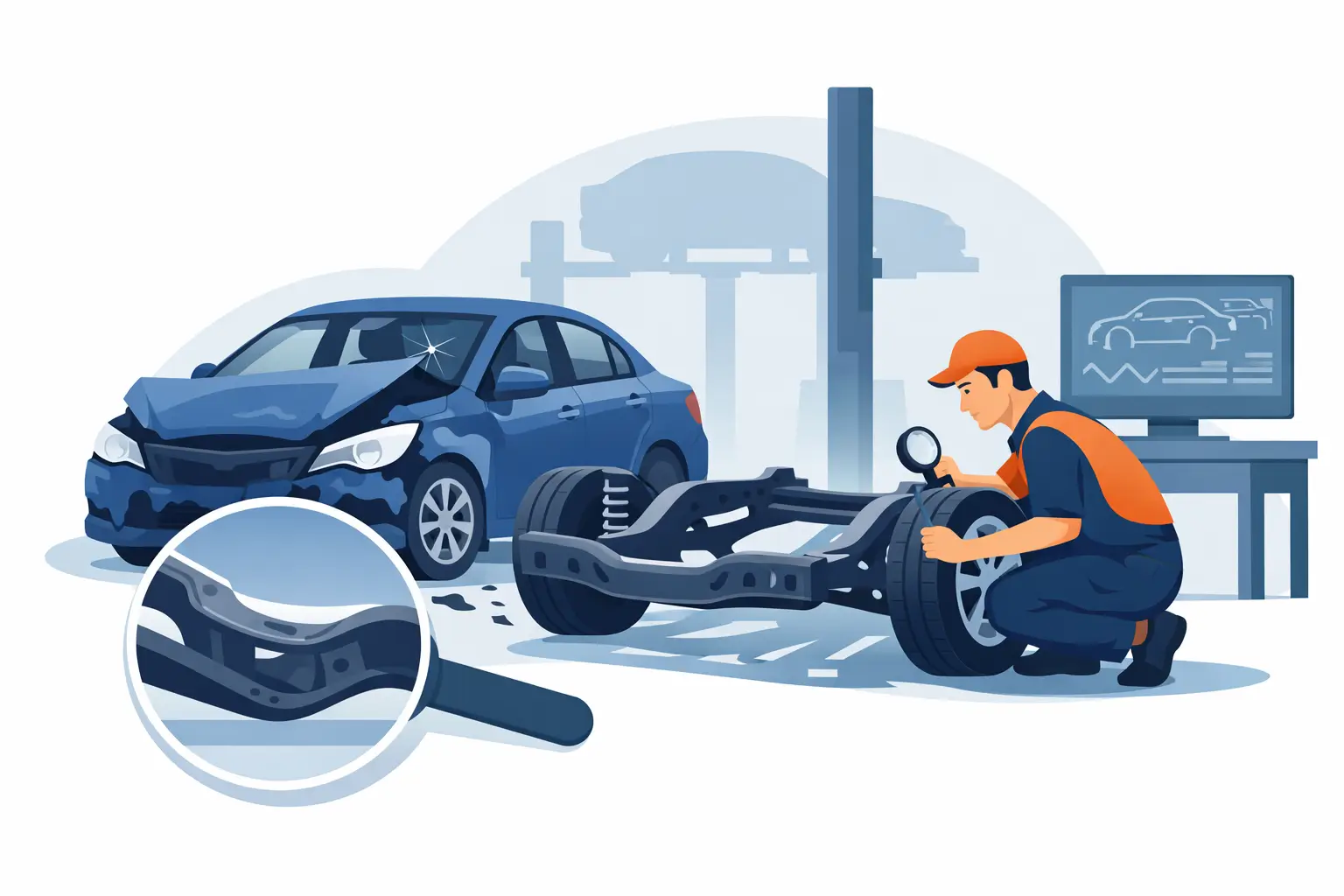
A reputable collision repairer will inspect the visible damage, suspension mounting points and structural areas before recommending repairs. For suspected chassis damage, the proper method is electronic or computerised measuring against manufacturer reference points. This compares the vehicle’s actual dimensions with its original factory specifications. It replaces guesswork with measurements.
Why a visual repair is not enough
A bumper can be painted beautifully while a problem sits behind it. That does not mean every repaired vehicle is unsafe, but it is why quality collision repairs begin with assessment rather than paint.
Structural damage that is left uncorrected can shorten tyre life, affect handling and make future repairs harder. It may also alter how the vehicle manages energy in another collision. For vehicles with advanced driver-assistance systems, camera, radar and sensor calibration may be required after structural or suspension repairs as well.
There is a cost trade-off here. A proper inspection may reveal more work than expected, particularly on a vehicle with hidden damage. But discovering that before new tyres are fitted, panels are painted or the car is sold gives you a clear repair path and avoids paying twice.
What to do after a collision or hard impact
If the steering feels wrong, a wheel is rubbing, fluids are leaking, warning lights appear, or the vehicle is difficult to control, do not keep driving it. Arrange a tow and have it assessed. A car can look driveable while having damage that makes it unsuitable for the road.
For less urgent cases, take clear photos of the impact area, note any new driving symptoms and avoid assuming a quick alignment will solve the problem. Tell the repairer exactly what happened: the speed, direction of impact, which wheel or corner was hit and whether the airbags deployed. That detail helps them inspect the right areas from the start.
At Fast Panel & Paint, the focus is on restoring more than the visible finish. A proper collision assessment looks at the panels, paintwork, suspension and underlying structure so you know what your vehicle needs before repair work begins.
A vehicle should feel straight, steer predictably and wear its tyres evenly. If yours does not after an impact, trust that signal and have the structure measured properly. The best repair is one that leaves you confident every time you turn the key.