A dent in the door after a tight car park, a creased guard from a low-speed knock, or hail marks across the bonnet can all look like the same problem from a distance. They are not. A proper dent repair methods comparison starts with what has happened beneath the surface: whether the paint has cracked, the metal has stretched, the panel has lost its shape, and whether safety or sensor components are involved.
The right repair should restore more than appearance. It should protect your vehicle’s value, preserve its factory lines and leave a finish that holds up to daily driving. Here is how the main options compare, and when each one makes sense.
Dent Repair Methods Comparison: Start With the Damage
No honest repairer should recommend a method from a photo alone when the damage looks more than minor. Panel material, dent depth, access behind the panel and paint condition all change the job.
A shallow dent in an intact painted panel may be a good candidate for paintless dent removal. A sharp crease with chipped paint generally needs conventional panel repair and refinishing. If the panel is badly torn, rusted, distorted around mounting points or structurally compromised, replacement can be the safer and more economical route.
The aim is not to choose the cheapest-looking repair on day one. It is to choose the repair that will look right, last properly and avoid paying twice when a quick fix fails.
Paintless Dent Removal
Paintless dent removal, often called PDR, reshapes a dent without filler or repainting. A technician uses specialist tools from behind the panel where access allows, or controlled glue-pulling techniques from the outside, to carefully return the metal to its original profile.
When PDR is a strong option
PDR is best suited to small or medium dents where the original paint is still sound. Typical examples include trolley dents, light door dings, small hail dents and shallow marks on a bonnet, roof or door. It can also be an excellent option for keeping a newer vehicle’s factory paint intact.
Because there is no colour matching, painting or curing time, PDR can often be completed faster than conventional repairs. It is usually more affordable as well, particularly where the damage is simple and access is good.
The biggest benefit is preservation. Factory paint is tough, consistent and valuable. If it has not been broken, keeping it in place is often the best result.
Where PDR has limits
PDR is not magic, and a skilled technician will be upfront about that. Sharp creases stretch metal differently from soft dents. Damage on a body line, near the edge of a panel, or beside a brace can be much harder to remove cleanly. Aluminium panels can also behave differently to steel and need the right approach.
If paint is cracked, scuffed through or already lifting, PDR may improve the panel shape but it cannot restore the coating. The area will still need paint repair to prevent moisture getting underneath and causing corrosion. A dent that has stretched the metal heavily may also retain a faint trace even after careful PDR.
Conventional Panel Repair and Repainting
For dents with damaged paint, deeper creases or more complex deformation, conventional panel beating is generally the right method. The panel is straightened using controlled pulling, shaping and metal-finishing techniques. Where needed, the repaired area is carefully prepared, primed, painted and blended to match the surrounding colour.
This method takes more time than PDR, but it handles a much wider range of damage. It is often the proper answer after a scrape, collision, impact around a wheel arch or a dent with exposed metal.
What a quality conventional repair involves
Good panel repair is not about burying a dent under a thick layer of filler. The metal should be returned as close as possible to its original shape before final refinishing work begins. This helps maintain panel strength, keeps body lines crisp and reduces the chance of repair marks showing later.
The paint process matters just as much. Correct preparation, quality primers, accurate colour matching and proper curing all affect the final result. Metallic, pearl and tri-coat colours can be particularly challenging, which is why a repair may need colour blending into adjacent panels for an even finish.
A professional repair should leave the panel looking natural in full sun, shade and under workshop lighting. It should also protect the repaired area from water, UV exposure and road grime.
The trade-off
Conventional repair costs more than a straightforward PDR job because it involves more labour, materials and refinishing time. Your vehicle may also need to stay at the workshop longer. In return, it can repair damage that PDR cannot and restore paint protection where it has been lost.
For many everyday cars, this is the best balance between cost, durability and appearance. It is especially worthwhile when the vehicle is in good condition and you want it to look properly cared for rather than merely acceptable from a few metres away.
Panel Replacement
Sometimes repairing a panel is possible, but not sensible. Replacement becomes the better choice when the metal is severely stretched, torn, heavily rusted or distorted across a large area. It can also be appropriate where a panel has been damaged around hinges, door latches, bumper mounts, lights or other critical attachment points.
A replacement door, guard, bonnet or bumper still needs careful fitting and painting. Panel gaps must be even, lights and trims must sit correctly, and the colour needs to match the rest of the vehicle. On modern vehicles, repairs near cameras, radar units and parking sensors may also require checks or recalibration after reassembly.
Replacement parts can be new, aftermarket or used, depending on availability, budget and the vehicle. The lowest-priced part is not automatically the best value. Poor fitment can create wind noise, uneven gaps, water leaks or a finish that never quite looks right. The right option is the one that fits safely and allows a lasting repair.
Smart Repairs for Scuffs and Minor Bumper Damage
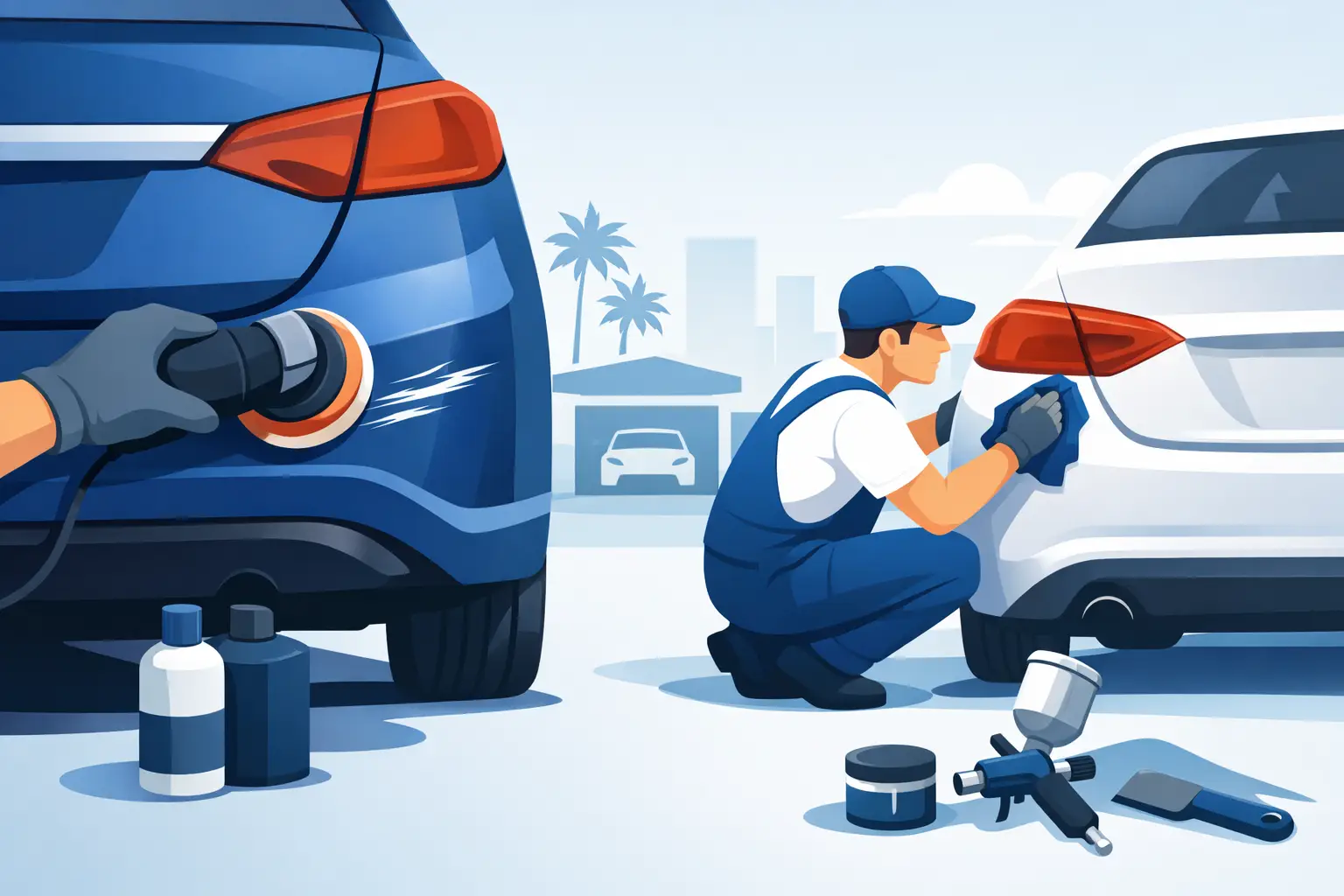
Not every mark needs a full panel repaint. Small bumper scuffs, light scratches and localised paint damage may be suitable for a targeted repair. Plastic bumpers can often be repaired with specialist plastic welding or reshaping before refinishing, rather than replaced outright.
This can be a cost-effective solution where damage is confined to a small area. However, a localised repair must still be blended carefully. Colour variation, texture differences and clear-coat edges are obvious when workmanship is rushed.
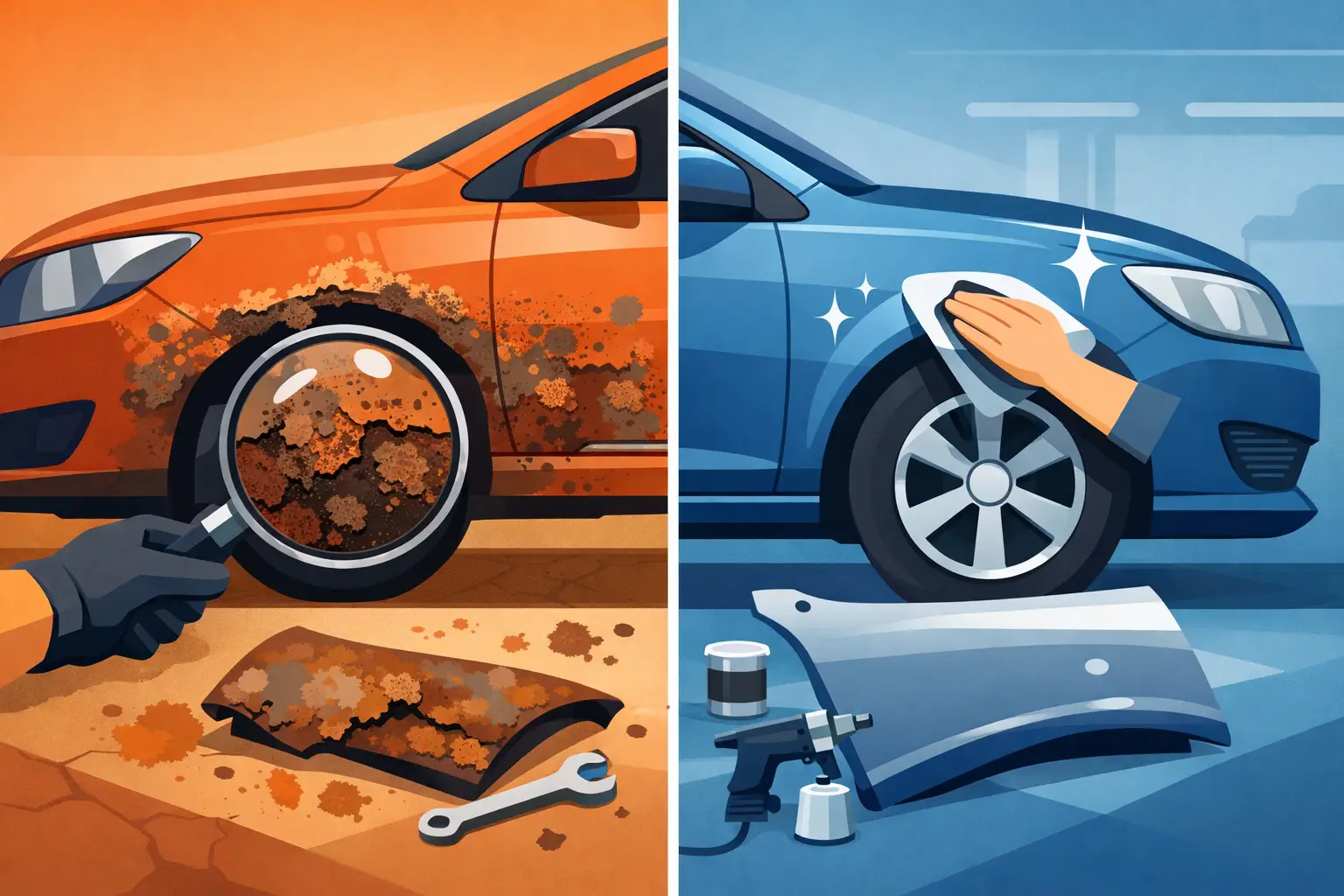
Rust is another area where cutting corners causes trouble. A spot of bubbling paint can indicate corrosion underneath, so simply touching it up may only hide the issue for a short time. Proper rust repair means removing the affected material, treating the area and rebuilding the protection before paint goes back on.
Comparing Cost, Time and Long-Term Results
Price is naturally part of the decision, but it should be compared against the condition of the vehicle and the risk of future work. PDR is usually the fastest and least invasive option when the paint is intact. Conventional repair costs more but delivers a complete fix for dents with paint damage. Replacement is often the highest-cost route, though it can save time and provide a better outcome when a panel is beyond economical repair.
Insurance can also shape the process. Collision damage may need an assessment, and insurers may have requirements around repair scope, parts and documentation. A workshop that communicates clearly can help you understand what is covered, what is safety-related and what work is worth completing at the same time.
Before approving any repair, ask what method is being recommended and why. You should also understand whether painting is required, whether adjacent panels need blending, how long the repair will take and whether any hidden damage could change the quote once the panel is stripped.
Choosing the Right Repair for Your Vehicle
The best repair depends on the dent, not a one-size-fits-all promise. If the paint is untouched and the dent is shallow, ask whether paintless dent removal can preserve the factory finish. If there is a crease, cracked paint or exposed metal, conventional panel repair is usually the more durable choice. If the panel is badly damaged, rusted or affecting fitment and safety, replacement may be the sensible call.
At Fast Panel & Paint, the focus is on recommending the repair that suits the vehicle, the damage and the result you expect. That means clear advice, honest quoting and workmanship that looks right when you walk back to your car in the car park.
A dent may be small, but leaving damaged paint or distorted panels unattended can turn a simple repair into a bigger one. Get it assessed early, choose the method that protects the car properly, and give your ride the finish it deserves.