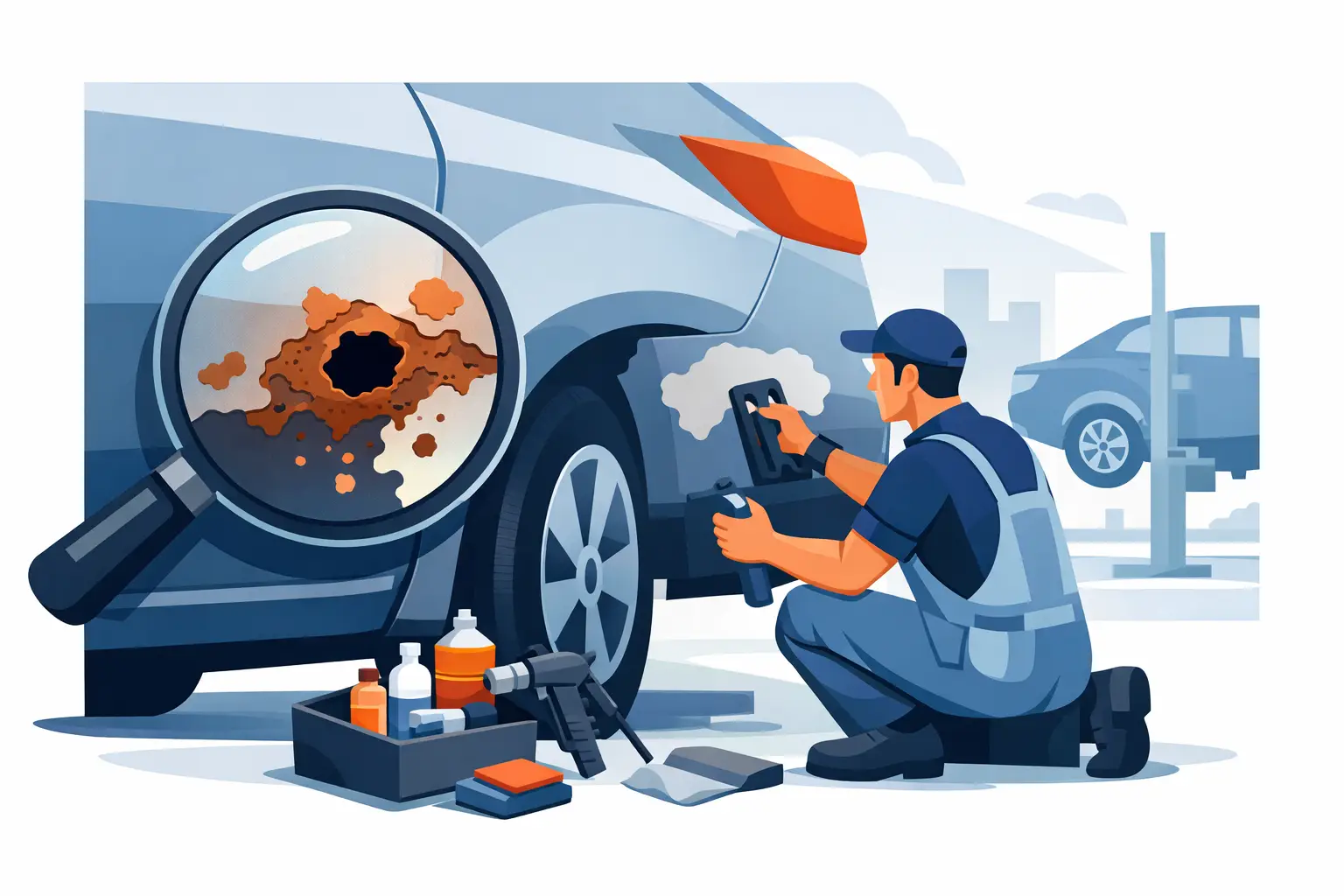
A bubble under the paint, a rough patch along a wheel arch or a brown stain near the windscreen may look minor. But rust repairs are rarely just about making a car look better. Once corrosion gets beneath the paint, it can continue spreading through the metal, weaken panels and turn a manageable repair into a much larger job.
For Manukau drivers, rust often starts where moisture, road grime and damaged paint meet. The smart move is to deal with it early, before it reaches seams, sills, doors or structural areas. A proper repair removes the cause, restores the metal and protects the area so the finish lasts.
What causes vehicle rust?
Rust forms when bare steel is exposed to oxygen and moisture. That sounds simple, but vehicles have plenty of places where water can sit unnoticed: inside wheel arches, beneath door seals, around windscreens, along the bottom of doors and behind bumper covers. Stone chips, parking scrapes and minor accident damage can break the paint seal and give moisture a way in.
Coastal air, regular wet-weather driving and road grime can speed up the process. So can blocked drain holes in doors, boots and sunroof channels. A car does not need to be old to rust. A newer vehicle with unrepaired paint damage can develop corrosion if water gets under the coating.
Previous repair work also matters. If a panel was filled, painted or sealed poorly in the past, moisture may have been trapped or left a path to the metal. This is why simply sanding a rusty spot and brushing over it is usually a short-term cosmetic fix, not a lasting solution.
Signs you should not ignore
Rust is not always obvious at first glance. Paint bubbling is one of the clearest warnings, especially around wheel arches, door edges and lower panels. The bubbles appear because corrosion is growing beneath the paint and pushing it upward.
Look out for flaking paint, orange-brown marks around chips, soft or uneven metal, and water collecting in the boot or footwells. Check under door rubbers, around the windscreen and beneath the vehicle if you can safely do so. On utes, vans and older vehicles, tray edges, chassis-adjacent areas and rear wheel arches deserve extra attention.
If rust appears near seatbelt mounts, suspension mounting points, sills, floors or other structural sections, do not put it off. These areas can affect safety and may create issues at a roadworthy inspection. The panel may look acceptable from outside while the corrosion behind it is far more advanced.
How professional rust repairs are done
Good rust repairs begin with an honest assessment. The visible patch is only part of the picture, so the affected area needs to be inspected properly to see how far corrosion has travelled. Sometimes the repair is localised. Other times, a larger section of the panel must be opened up or replaced to stop rust returning from behind.
The damaged paint, corrosion and weakened metal are removed back to sound material. If the rust has created holes or thinned the steel, the affected section may need to be cut out and new metal welded in. This is the right approach where strength and durability matter. Filling over perforated rust might look tidy for a while, but it does not restore the panel underneath.
Once the metalwork is sound, the repair area is prepared, treated and sealed. Quality primers, seam sealers and underbody protection help prevent moisture getting back into vulnerable areas. The panel is then refinished to match the vehicle’s colour and gloss, with blending where needed for a clean, natural result.
The final step is as valuable as the first: checking that water drains correctly, trims are refitted properly and hidden edges are protected. A flawless paint finish means little if the back of the repair is left exposed.
Repairing rust versus replacing a panel
There is no one-size-fits-all answer. A small patch of surface rust on an accessible panel can often be repaired efficiently. If corrosion has spread across a door skin, eaten through a wheel arch or affected multiple seams, replacing the panel may be more cost-effective and reliable.
Panel replacement can reduce labour in some cases, but it still needs careful fitting, corrosion protection and colour matching. Repairing an original panel can be the better choice where replacement parts are poor quality, unavailable or expensive. The right option depends on the vehicle, the location of the rust and the condition of the metal behind the visible damage.
Why DIY rust fixes often come back
Hardware-store rust converters and touch-up paint have a place for very small chips caught early. They can help protect exposed metal until a professional repair is booked. The problem comes when they are used over active rust, bubbling paint or thin metal.
Corrosion hides in pits, seams and the reverse side of the panel. If it is not fully removed and the area is not sealed on both sides, moisture keeps working away beneath the surface. The patch may look fine for months, then bubbles return – often wider than before.
Colour matching is another challenge. Vehicle paint changes over time through sun exposure, washing and wear. A quick brush-on repair can stand out badly, particularly on metallic, pearl or bright colours. Professional refinishing is about more than applying paint. It is about preparation, product choice, colour match and protection that holds up to real-world driving.
What affects the cost of rust repairs?
The cost comes down to the extent of corrosion, where it sits and what is needed to repair it properly. A small surface spot caught early is usually far more straightforward than rust that has reached inner guards, seams or structural metal.
Access also makes a difference. A rust patch on a flat, open panel is easier to work on than corrosion hidden behind glass, trims, bumpers, wiring or interior lining. Welding, panel fabrication, replacement parts and paint blending can all add time. That is why a clear inspection before quoting matters more than guessing from a photo alone.
The cheapest quote is not always the best value if it only covers a cosmetic cover-up. Ask what will be removed, whether rusted metal needs welding or replacement, how hidden areas will be protected, and whether paintwork will be blended for a proper finish. Clear answers help you compare repairs fairly and avoid surprises.
Keeping corrosion away after the repair
Once the repair is complete, simple care helps protect your investment. Wash road grime from wheel arches, lower doors and underbody areas, particularly after wet or muddy driving. Clean leaves and debris from windscreen channels and make sure door and boot drain holes are not blocked.
Fix stone chips and deep scratches before they expose metal for long periods. If you notice damp carpet, water in the boot or persistent condensation inside the car, have it checked. Water leaks can feed corrosion from the inside out, where it is harder to spot.
Underbody protection can be worthwhile for vehicles that see rough roads, coastal conditions or regular outdoor parking. It is not a substitute for repairing active rust, but it adds a useful layer of defence to clean, sound metal.
At Fast Panel & Paint, the focus is on repairs that look right and last. If you have spotted bubbling paint or a suspicious rusty patch, getting it assessed early gives you more options, a cleaner repair and a better chance of keeping the rest of your vehicle protected.