A trolley ding in a door, a shallow crease below the window line or a hail dent can make an otherwise tidy car look tired fast. When comparing paintless dent repair versus filling, the best choice is not simply the cheapest option. It comes down to the depth and location of the damage, whether the paint has broken, and what will deliver a lasting finish on your particular vehicle.
Paintless dent repair can be a quick, tidy solution when the original paint is still sound. Filling and repainting is the proper answer when the panel, paint or underlying material has been damaged beyond what can be carefully massaged back into shape. A good repairer will explain the difference before work begins, rather than forcing every dent into the same repair method.
Paintless Dent Repair Versus Filling: The Real Difference
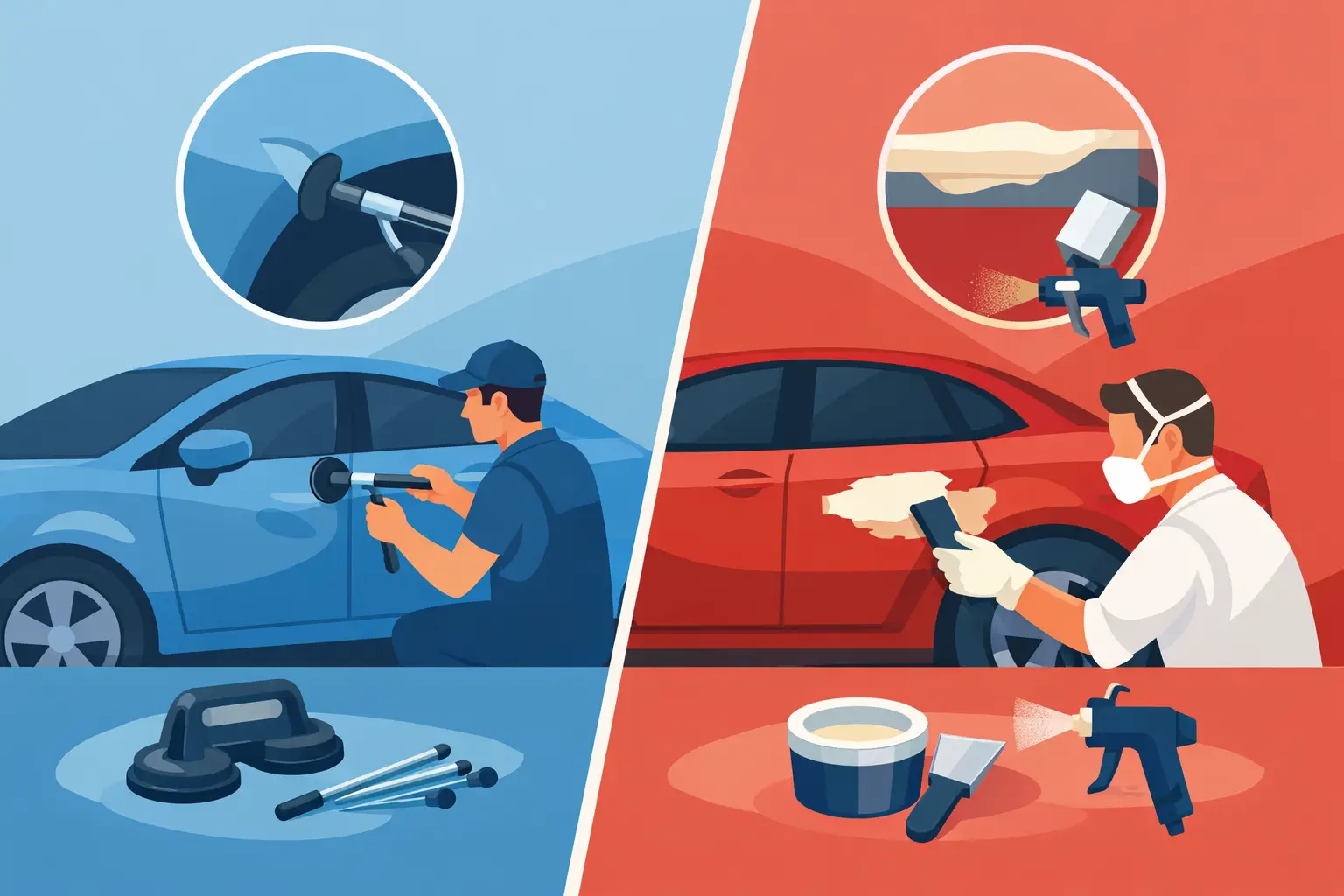
Paintless dent repair, often called PDR, restores a dent without repainting the panel. Using purpose-built tools, a technician gently works the metal from behind the panel or uses controlled pulling techniques from the outside. The aim is to return the panel to its original contour while preserving the factory paint finish.
Traditional dent repair takes a different path. The damaged area is straightened as far as practical, then prepared with a thin layer of automotive body filler where needed. The repair is shaped, primed, colour matched and painted before being blended and polished for a consistent finish.
Neither method is automatically better. PDR is ideal for certain cosmetic dents, while a filled and painted repair is often essential after a scrape, deeper impact or collision. The right method is the one that restores both appearance and protection – not the one that merely hides the damage for now.
When Paintless Dent Repair Is the Better Choice
PDR works best on shallow dents where the paint has not cracked, chipped or stretched. Think of a clean door ding in a supermarket car park, a minor dent caused by a loose rubbish bin, or light hail damage across a bonnet or roof. If the panel’s paint and metal have remained flexible, there is a strong chance it can be repaired without refinishing.
The biggest benefit is paint preservation. Factory paint is exceptionally durable, and keeping it intact avoids colour-matching concerns and reduces the amount of work required. It can also mean a faster turnaround, particularly for straightforward dents with good access behind the panel.
PDR is especially appealing on newer vehicles, well-kept cars and leased vehicles where keeping original paintwork matters. There is no filler, primer or spray work involved, so the repair can be less invasive. A successful PDR result should leave the panel looking natural, not simply flatter from a distance.
That said, access matters. A dent in the middle of a door skin may be relatively straightforward, while one beside a reinforced edge, brace, wheel arch or body line can be much more difficult. Modern vehicles also have sensors, side-impact beams, wiring and trim behind their panels. Removing or working around these parts safely is part of doing the job properly.
Signs a dent may suit PDR
A dent is more likely to suit paintless repair when the paint is unbroken, the metal has not formed a sharp crease, and the panel has not been stretched by a hard impact. Smooth, rounded dents generally respond better than small, pointed knocks.
The vehicle’s panel material also plays a role. Steel and aluminium behave differently, and aluminium can require extra care because it does not move in quite the same way as steel. A close inspection under proper lighting is the only reliable way to tell what is achievable.
When Filling and Repainting Is the Right Repair
If the paint is damaged, PDR alone cannot restore the panel’s protective finish. Chips, cracks and exposed metal need proper preparation and refinishing to prevent moisture getting underneath the paint and starting corrosion. On a vehicle used daily around Manukau’s changing weather and coastal conditions, leaving bare or poorly sealed metal is not worth the risk.
Filling and painting is also the better option for deeper dents, sharp creases and damage around panel edges. These impacts can stretch the metal or distort the panel in a way that cannot be fully corrected with paintless techniques. The technician may still use panel-beating methods to bring the metal back into shape first, then use only the amount of filler needed to refine the surface.
A quality filled repair is not about packing a dent with product and hoping for the best. The panel must be pulled and shaped correctly, the filler must be applied in controlled layers, and the repair needs proper priming, sanding, colour matching and clear coating. Done well, it gives the vehicle a smooth, durable finish that blends into the surrounding paintwork.
This approach is often needed after bumper scrapes that have damaged adjacent panels, dents with paint loss, minor accident damage or rust repairs. It takes more time than PDR because refinishing requires careful preparation and paint curing, but it addresses the full problem rather than just the visible depression.
Cost, Turnaround and Long-Term Value
For a suitable dent, PDR is often the more cost-effective option because it avoids paint and material costs. It can also get your car back on the road sooner. But a low price should never be the deciding factor if the dent is not a proper PDR candidate. Attempting to push out stretched metal or a sharply creased panel can leave visible distortion, especially in sunlight.
Traditional repair and repainting generally costs more because it involves more labour and materials. The repairer needs to prepare the panel, use quality primers and paint products, match the colour, apply clear coat and polish the finish. The result, when completed correctly, is a repair that protects the panel and holds up over time.
Long-term value also depends on the age and condition of the vehicle. On a late-model car with original paint and a minor door ding, PDR may be the smartest way to preserve its condition. On an older vehicle with faded paint, existing stone chips or deeper body damage, a carefully refinished section may make more sense and improve the overall appearance at the same time.
Why Colour Matching Changes the Decision
Paint colours are not all equal. Solid white or black can be more straightforward to blend than metallic, pearl or tri-coat finishes. Even vehicles with the same factory paint code can show slight differences after years of sun exposure, washing and everyday wear.
This is one reason PDR can be valuable when it is suitable: there is no new paint to match. However, when repainting is required, a professional repair involves more than reading the paint code. The colour is checked, adjusted if needed and blended into nearby sections so the repair does not stand out in different light.
A rushed spot repair can look fine in a workshop and obvious in the driveway. Proper lighting, careful prep work and a controlled spray process make the difference between a repair that looks acceptable and one that looks like it belongs on the car.
Don’t Ignore Damage Behind the Dent
A small dent can sometimes be just cosmetic, but not always. If the impact sits near a door edge, guard, bumper mount, wheel arch or safety sensor, there may be damage that is not obvious at first glance. Scratches can also allow water into the panel, and a dented bumper may have broken clips or brackets behind the cover.
For that reason, the best first step is an honest assessment. At Fast Panel & Paint, the focus is on choosing a repair method that suits the actual damage, your budget and the finish you expect. You should know whether paintless repair is realistic, whether repainting is needed, and what work is included before the job starts.
Choosing the Repair That Looks Right Years Later
Paintless dent repair is a smart option when the original paint is intact and the metal can be returned to shape cleanly. Filling and repainting is the dependable choice when damage is deeper, paint has failed or the panel needs full restoration. Both can produce excellent results in the right hands.
Before approving a repair, ask to see how the damage will be assessed and whether there is any risk of cracked paint, hidden distortion or corrosion. The right repair is the one that restores your car properly, keeps the finish looking sharp and gives you confidence every time you walk back to it in the car park.